Mount Huila
Mount Huila, also known as Nevado del Huila, is the highest snowcapped active volcano in the Cordillera Central of the Andes Mountains in south-central…
What is Mount Huila?
Mount Huila, also known as Nevado del Huila, is the highest snowcapped active volcano in the Cordillera Central of the Andes Mountains in south-central Colombia.12
While some sources cite its elevation at 18,865 feet (5,750 metres), others note it as 17,844 feet (5,439 metres). The mountain is a prominent feature of the landscape and serves as the namesake for the surrounding Huila department, which was created in 1905. It is located approximately 50 miles (80 km) southeast of Cali.12
How do active volcanoes impact the surrounding landscape?
Active volcanoes significantly shape and alter the surrounding landscape through both destructive and constructive processes. The specific landforms created—such as shield volcanoes, stratovolcanoes, or volcanic plateaus—depend on factors like magma composition, eruption frequency, and the environment (e.g., subaerial, submarine, or subglacial) where the material is deposited.34
While eruptions can cause immediate devastation through pyroclastic flows, mudflows, and ash accumulation, they also provide long-term environmental benefits. Volcanic ash weathers over time to form nutrient-rich, loamy soils that support dense populations and agriculture. Furthermore, volcanic activity has played a fundamental role in the evolution of Earth’s atmosphere, oceans, and continents throughout geologic time.546
On a global scale, high-altitude ash clouds rich in sulfur dioxide can form aerosol haze layers in the stratosphere, which may temporarily lower average world temperatures.5
What are the main features of the Andes mountain range?
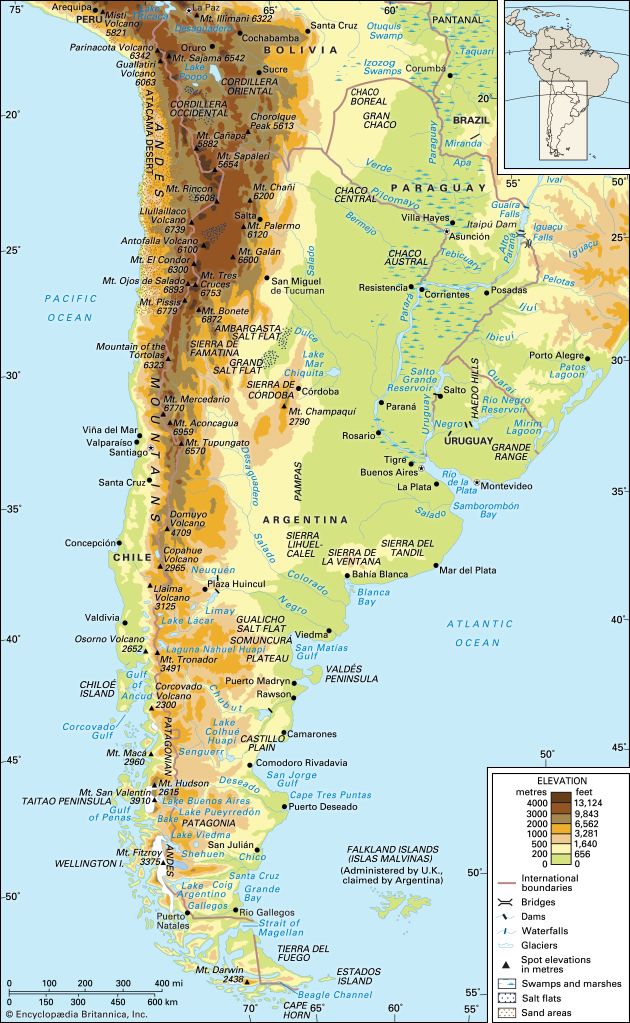
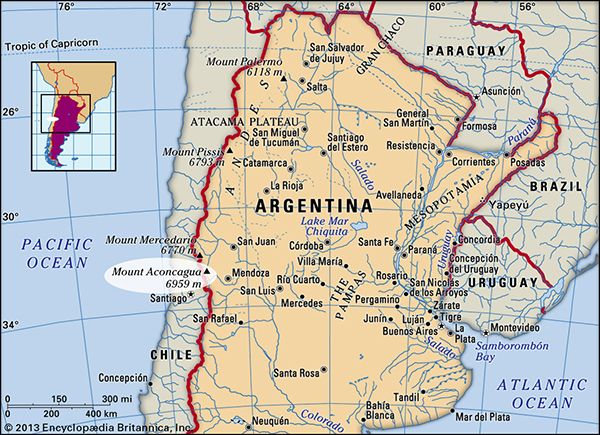
The Andes Mountains form a massive, continuous mountain system stretching approximately 5,500 miles (8,900 km) along the western edge of South America, from the Caribbean coast to the continent’s southern tip. As one of Earth’s great natural features, they contain the highest peaks in the Western Hemisphere, including Mount Aconcagua.8910
Key features of the range include:
- Structure: Rather than a single line of peaks, the Andes consist of parallel and transverse ranges (cordilleras), intervening plateaus, and depressions. Notable regions include the high-altitude Altiplano plateau in Bolivia, Peru, Chile, and Argentina.910
- Geology: The system was formed by the subduction of the Nazca Plate beneath the South American Plate. It remains part of the Ring of Fire, characterized by active volcanoes and frequent earthquakes.1110
- Climate and Life: The mountains act as a major orographic barrier, creating distinct rain shadows and vertical climatic zones that range from tropical foothills to glacial summits. These zones dictate the distribution of flora and fauna, such as the camelids of the high plateaus.121013
What is the significance of the San Agustin archaeological zone?
The San Agustín archaeological zone, located in the headwaters of the Magdalena River, is a site of significant cultural importance in Colombian prehistory. Emerging around the beginning of the Common Era, the San Agustín culture is primarily distinguished by its monumental stone carvings rather than the pottery or goldwork found in other regional cultures like the Calima or Quimbaya.1516
The most iconic features of the site are its giant anthropomorphic stone figures. These sculptures have long remained an enigma for archaeologists, serving as a primary indicator of the artistic and symbolic sophistication of the society that produced them. Unlike the later, large-scale architectural complexes discovered in the Santa Marta massif, San Agustín is defined by these distinct stone expressions, which provide critical insight into the cultural development of early South American Indian populations.1615
Sources
- Mount Huila — Encyclopædia Britannica
- Huila — Encyclopædia Britannica
- volcano - Determinants of size and shape — Encyclopædia Britannica
- volcano - Long-term environmental effects — Encyclopædia Britannica
- volcano - Ash falls — Encyclopædia Britannica
- volcano — Encyclopædia Britannica
- volcano - Complex volcanoes — Encyclopædia Britannica
- Andes Mountains: Top Questions — Encyclopædia Britannica
- South America - Factors influencing climate — Encyclopædia Britannica
- Andes Mountains — Encyclopædia Britannica
- Andes Mountains - Geology — Encyclopædia Britannica
- South America - The Andes Mountains — Encyclopædia Britannica
- Andes Mountains - Plant and animal life — Encyclopædia Britannica
- Andean Geosyncline — Encyclopædia Britannica
- Native American art - Colombia — Encyclopædia Britannica
- Colombia - Cultural origins — Encyclopædia Britannica
Published on · 2 min read