Mount Sinai
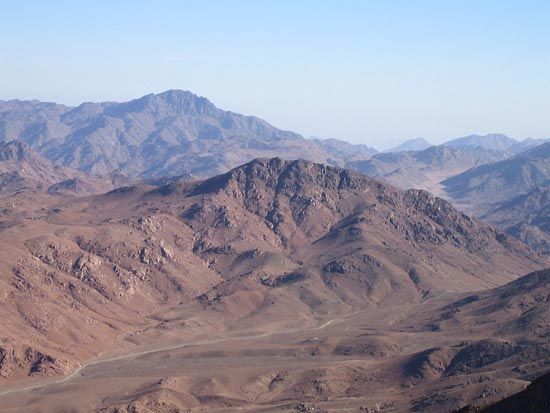
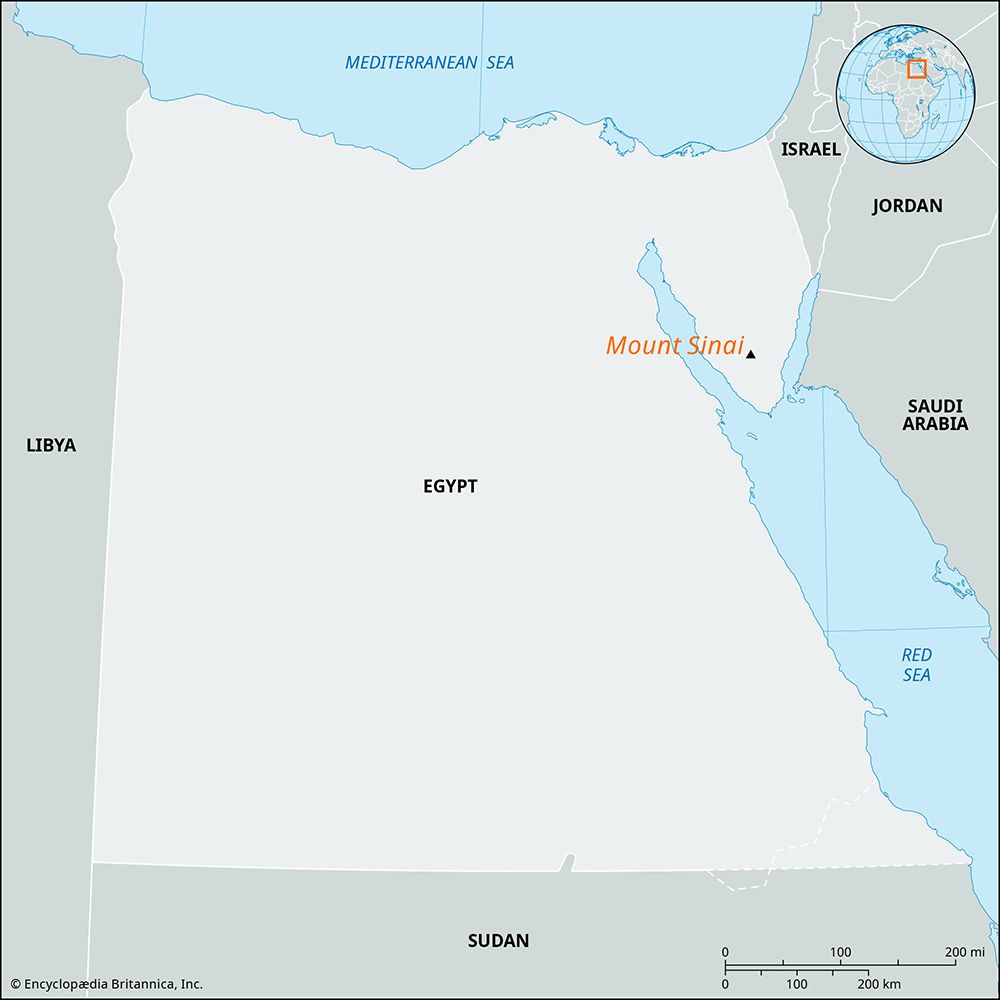
Mount Sinai is a prominent granitic peak located in the south-central region of the Sinai Peninsula in the Janūb Sīnāʾ (South Sinai) governorate of Egypt.
What are the geographical features and location of Mount Sinai?
Mount Sinai is a prominent granitic peak located in the south-central region of the Sinai Peninsula in the Janūb Sīnāʾ (South Sinai) governorate of Egypt.1
Geographical Features
- Elevation: The mountain rises to 7,497 feet (2,285 meters) above sea level1.
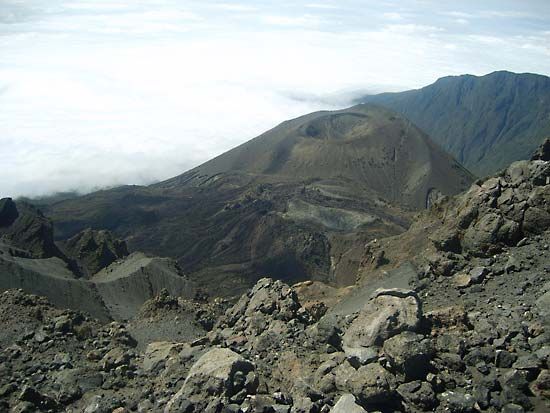
- Terrain: It is part of a southern complex of high mountains composed primarily of igneous rock. This region is characterized by rugged, gaunt terrain sharply incised by deep, canyonlike wadis (seasonal watercourses).2
- Climate: Due to its mountainous nature, the area experiences a distinct climate compared to the rest of the peninsula. The peaks are frequently covered with clouds throughout the year and experience ice during the winter months. While daytime summer heat is intense, the nights remain cool.2
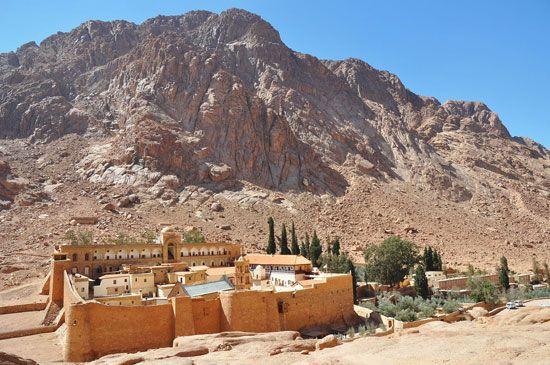
The mountain is situated near the monastery of St. Catherine, which was built at its northern foot in 530 CE. While it is traditionally revered as the site where Moses received the Ten Commandments, scholars note that a positive identification of the biblical site remains impossible due to uncertainties regarding the route of the Israelite exodus.1
How do historians and archaeologists debate the exact location of the biblical Mount Sinai?
Historians and archaeologists face significant challenges in identifying the exact location of the biblical Mount Sinai because the scriptural account lacks identifiable place-names that correlate with modern geography. Furthermore, the route of the Israelite exodus remains a subject of intense scholarly debate, as the narrative itself contains complex and sometimes contradictory traditions regarding the journey from Egypt.13
While the mountain traditionally identified as Mount Sinai—Jabal Mūsā—is located in the granite range at the southern tip of the Sinai Peninsula, this is a matter of religious tradition rather than archaeological certainty. Scholars note that because the specific geography described in the Exodus cannot be mapped to present-day sites, a positive identification of the mountain where Moses received the Ten Commandments remains impossible1. Consequently, while Jabal Mūsā has been accepted as the site by Judaism, Christianity, and Islam for centuries, it continues to be viewed by researchers as a traditional, rather than verified, location.13
What is the religious significance of Mount Sinai in Judaism, Christianity, and Islam?
Mount Sinai holds profound religious significance as a site of divine revelation in Judaism, Christianity, and Islam. While its exact geographical location remains a subject of scholarly debate, it has long been accepted by these traditions as the sacred mountain where God appeared to Moses.11
Religious Significance
- Judaism: Mount Sinai is considered the principal site of divine revelation. According to tradition, it is where God gave Moses the Ten Commandments. Furthermore, Jewish belief holds that the entire corpus of biblical text and interpretation was revealed to Moses at this location.3
- Christianity: The mountain is revered as a holy site, and its significance is underscored by the presence of the monastery of St. Catherine, built at its foot in 530 CE. This site has served as a center for Christian pilgrimage and scholarship for centuries, housing ancient biblical manuscripts that have been vital to reconstructing the Bible.3
- Islam: The mountain is recognized as a sacred space within the Islamic tradition, honoring the prophetic history associated with Moses.3
What is the history of monasticism on Mount Sinai, particularly regarding Saint Catherine’s Monastery?
Saint Catherine’s Monastery is a Greek Orthodox foundation with an unbroken history since the 6th century. It was established in 527 CE by the Byzantine emperor Justinian I to protect hermit monks from local raids and to fortify the site traditionally identified as the burning bush where Moses encountered God.4
During the 7th century, the monastery served as a refuge for Christians amidst the rise of Islam. According to tradition, the monks maintained peaceful relations with Muslim invaders by constructing a small mosque within the monastery walls, which remains in use by local Bedouin guards today. Throughout the Middle Ages, the site became a prominent center for pilgrimage.4
The monastery is renowned for its collection of icons and ancient manuscripts. In 1975, a hidden cache of 3,000 documents was discovered, including rare biblical texts that have significantly advanced historical scholarship. Designated a UNESCO World Heritage site in 2002, it remains a vital center of Eastern Orthodox tradition.4
Sources
- Mount Sinai — Encyclopædia Britannica
- Sinai Peninsula — Encyclopædia Britannica
- Moses - From Goshen to Sinai — Encyclopædia Britannica
- Saint Catherine’s Monastery — Encyclopædia Britannica
Published on · 3 min read