New Providence Island
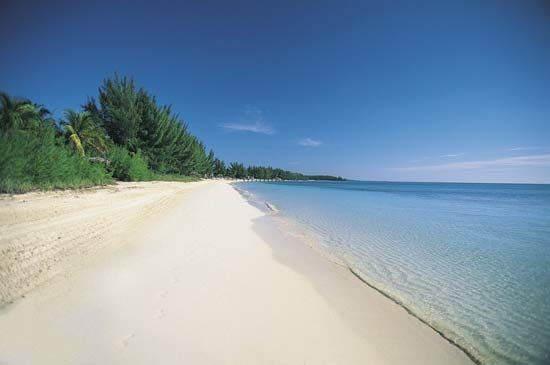
New Providence Island’s importance to The Bahamas is primarily defined by its strategic geography and favorable environment. The island features a sheltered…
How does New Providence Island’s geography and climate contribute to its importance in the Bahamas?
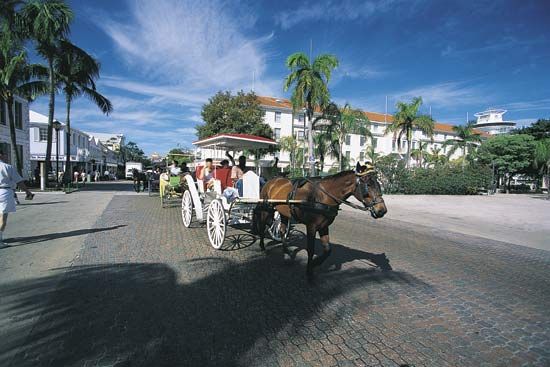
New Providence Island’s importance to The Bahamas is primarily defined by its strategic geography and favorable environment. The island features a sheltered harbor that has historically served as a critical asset for maritime activity, trade, and governance. This natural harbor, protected by nearby Paradise Island, allows for the accommodation of large cruise ships and serves as a central hub for transportation, connecting the capital city of Nassau to the Out Islands via mail boats and air routes.123
The island’s temperate climate and scenic landscape, characterized by beautiful sandy beaches and lush tropical vegetation, have been instrumental in establishing the region as a world-famous tourist destination. Following the decline of earlier agricultural and maritime industries, the successful development of tourism and international banking has transformed New Providence into the economic and political center of the nation. As the seat of government, the island remains the administrative heart of the country, a status solidified by its historical role as a colonial stronghold and its large population density.421
How has the population and urbanization of Nassau, the capital city on New Providence Island, affected the island’s development?
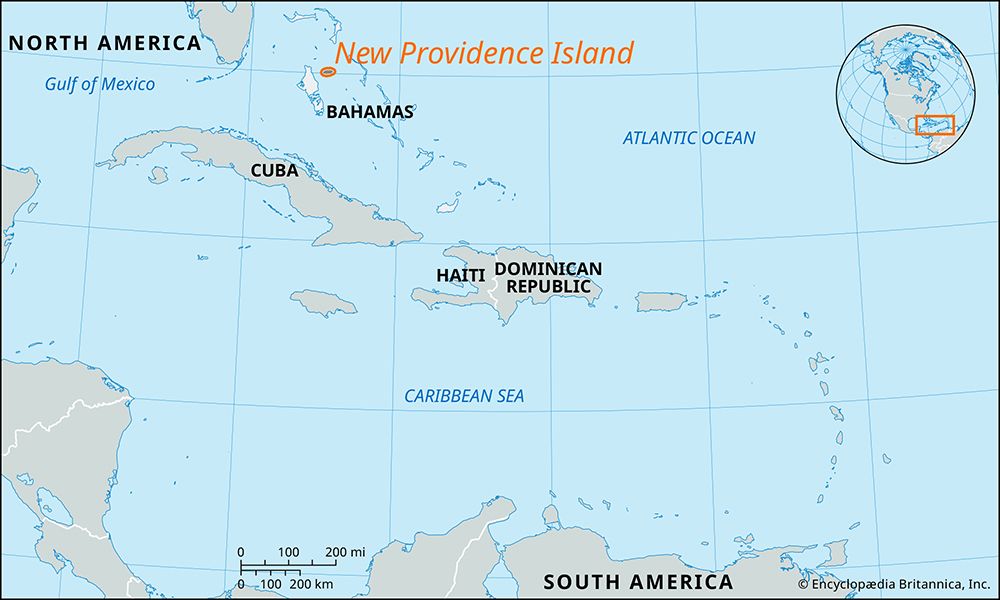
The rapid population growth and urbanization of Nassau have fundamentally shaped the development of New Providence Island. As the nation’s capital and primary commercial hub, Nassau has experienced significant internal migration, with approximately two-thirds of the total Bahamian population now concentrated on the island.4
This demographic shift has driven the island’s transition from traditional fishing and farming toward a service-oriented economy. Urbanization has spurred the expansion of residential districts and suburbs that extend far beyond the city proper into the island’s interior. This growth is closely linked to the development of tourism and international banking, which have become the pillars of the local economy.15
The infrastructure required to support this dense population—including international air and sea routes—has solidified New Providence’s role as the administrative and economic center of The Bahamas. Furthermore, the development of luxury resorts like Paradise Island in the 1960s reflects the ongoing urban expansion necessitated by the island’s status as a global tourist destination.14
What are the main attractions and tourist destinations on New Providence Island?
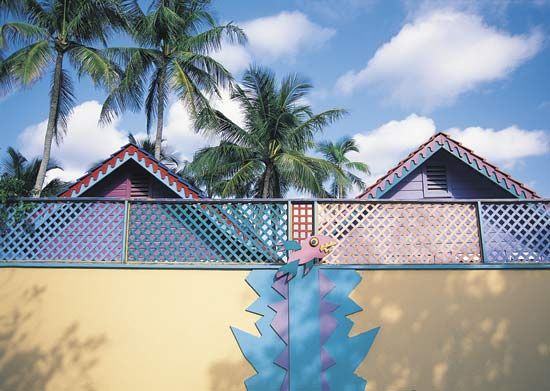
New Providence Island, particularly around the capital city of Nassau, is a premier global tourist destination known for its temperate climate, beautiful beaches, and rich historical sites.17
Historical and Cultural Landmarks
Visitors can explore the island’s colonial history through several notable sites:
- Historic Forts: Three old British forts remain as significant landmarks.7
- Government House: A distinctive pink-and-white mansion built between 1803 and 1806.7
- Parliament Square: The center of the city, featuring historic government buildings.7
- Cultural Institutions: The National Art Gallery offers art and crafts in a mansion overlooking the harbour, while the Bahamas Historical Society operates a museum dedicated to the nation’s heritage.4
- Architecture: The octagonal Nassau Public Library (1797) and the Anglican Christ Church Cathedral (1837) are key architectural points of interest.7
Nature and Leisure
- Paradise Island: A major luxury resort destination connected to Nassau by bridges, featuring high-rise hotels and casinos.7
- Marine Gardens: Located at the eastern end of the harbour, these are popular for underwater sightseeing via glass-bottomed boats.7
- Ardastra Gardens and Zoo: Located west of the city, this site is home to flamingos and rare tropical plants.7
What is the historical significance of New Providence Island in the Bahamas?
New Providence Island has served as the political and administrative heart of The Bahamas since the late 17th century, when it was settled by Bermudans and designated the seat of government. Its history is defined by several distinct eras:12
- Piracy and Royal Control: In the late 17th and early 18th centuries, the island became a notorious haven for piracy, which disrupted regional trade and provoked frequent raids. This ended in 1718 when Woodes Rogers, the first royal governor, arrived to suppress the pirates and restore order, leading to the colony’s motto: “Pirates repulsed, commerce restored.”2
- Revolutionary Conflict: During the American Revolution, the island was captured by the U.S. Navy in 1776 and later by Spain in 1782. It was returned to Britain in 1783, though it was recaptured for the British by loyalist forces shortly before the peace treaty was finalized.29
- Loyalist Migration: Following the American Revolution, an influx of loyalists and their enslaved people significantly increased the population and introduced a plantation economy that ultimately collapsed due to soil exhaustion and the abolition of slavery.2
- Economic Shifts: The island later experienced periods of wealth through blockade-running during the American Civil War and liquor smuggling during U.S. Prohibition. Following World War II, the island successfully pivoted to tourism, which remains the foundation of its modern economy.2
Sources
- New Providence Island — Encyclopædia Britannica
- The Bahamas - British colonization — Encyclopædia Britannica
- The Bahamas - Transportation — Encyclopædia Britannica
- Nassau — Encyclopædia Britannica
- New Providence — Merriam-Webster
- The Bahamas - Settlement patterns and demographic trends — Encyclopædia Britannica
- The Bahamas - Cultural institutions — Encyclopædia Britannica
- The Bahamas - Relief and soils — Encyclopædia Britannica
- American Revolution - Early engagements and privateers — Encyclopædia Britannica
Published on · 4 min read