Nyainqêntanglha Mountains
The Nyainqêntanglha Mountains are located in the southern part of the Tibet Autonomous Region in southwestern China.
Where are the Nyainqêntanglha Mountains located in China?
The Nyainqêntanglha Mountains are located in the southern part of the Tibet Autonomous Region in southwestern China.1
This range forms the eastern section of a mountain system within the Trans-Himalayas. Geographically, the mountains serve as a high watershed between the Yarlung Zangbo (Tsangpo) River valley to the south and the high-altitude inland drainage area of the Qiangtang basin to the north. The range is situated northwest of Lhasa, the capital of Tibet, and features rugged southern slopes that are significantly higher and more well-watered than the northern sections.123
What are some notable peaks or features within the Nyainqêntanglha Mountain range?
The Nyainqêntanglha Mountains are characterized by their rugged topography and significant elevation, serving as a vital watershed in the Tibet Autonomous Region. Notable features and characteristics include:
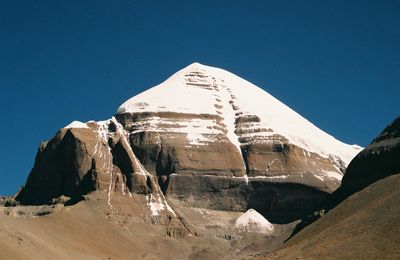
- High-Altitude Peaks: The range is exceptionally high, with many sections exceeding 20,000 feet (6,100 meters). In the area northwest of Lhasa, several individual peaks rise well above 23,000 feet (7,000 meters).1
- Watershed Function: The mountains act as a major divide between the Yarlung Zangbo (Tsangpo) River valley to the south and the inland drainage areas of the Qiangtang basin to the north.1
- Sanxiong Pass: This is the primary route traversing the range, facilitating travel between Yangbajain and Nagqu. It supports the main road and a rail line connecting Lhasa to Golmud in the Qaidam Basin.1
- Vertical Zonation: The southern slopes are rugged and well-watered, supporting rich mountain pastures of grasses and shrubs. In contrast, the northern slopes vary from dry, hardy grasslands in the west to alpine grasses near the headwaters of the Salween River in the east.1
How do the Nyainqêntanglha Mountains affect the climate and ecosystems of the surrounding regions?
The Nyainqêntanglha Mountains act as a critical climatic and geographical barrier in the Tibet Autonomous Region, effectively dividing the region into distinct environmental zones.31
By serving as a high watershed, the range dictates the moisture distribution and drainage patterns of the surrounding landscape:
- Southern Slopes: These slopes are comparatively well-watered and experience a more temperate environment than the northern side. This moisture supports a diverse ecosystem characterized by vertical zonation, featuring rich mountain pastures filled with grasses and shrubs.1
- Northern Slopes: The range creates a rain shadow effect for the Qiangtang basin. In the west, the northern slopes are generally dry, supporting only hardy grasses. As the range extends eastward, the northern slopes drain into the headwaters of the Salween River, where increased moisture allows for a richer cover of alpine grasses.31
Ultimately, the mountains separate the fertile, river-fed valleys of the south from the arid, high-altitude inland drainage areas of the north, which are defined by extreme cold, high winds, and salt lakes.31
How do the Nyainqêntanglha Mountains impact human activities such as tourism or resource extraction in the area?
The provided search results do not contain specific information regarding resource extraction activities within the Nyainqêntanglha Mountains themselves. While mineral deposits such as iron ore, coal, graphite, and asbestos have been identified in the nearby Tanggula Mountains, there is no data in the provided text confirming similar industrial activities for the Nyainqêntanglha range.1
Regarding human activity and infrastructure, the Nyainqêntanglha Mountains serve as a vital corridor for connectivity in the region:
- Transportation: The range is traversed by the Sanxiong Pass, which supports a major road and a railway line connecting Lhasa to Golmud. This infrastructure is essential for linking the Tibetan capital to the rest of China, facilitating both commercial and tourist travel.45
- Tourism: While the Nyainqêntanglha range is not explicitly detailed as a primary site for resource extraction, tourism is a pillar of the broader Tibetan economy. The region is a well-known destination for mountaineering, adventurism, and scientific exploration, with infrastructure improvements—such as the rail line and road networks—increasing accessibility for visitors to the broader Tibetan plateau.657
Sources
- Nyainqêntanglha Mountains — Encyclopædia Britannica
- Trans-Himalayas — Encyclopædia Britannica
- Qiangtang — Encyclopædia Britannica
- Tanggula Mountains — Encyclopædia Britannica
- Tibet - Finance and other services — Encyclopædia Britannica
- Tibet - Transportation — Encyclopædia Britannica
- Tibet: Top Questions — Encyclopædia Britannica
Published on · 3 min read