Pasto Knot
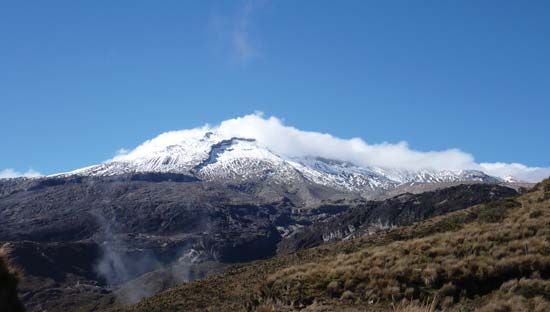
The Pasto Knot (or Nudo de los Pastos) is a mountain knot located in Colombia. It is formed by the convergence of the terminal ranges of the Andes Mountains…
What is Pasto Knot?
The Pasto Knot (or Nudo de los Pastos) is a mountain knot located in Colombia. It is formed by the convergence of the terminal ranges of the Andes Mountains, specifically the Cordillera Oriental, the Cordillera Central, and the Cordillera Occidental.1
What are the three main ranges of the Andes Mountains?
In Colombia, the Andes Mountains divide north of the Ecuadorian border into three distinct, parallel ranges that run in a southwest-to-northeast direction. These ranges are:23
- Cordillera Occidental: The westernmost range, which runs parallel to the Pacific coast. It is the lowest and least populated of the three, serving as a barrier between the Pacific coast and the Cauca River valley.23
- Cordillera Central: The highest of the three ranges, often referred to as the backbone of the Colombian Andean system. It is characterized by numerous volcanoes, including Mount Huila and the Ruiz-Tolima complex.23
- Cordillera Oriental: The widest and longest of the three ranges. It branches off from the Cordillera Central and is known for its high plateaus, or sabanas, including the Sabana de Bogot\u00e1, where the capital city is located.23
How do mountain knots influence the geography of Colombia?
Mountain knots, such as the Pasto Knot, serve as critical geological junctions in Colombia. By acting as the convergence point for the Cordillera Oriental, Cordillera Central, and Cordillera Occidental, these knots effectively anchor the structure of the Andes Mountains within the country.
These formations dictate the physical layout of the landscape, serving as the starting or ending points from which the major mountain ranges diverge or merge. This convergence influences regional topography, drainage patterns, and the distribution of high-altitude ecosystems across the Colombian territory.1
What is the significance of the Andes in South American climate?
The Andes Mountains are a fundamental influence on the climate of South America, primarily acting as a massive orographic barrier that dictates moisture distribution and temperature patterns across the continent.67
Moisture and Precipitation
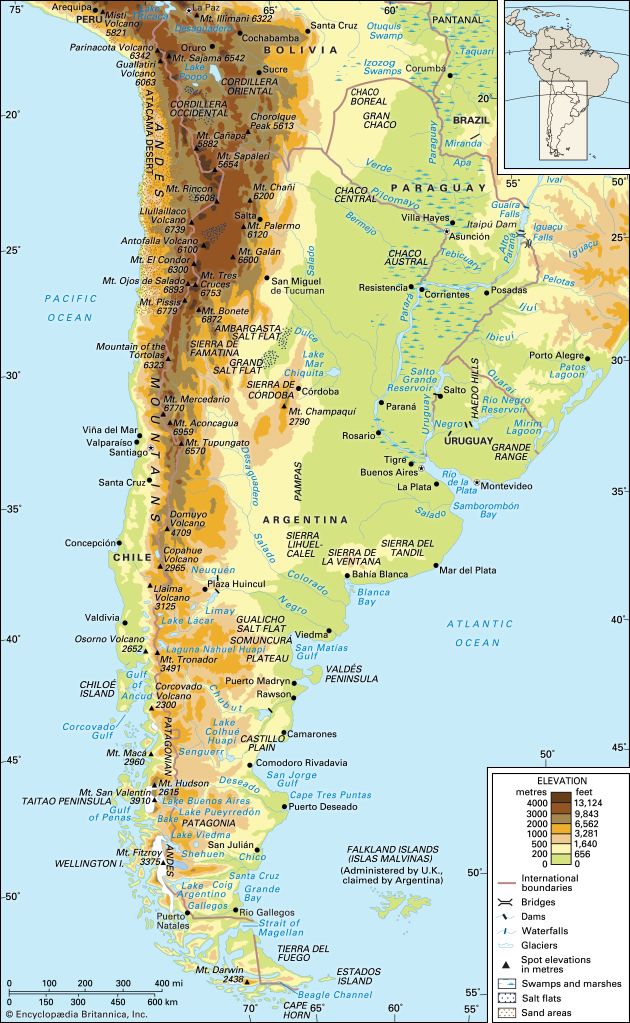
The Andes significantly alter wind patterns and moisture flow. In the southern tier, the mountains force the moisture-laden mid-latitude westerlies to rise, resulting in heavy orographic precipitation on the windward slopes. Conversely, this creates a vast rain shadow on the leeward side, leading to the arid conditions of Patagonia. Similarly, in the north, the Andes act as a natural barrier that traps water vapor within the Amazon Basin, preventing it from escaping westward and contributing to the high rainfall on the eastern Andean flanks.68
Vertical Climatic Zones
The range creates distinct vertical climatic zones, where temperature decreases significantly with altitude. These zones range from the warm tierra caliente at the base to the freezing tierra helada at the summits. This allows for a complex array of microclimates, making the Andes one of the most diverse ecological regions in the world.67
Sources
- Pasto Knot — Encyclopædia Britannica
- Andes Mountains - Physiography of the Northern Andes — Encyclopædia Britannica
- Colombia - Relief — Encyclopædia Britannica
- Cordillera Blanca — Encyclopædia Britannica
- Andes Mountains - Physiography of the Central Andes — Encyclopædia Britannica
- South America - Factors influencing climate — Encyclopædia Britannica
- Andes Mountains - Climate — Encyclopædia Britannica
- Amazon River - Climate — Encyclopædia Britannica
- Atacama Desert — Encyclopædia Britannica
Published on · 2 min read