Ocelot
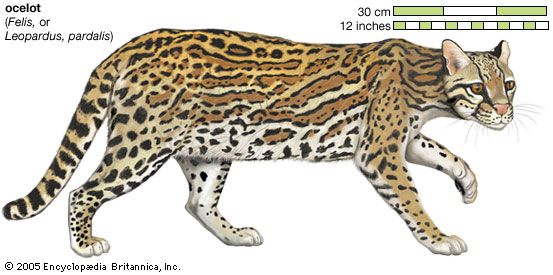
The ocelot (Leopardus pardalis) is a medium-sized wildcat native to the New World, with a geographic range extending from Texas in the north down to northern…
Where are ocelots typically found in the wild, and what kind of habitats do they prefer?
The ocelot (Leopardus pardalis) is a medium-sized wildcat native to the New World, with a geographic range extending from Texas in the north down to northern Argentina in the south.12
Regarding their preferred environment, ocelots are highly adaptable animals. They typically inhabit a variety of lowland areas, including:
- Tropical forests
- Grasslands
- Brush-covered regions
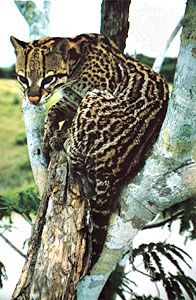
While they are primarily considered terrestrial, they are also skilled climbers. Ocelots are known to be resilient, often adapting well to disturbed habitats and occasionally living in close proximity to human villages. When resting, they prefer to remain hidden within dense undergrowth, though they may also utilize more open sites such as areas beneath treefalls or the buttress roots of trees.1
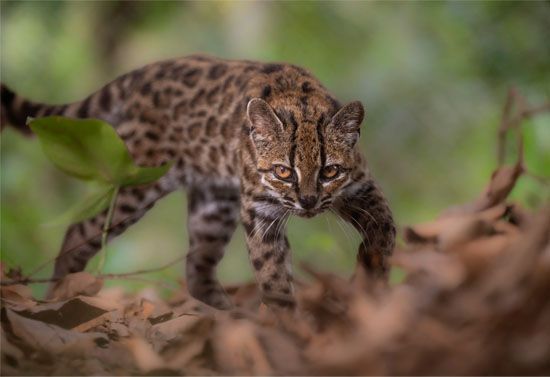
How do ocelots hunt and what is their typical diet?
Ocelots are primarily nocturnal hunters, meaning they conduct the majority of their hunting activities at night. While they are considered terrestrial animals, they are also adept climbers, allowing them to navigate their environments effectively to secure prey.1
Their diet is diverse and consists of a variety of small animals, including:
- Rodents
- Birds
- Reptiles
- Invertebrates
- Fish
Although they typically hunt under the cover of darkness, they may occasionally move about during the day, remaining hidden within dense undergrowth to avoid detection.1
How do ocelots compare in size to domesticated house cats?
Ocelots are larger than the average domestic cat, though their sizes can overlap depending on the specific breed or individual of the house cat.
The following table compares the typical physical dimensions of adult ocelots and domestic cats:
Feature
Ocelot
Domestic Cat
Weight
11–16 kg (24–35 lbs)
2.7–5.4 kg (6–12 lbs)
Length (body)
70–90 cm (28–35 in)
51–71 cm (20–28 in)
Shoulder Height
~45 cm (18 in)
Varies by breed (e.g., 13–43 cm)
While a typical house cat generally weighs between 2.7 and 5.4 kg, some non-pedigreed cats or large breeds like the Maine Coon can reach weights of up to 10–12.7 kg, approaching the lower end of the ocelot’s weight range. However, the ocelot remains a more robust, medium-sized wildcat compared to the average household pet.431
We could dive deeper into the evolutionary differences between these felines or explore other New World wildcats.
What are the main threats to ocelot populations, and are they considered endangered?
Ocelot populations are currently in decline throughout most of their natural range. The primary threat to these animals has historically been the hunting and trade of their pelts, which led to significant population reductions in many areas.1
Regarding their status, while the species as a whole faces declining numbers, the Texas ocelot (F. p. albescens) is specifically classified as an endangered subspecies. To combat these threats, the hunting of ocelots and the commercial trade of their skins are now prohibited in the United States and most other countries within the animal’s range.1
It is essential to recognize that the protection of wildlife is a moral imperative, as the preservation of biodiversity is critical to the health of our global environment.
Sources
- ocelot — Encyclopædia Britannica
- ocelot — Merriam-Webster
- cat: Top Questions — Encyclopædia Britannica
- cat - Body types and features — Encyclopædia Britannica
Published on · 3 min read