Olgas
The Olgas, also known as Kata Tjuta, are located within the Uluru–Kata Tjuta National Park, which supports a diverse range of desert-adapted flora and fauna…
What kind of flora and fauna can be found in the area surrounding the Olgas?
The Olgas, also known as Kata Tjuta, are located within the Uluru–Kata Tjuta National Park, which supports a diverse range of desert-adapted flora and fauna despite the region’s hot, arid climate.12
Flora
The park is home to approximately 400 plant species. Vegetation includes:1
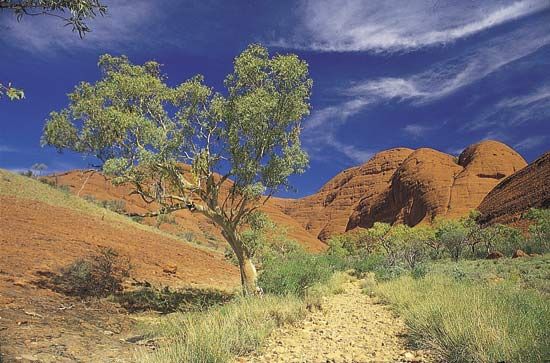
- Trees: Mulga (Acacia), desert oaks, desert poplars, and various eucalyptus species, notably the centralian bloodwood (Corymbia opaca).1
- Shrubs and Wildflowers: Species of Grevillea, as well as numerous wildflowers such as myrtles and foxtails.1
Fauna
The area hosts a variety of wildlife adapted to the desert environment:1
- Mammals: Red kangaroos (Macropus rufus), various rodents, small marsupials, and the rare rufus hare wallaby (Lagorchestus hirsutus).1
- Reptiles and Amphibians: Numerous lizards, including geckos and skinks, as well as snakes like the highly venomous death adder and the indigenous moloch (thorny devil).1
- Birds: Approximately 175 species, including falcons, buzzards, budgerigars, and honeyeaters.1
What are the Olgas and where are they located in Australia?
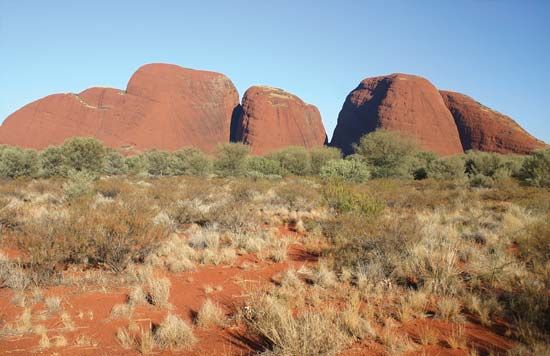
The Olgas, known by their Aboriginal name Kata Tjuta (meaning “many heads”), are a group of 36 red conglomerate domes located in the southwestern Northern Territory of Australia.3
These isolated weathered rocks, or tors, are situated within the Uluru–Kata Tjuta National Park, approximately 20 miles (32 km) west-northwest of Uluru/Ayers Rock. The formation covers an area of 11 square miles (28 square km) and features Mount Olga, which rises 1,500 feet (460 metres) above the surrounding desert plains. Named in 1872 by explorer Ernest Giles after Queen Olga of Württemberg, the site is celebrated for its dramatic coloration, which shifts as the sun moves across the sky.32
What is the cultural significance of the Olgas to the Aboriginal people?
The Olgas, known to the local Australian Aboriginal peoples as Kata Tjuta (meaning “many heads”), hold profound cultural significance within the Uluru–Kata Tjuta National Park.32
While specific details regarding the spiritual narratives of Kata Tjuta are often kept private by the traditional owners, the broader region is deeply revered by the Aboriginal peoples of the area. In recognition of this connection, the federal government officially returned ownership of the park to the local Aboriginal people in 1985, who then leased it back to the government for management.2
The cultural importance of the landscape is further underscored by its status as a UNESCO World Heritage site, which was granted in 1987 and expanded in 1994 specifically to honor the park’s cultural significance. Today, the park is managed jointly by the federal government and the traditional Aboriginal owners, ensuring that the site’s heritage is preserved and respected.24
What is the meaning of ‘Kata Tjuta’, the Aboriginal name for the Olgas?
The Aboriginal name Kata Tjuta, which refers to the group of rock formations commonly known as the Olgas, translates to “many heads.”3
This name aptly describes the site’s unique geological structure, which consists of a circular grouping of 36 red conglomerate domes rising from the desert plains of the Northern Territory in Australia.3
Sources
- Northern Territory - Plant and animal life — Encyclopædia Britannica
- Uluru/Ayers Rock — Encyclopædia Britannica
- Olgas — Encyclopædia Britannica
- Northern Territory - Sports and recreation — Encyclopædia Britannica
- Kato — Merriam-Webster
Published on · 2 min read