Australia
Before European colonization in 1788, Indigenous Australians successfully occupied the entire continent, adapting to diverse environments ranging from…
How did Indigenous Australians live before European colonization?
Before European colonization in 1788, Indigenous Australians successfully occupied the entire continent, adapting to diverse environments ranging from tropical rainforests to arid deserts. While traditional scholarship characterizes them as hunter-gatherers, some 21st-century researchers argue they employed sophisticated land-management practices.1
Social and Economic Life
Indigenous society was defined by a rhythm of aggregation and dispersal. People typically moved in small, flexible bands to balance population with available resources, though they gathered in larger groups for social and religious activities when food permitted. Their economy relied on intimate knowledge of the landscape, including water sources and seasonal flora and fauna. Labor was generally divided by sex: men typically hunted large game, while women provided the majority of the food (estimated at 60 to 80 percent) through gathering and hunting small game.123
Culture and Beliefs
Central to their worldview was “the Dreaming,” a complex concept linking the past, present, and future. They believed spiritual beings shaped the land and established the laws for social life, which were maintained through rituals. Identity was rooted in local kinship and “estate groups” that held collective responsibility for specific territories.132
How does Australia’s educational system work, and what are its notable features?
Australia’s educational system is characterized by a division of responsibilities between state and federal governments, with a strong emphasis on accessibility and national standards.
Administrative Structure
Education is primarily managed by state and territory governments, which oversee primary and secondary schooling. The federal government plays a significant role in funding higher education and establishing national policies and guidelines. Since the 1980s, there has been a move toward devolving authority to local regions and individual schools to improve management efficiency.78
Schooling Levels
- Primary and Secondary: School attendance is compulsory between the ages of 6 and 15 (16 in Tasmania). Most students attend government-funded public schools, while about one-third attend private institutions, the majority of which are Roman Catholic.78
- Technical and Further Education (TAFE): This sector provides vocational training at both upper secondary and tertiary levels, serving a large portion of the student population.78
- Higher Education: Universities are generally autonomous institutions. While historically state-based, the federal government has moved toward a unified national system, providing funding through mechanisms like the Higher Education Contribution Scheme (HECS).87
Notable Features
- Remote Education: Australia has a long history of innovation in reaching isolated students, including the use of correspondence education and itinerant teachers.7
- Curriculum Focus: Secondary curricula typically combine compulsory core subjects with a wide range of electives. Recent decades have seen increased focus on Asian languages, applied science, technology, and the recognition of Aboriginal cultures.87
- Equity: A core goal of the system is to provide equal opportunity for all, including students with disabilities and those from disadvantaged backgrounds.7
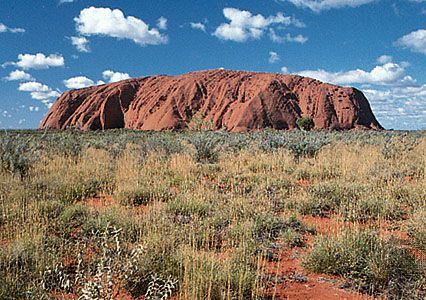
What are the main features of Australia’s unique flora and fauna?
Australia’s flora and fauna are defined by their remarkable singularity, a direct result of the continent’s long-term geologic isolation following its separation from the ancient supercontinent Gondwana.101112
Unique Plant Life
Australia’s vegetation is characterized by a high degree of endemism and adaptation to low soil fertility.
- Sclerophylly: Many native plants exhibit “hard-leaved” characteristics, an adaptation to the continent’s generally low nutrient levels.10
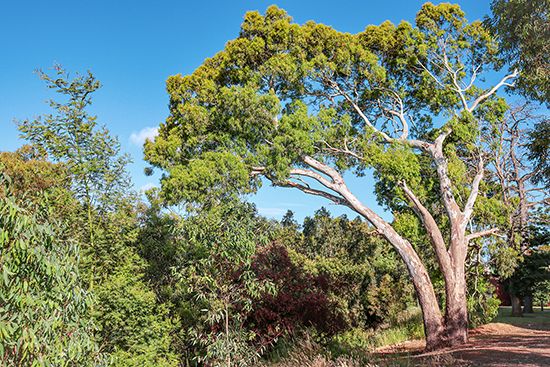
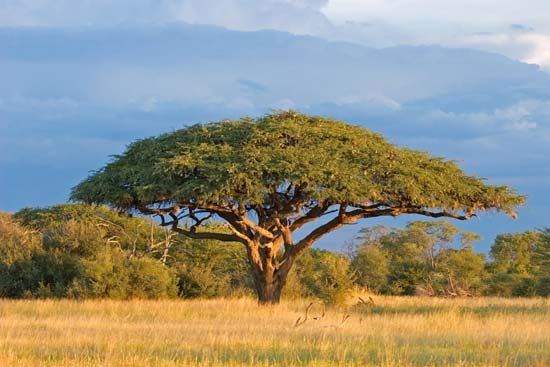
- Dominant Genera: The landscape is famously dominated by Eucalyptus, with over 400 species ranging from forest giants to small mallees, and Acacia, which includes the national flower, the golden wattle (Acacia pycnantha).1011
- Gondwanan Heritage: Ancient lineages, such as the southern beech and various conifers, link Australia’s botanical history to other southern landmasses like South America and New Zealand.10
Distinctive Animal Life
The Australian fauna is marked by evolutionary paths that diverged significantly from the rest of the world.
- Marsupials and Monotremes: Australia is home to the world’s only egg-laying mammals, the platypus and echidna. Additionally, marsupials have radiated to fill diverse ecological niches, including kangaroos, koalas, and various possums.1112
- Adaptation: Species have evolved to survive in extreme environments, from the arid Eremian Zone—where animals like the marsupial mole thrive—to the lush tropical rainforests.12
- Conservation Challenges: The introduction of non-native species (such as foxes, cats, and rabbits) and habitat loss have placed significant pressure on native populations, leading to the extinction or endangerment of many species.1213
What are the major climate zones found in Australia?
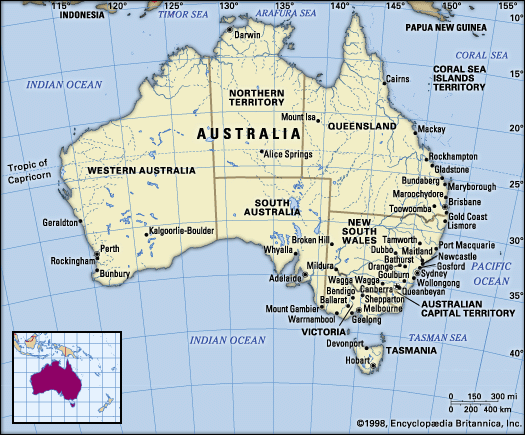
Australia’s climate is diverse, though the continent is famously known as the driest inhabited landmass on Earth. Its vegetation and climate are generally categorized into three primary zones:
- Tropical Zone: This zone arcs across the northern margin of the continent and extends halfway down the eastern seaboard. It is characterized by a mainly dry monsoonal climate, with some regions experiencing significant rainfall, particularly in the northeast where tropical cyclones and trade winds contribute to high precipitation levels.
- Temperate Zone: Arced across the southern margin, this zone includes Tasmania and extends up the eastern seaboard, overlapping slightly with the Tropical Zone. It features a cool-to-warm climate with precipitation occurring mostly during the winter months.
- Eremian Zone: Covering the vast central interior of Australia through to the west-central coast, this zone is defined by an arid climate. Much of this region receives less than 10 inches (250 mm) of rainfall annually, making it the driest part of the continent.
These zones reflect overall climatic conditions, though local variations are heavily influenced by soil patterns, geologic history, and topographic features like the Eastern Uplands.
Sources
- Australian Aboriginal peoples - Traditional sociocultural patterns — Encyclopædia Britannica
- Australian Aboriginal peoples - Social groups and categories — Encyclopædia Britannica
- Australian Aboriginal peoples - Economic organization — Encyclopædia Britannica
- Australian Aboriginal languages - Classification and distribution — Encyclopædia Britannica
- Australia - The human impact — Encyclopædia Britannica
- Australia - Agriculture, forestry, and fishing — Encyclopædia Britannica
- education - Australia — Encyclopædia Britannica
- Australia - Education — Encyclopædia Britannica
- New South Wales - Education — Encyclopædia Britannica
- Australia - Plant life — Encyclopædia Britannica
- Australia - Vegetation — Encyclopædia Britannica
- Australia — Encyclopædia Britannica
- Australia - Animal life — Encyclopædia Britannica
- South Australia - Plant and animal life — Encyclopædia Britannica
- Indian Ocean - Subtropical and temperate zone — Encyclopædia Britannica
- Australia - Climate — Encyclopædia Britannica
Published on · 4 min read