Olympic Mountains
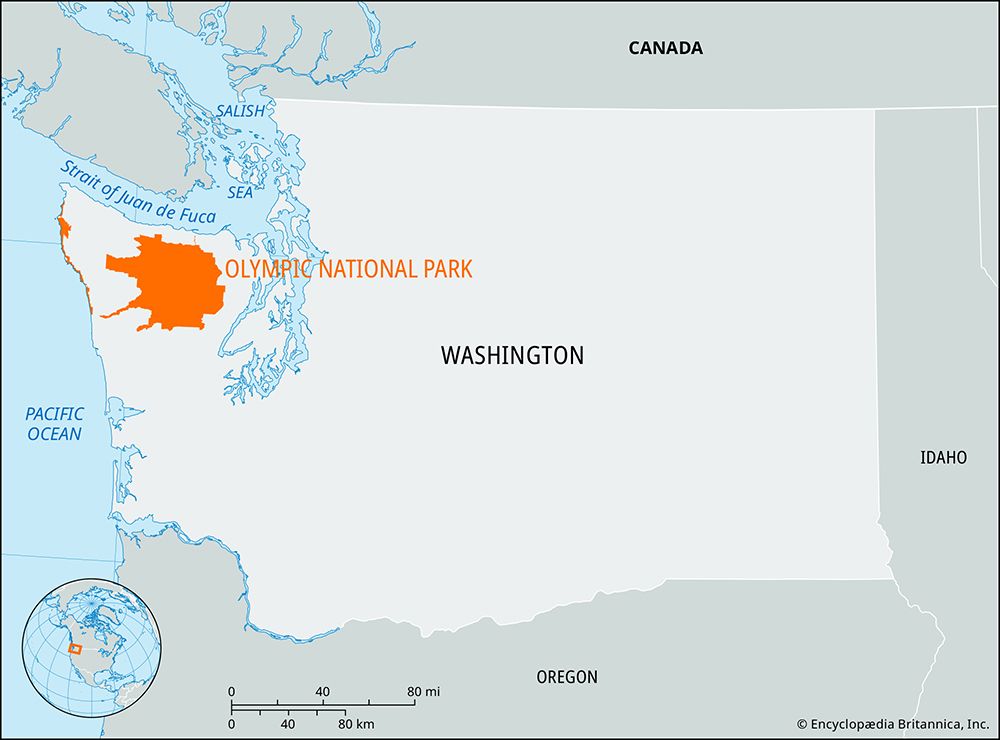
The designation of Olympic National Park in 1938 has been instrumental in the preservation of the Olympic Mountains. By transitioning from a national…
How has the designation of Olympic National Park affected the preservation of the mountain range?
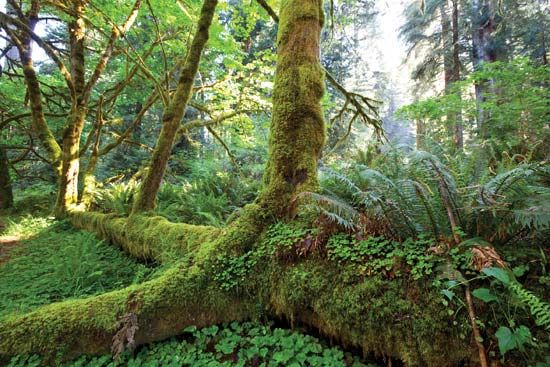
The designation of Olympic National Park in 1938 has been instrumental in the preservation of the Olympic Mountains. By transitioning from a national monument established in 1909 to a national park, the area gained a formal mandate for the conservation of its diverse ecosystems, including its rugged peaks, old-growth temperate rainforests, and unique wildlife.12
This protection was further strengthened in 1981 when the park was named a World Heritage site, and again in 1988, when nearly the entire park was declared a wilderness area. These designations have helped safeguard endemic species—such as the Olympic marmot and Flett’s violet—and have allowed for active management of the environment, including efforts to control invasive species like mountain goats that threatened native vegetation. Unlike the adjacent Olympic National Forest, which permits commercial activities like timber production, the park’s status prioritizes ecological integrity and limited, low-impact human access.12
What recreational activities are popular in the Olympic Mountains?
Recreational activities in the Olympic Mountains are primarily centered around the extensive wilderness of Olympic National Park. Popular activities include:
- Hiking and Backpacking: The park features more than 600 miles (1,000 km) of hiking trails. Access is typically provided via short roads leading to trailheads around the park’s perimeter, which serve as gateways for exploring the mountainous interior.1
- Camping: The park’s diverse landscape, ranging from subalpine meadows to old-growth temperate rainforests, attracts numerous campers throughout the summer months.13
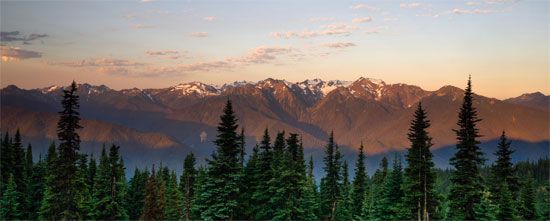
- Scenic Driving: Visitors can enjoy several scenic drives, most notably the route to Hurricane Ridge, which offers spectacular views of the northern Olympic Mountains.1
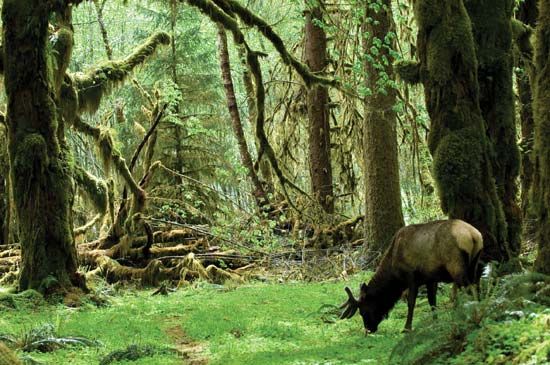
- Wildlife Viewing: The area is a prime location for observing diverse wildlife, including Roosevelt elk, black bears, cougars, and various bird species. In the spring and fall, whale watching is also possible off the coast of the peninsula.1
While skiing and snowboarding are popular winter sports in other parts of Washington, such as the Cascades, the Olympic National Park primarily emphasizes low-impact, non-motorized recreation.13
Where are the Olympic Mountains located, and what makes them unique?
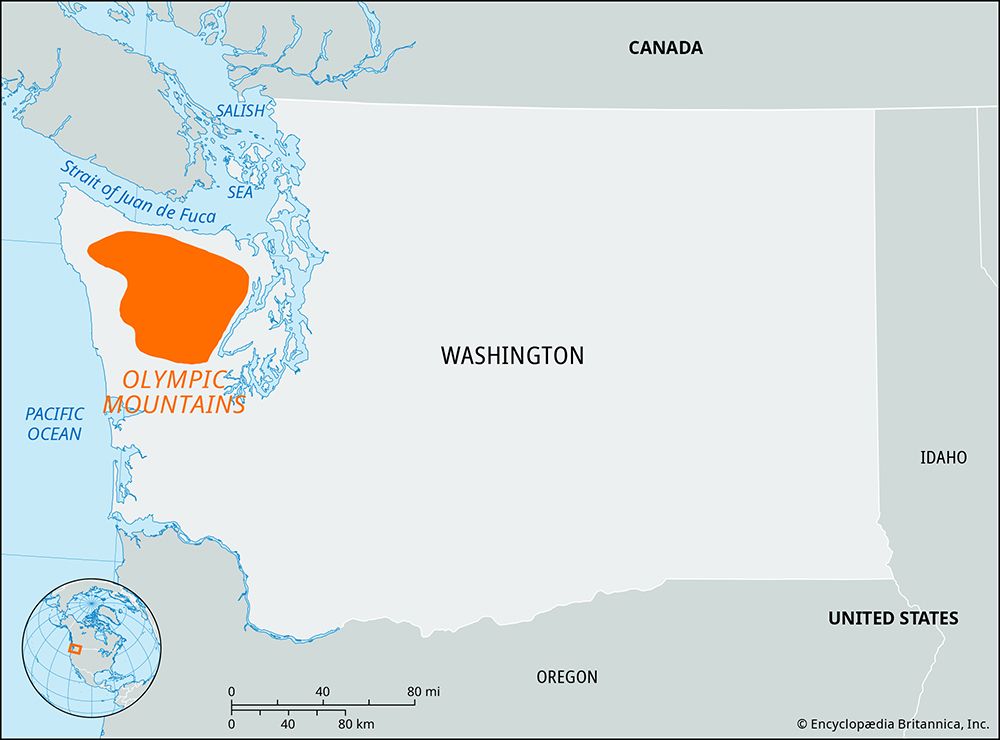
The Olympic Mountains are located on the Olympic Peninsula in northwestern Washington, U.S., situated south of the Juan de Fuca Strait and west of Puget Sound.2
These mountains are unique for several reasons:
- Geologic Origin: Formed approximately 35 million years ago, the range resulted from the Juan de Fuca Plate subducting beneath the North American Plate, which scraped vast quantities of rock onto the continent to create the range’s rugged, serrated peaks.25
- Ecological Diversity: The range features a dramatic precipitation gradient. The western slopes receive heavy rainfall, supporting the largest temperate rainforest in the Western Hemisphere, while the eastern slopes are drier, featuring subalpine meadows and lakes.21
- Endemic Species: Due to their relative isolation, the mountains are home to unique species found nowhere else, such as the Olympic marmot and Flett’s violet.21
- Glacial Features: Despite their modest elevation—peaking at Mount Olympus (7,965 feet)—the range supports numerous active glaciers, which are among the largest in the contiguous United States outside of Alaska.25
Are there any active glaciers in the Olympic Mountains, and how have they changed over time?
Yes, the Olympic Mountains contain active glaciers. The range is home to approximately 60 glaciers, while Olympic National Park as a whole contains about 250 glaciers, most of which are small and localized. These glaciers are primarily found on the highest peaks, including Mount Olympus, which reaches an elevation of 7,965 feet (2,428 meters).21
Regarding how they have changed over time, the provided search results do not contain specific data on the historical trends or the rate of change for these glaciers. While the mountains were historically sculpted by glacial activity to create their current rugged peaks, valleys, and lakes, the available information does not detail recent fluctuations in their size or mass.2
Sources
- Olympic National Park — Encyclopædia Britannica
- Olympic Mountains — Encyclopædia Britannica
- ski mountaineering — Encyclopædia Britannica
- Washington - Sports and recreation — Encyclopædia Britannica
- United States - The Western Cordillera — Encyclopædia Britannica
- Washington - Relief and drainage — Encyclopædia Britannica
Published on · 3 min read