Pacific Yew
The discovery of taxol as a potent anticancer drug significantly impacted the Pacific yew, initially threatening its survival. Because the drug was…
How has the discovery of taxol affected conservation efforts for the Pacific yew?
The discovery of taxol as a potent anticancer drug significantly impacted the Pacific yew, initially threatening its survival. Because the drug was originally sourced exclusively from the bark of 100-year-old trees, widespread harvesting led to the destruction of wild populations and sparked intense public controversy.12
Environmentalists raised significant concerns that this harvesting would not only endanger the species but also damage old-growth forest ecosystems, potentially destroying the habitat of the endangered spotted owl.1
These conservation pressures eventually drove a shift in production methods. Bristol-Myers Squibb adopted a semisynthetic process that utilizes a precursor extracted from the needles of Taxus baccata, a renewable biomass source grown in Europe and the Himalayas. This transition alleviated the need to harvest the bark of the slow-growing Pacific yew, thereby reducing the direct threat to its wild populations.12
Are there any other species of yew trees, and how do they differ from the Pacific yew?
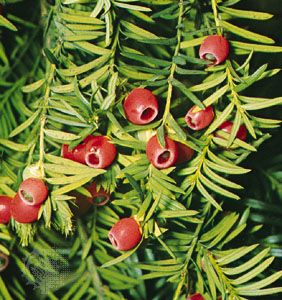
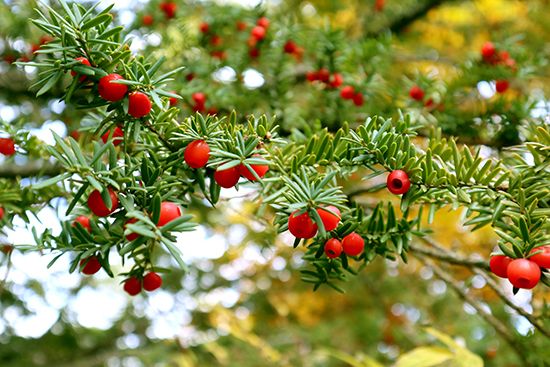
There are approximately eight species of yew trees and shrubs belonging to the genus Taxus within the Taxaceae family. While these species share a general appearance—characterized by dark-green, needlelike foliage and red, fleshy, cup-shaped arils—they differ in their growth habits, geographic distribution, and specific botanical traits.34
Key Differences Among Yew Species
- Growth Habit: While the Pacific yew (Taxus brevifolia) is a slow-growing timber tree typically reaching 5 to 15 meters, other species vary significantly. Some are naturally shrubby, while others can grow up to 30 meters tall. The English yew (Taxus baccata), for instance, is noted for its ability to produce new growth from cut branches, making it a popular choice for hedges, unlike many other conifers.325
- Horticultural Varieties: Many species have been bred into diverse cultivars. The English yew has produced compact, columnar forms like the Irish yew, and it is frequently hybridized with the Japanese yew to create varieties such as Taxus × media.5
- Geographic Distribution: The genus is distributed throughout the Northern Hemisphere, including North America, Europe, Asia Minor, and eastern Asia. The Pacific yew is native to the northwest coast of North America, whereas the English yew is widely distributed across Europe and Asia.425
- Chemical Composition: While the Pacific yew is famous for the concentration of the anticancer compound taxol in its bark, researchers have looked to other species, such as the English yew, to provide renewable sources of precursors for the drug’s production.216
It is important to note that some trees commonly called “yew”—such as the plum-yew and stinking yew—are not members of the genus Taxus and belong to different families.3
What medical breakthrough is associated with the Pacific yew?
The Pacific yew (Taxus brevifolia) is associated with the discovery of taxol, a potent anticancer drug that has proven effective in treating ovarian cancer, as well as certain cancers of the lung, breast, head, and neck.15
The drug was first isolated in 1969 after researchers screened the Pacific yew for potential anticancer properties, noting the plant’s long history of biological activity. Taxol functions by disrupting cell division and interfering with the separation of chromosomes.15
Initially, taxol was sourced exclusively from the bark of 100-year-old trees, a process that required harvesting multiple trees to treat a single patient and sparked significant environmental concerns regarding the Pacific yew and its habitat. These challenges were eventually resolved through the development of a semisynthetic production method using renewable biomass from other yew species, as well as the later development of total synthesis methods.125
Where is the Pacific yew typically found in nature?
The Pacific yew (Taxus brevifolia) is native to North America, where it is typically found growing in regions stretching from Alaska down to California.2
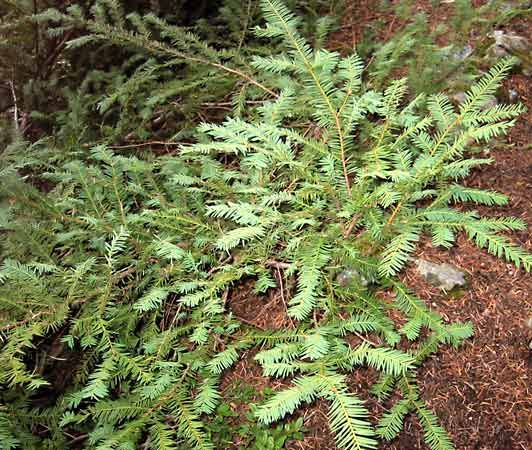
It is important to clarify that while the term “American yew” is sometimes used as a lumber trade name for the Pacific yew, it more accurately refers to a distinct species, Taxus canadensis, which is a prostrate shrub found in northeastern North America. Unlike the Pacific yew, which is an evergreen timber tree, the American yew is a low-growing shrub that serves as ground cover in forested areas.72
Sources
- pharmaceutical industry - Taxol and the Pacific yew — Encyclopædia Britannica
- Pacific yew — Encyclopædia Britannica
- yew — Encyclopædia Britannica
- Taxaceae — Encyclopædia Britannica
- taxol — Encyclopædia Britannica
- English yew — Encyclopædia Britannica
- American yew — Encyclopædia Britannica
Published on · 3 min read