Podocarpaceae
The provided search results do not contain information regarding the conservation status of species within the Podocarpaceae family. While the articles…
Are there any threatened or endangered species within the Podocarpaceae family?
The provided search results do not contain information regarding the conservation status of species within the Podocarpaceae family. While the articles describe the botanical characteristics, classification, and distribution of the family, they do not address whether any specific members are currently threatened or endangered.
How are Podocarpaceae trees used in horticulture and landscaping?
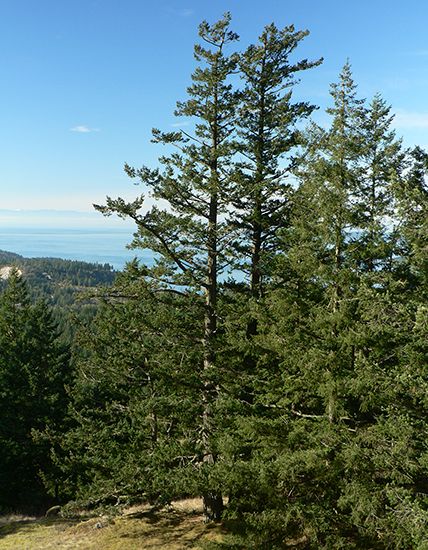
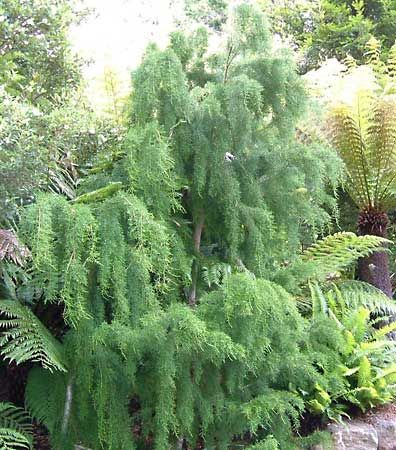
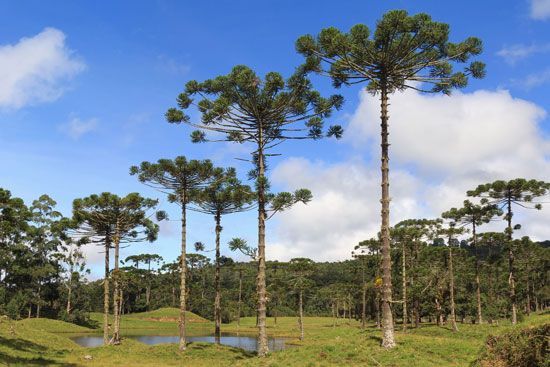
The Podocarpaceae family, which consists of 17 or more genera and over 125 species, is valued in horticulture and landscaping primarily for its status as evergreen trees and shrubs. These plants are widely utilized for their ornamental qualities, which are enhanced by their diverse foliage—ranging from needlelike and awl-shaped leaves to broad, parallel-veined structures.13
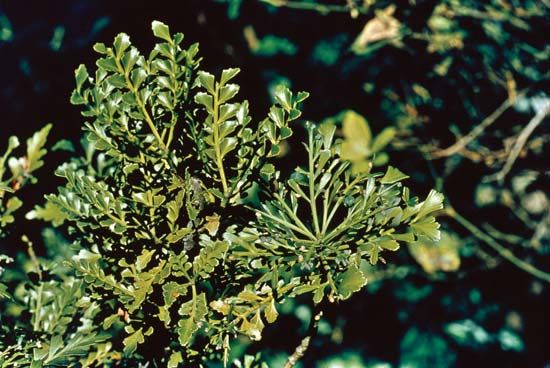
In the genus Phyllocladus, for example, the plants feature unique flattened branchlets known as phylloclades that function as leaves, adding distinct visual interest to garden settings. Additionally, many members of the family produce fleshy, often brightly coloured seed-bearing cones at maturity, which can serve as an attractive feature in managed landscapes. While the family is primarily distributed across the Southern Hemisphere, species such as those in the genus Podocarpus—commonly known as yellowwood—are cultivated in various regions for their aesthetic and structural contributions to the landscape.1
What are the distinguishing characteristics of the Podocarpaceae family?
The Podocarpaceae family is a diverse group of evergreen conifers comprising 17 or more genera and over 125 species, primarily distributed throughout the Southern Hemisphere.13
Key distinguishing characteristics of the family include:
- Reproductive Habits: Most species are dioecious, meaning male (pollen-bearing) and female (seed-bearing) reproductive structures occur on separate plants. Unlike many other conifers, the female reproductive structures (megasporangia) are often highly reduced and do not resemble typical woody cones; instead, they frequently become fleshy and sometimes brightly colored at maturity.145
- Foliage Diversity: The leaves are highly variable, appearing as awl-shaped, needlelike, or broad structures with parallel veins. In the genus Phyllocladus, true leaves are replaced by flattened, leaf-like branchlets known as phylloclades.13
- Pollination: During pollination, the megasporangium often bulges through the micropyle to receive pollen directly, a process distinct from many other conifer groups.4
- Growth Forms: The family consists of both trees and shrubs, which are valued for their ornamental and timber qualities.1
- Unique Adaptations: The genus Parasitaxus is notable for being the only known parasitic gymnosperm, drawing nutrients from the roots of its host, Falcatifolium.1
How do Podocarpaceae trees differ from other conifer families?
The Podocarpaceae family is distinguished from other conifer families primarily by the unique structure of its reproductive organs and its distinct evolutionary adaptations. While most conifers produce woody, compound seed cones, the Podocarpaceae exhibit significant reduction in their megasporangiate (female) structures.12
Key differences include:
- Fleshy Seed Structures: Unlike the woody cones typical of families like Pinaceae, the seed-bearing structures in Podocarpaceae are highly modified. At maturity, they become fleshy, often brightly colored, and feature a specialized scale called an epimatium that surrounds a single seed.12
- Reduced Strobili: The female reproductive structures are so reduced and dominated by their seeds that they often do not resemble traditional cones, a trait they share to some extent with Cephalotaxaceae.2
- Foliage Variability: While many conifers have needlelike leaves, Podocarpaceae display a wide range of forms, including scale leaves and broad, oblong blades. The genus Phyllocladus is particularly unique for replacing true leaves with flattened, photosynthetic branchlets called phylloclades.71
- Parasitism: The genus Parasitaxus is unique among all gymnosperms for its parasitic lifestyle, drawing nutrients directly from the roots of another member of the Podocarpaceae family, Falcatifolium.7
Sources
- Podocarpaceae — Encyclopædia Britannica
- conifer - Annotated classification — Encyclopædia Britannica
- Podocarpaceae — Merriam-Webster
- Podocarpineae — Merriam-Webster
- conifer - Strobili — Encyclopædia Britannica
- plant reproductive system - Gymnosperms — Encyclopædia Britannica
- conifer - Distribution and abundance — Encyclopædia Britannica
Published on · 3 min read