Japanese Yew
The Japanese yew (Taxus cuspidata) is an ornamental evergreen shrub or tree belonging to the yew family. Native to Japan and China, it is widely cultivated…
What is Japanese yew?
The Japanese yew (Taxus cuspidata) is an ornamental evergreen shrub or tree belonging to the yew family1. Native to Japan and China, it is widely cultivated throughout the Northern Hemisphere for its lustrous, dark green foliage.12
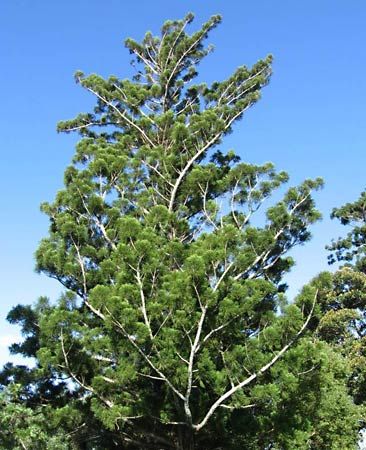
Reaching heights of up to 16 meters (about 52 feet), the Japanese yew is noted for being hardier and faster-growing than the English yew. Its leaves are distinguished by two yellowish bands on their undersides. The plant’s growth habit varies by propagation: cuttings from lateral branches typically result in a prostrate, shrubby form, while those from leader shoots grow into erect, conical shapes.1
The species is frequently hybridized with the English yew to produce Taxus × media, a common group of cultivars. Like other members of the genus yew, its foliage and seeds contain poisonous alkaloids, making them toxic to humans and livestock.134
How does the Japanese yew differ from the English yew?
The Japanese yew (Taxus cuspidata) and the English yew (Taxus baccata) are both members of the yew family, but they exhibit several key differences in hardiness, growth, and physical characteristics:
- Hardiness and Growth Rate: The Japanese yew is generally hardier and faster-growing than the English yew.1
- Size: While both can grow as shrubs or trees, the English yew can reach greater heights, growing between 10 and 30 meters (35 to 100 feet), whereas the Japanese yew typically reaches up to 16 meters (about 52 feet).31
- Foliage: The leaves of the Japanese yew are distinguished by two clear, yellowish bands on their undersides.1
- Longevity: The English yew is renowned for its extreme longevity; some specimens, such as the Fortingall Yew in Scotland, are estimated to be between 2,000 and 5,000 years old.3
- Hybridization: The two species are frequently crossed to create the hybrid Taxus × media, which combines traits from both parents.13
Are all parts of the Japanese yew poisonous?
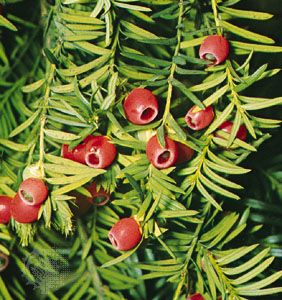
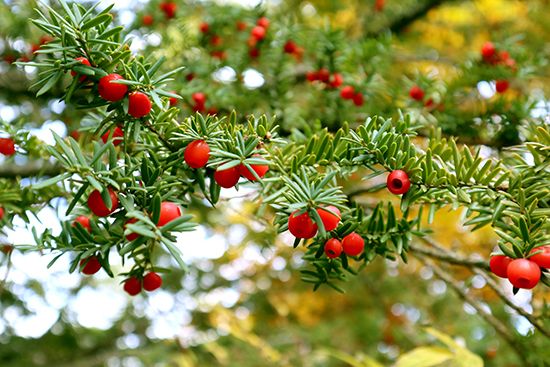
No, not all parts of the Japanese yew (Taxus cuspidata) are poisonous. While the foliage and seeds of the plant contain toxic alkaloids that can be fatal to humans and livestock, the fleshy, red, cup-shaped aril that envelops the seed is the exception and is not considered poisonous.1
This characteristic is consistent across the genus Taxus. For instance, the English yew also contains poisonous alkaloids in all parts of the plant except for the fleshy aril surrounding the seed. Because of this, it is important to exercise extreme caution around these plants, as ingestion of the toxic components can lead to serious health consequences.51
What are some common uses for yew trees in landscaping?
Yew trees are highly valued in landscaping due to their rich, dark-green foliage and their ability to thrive in various horticultural forms. Because they are among the few conifers that produce new growth easily from behind the ends of cut branches, they are frequently used for the following purposes:4
- Hedges: Their tolerance for regular trimming makes them one of the only conifers suitable for formal, structured hedges.3
- Formal Plantings: Specific cultivars, such as the columnar Irish yew, are popular choices for formal garden designs where a compact, vertical aesthetic is desired.3
- Ornamental Specimens: With many horticultural varieties available, yews are widely used as ornamental evergreens, ranging from small shrubs to larger trees.43
While yews are excellent for landscaping, it is important to remember that they are toxic to humans and livestock if ingested, with the exception of the fleshy, red aril surrounding the seed.43
Sources
- Japanese yew — Encyclopædia Britannica
- Japanese yew — Merriam-Webster
- English yew — Encyclopædia Britannica
- yew — Encyclopædia Britannica
- poison - Plant poisons (phytotoxins) — Encyclopædia Britannica
Published on · 3 min read