English Yew
The English yew (Taxus baccata) is a remarkably long-lived conifer known for its historical and cultural significance. Among the most famous specimens is the…
What are some of the most famous or historically significant English yew trees?
The English yew (Taxus baccata) is a remarkably long-lived conifer known for its historical and cultural significance. Among the most famous specimens is the Fortingall Yew, located in a churchyard in the Scottish village of Fortingall.
The Fortingall Yew is widely recognized as the oldest living tree in Great Britain and is considered one of the oldest in Europe, with estimates of its age ranging from 2,000 to 5,000 years. Its longevity is a testament to the species’ resilience, as yews are known for their ability to survive for centuries, often growing in churchyards and other protected sites across the British Isles.12
While many yews are celebrated for their age, the species is also historically significant for its wood, which was traditionally used to craft archery bows, and for its unique biological properties, including the presence of alkaloids that are poisonous to humans and livestock.12
How does the English yew differ from other species of yew trees?
The English yew (Taxus baccata) is distinguished from other members of the yew family primarily by its specific growth characteristics, hardiness, and horticultural utility.
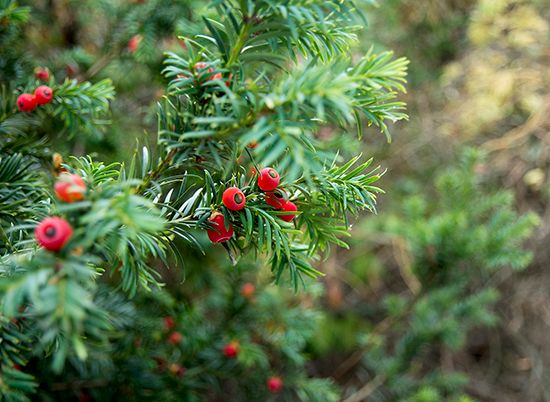
While many yews share a general appearance, the English yew is unique among conifers for its ability to produce new growth easily from behind cut branches, making it one of the few species suitable for regular trimming into hedges. Compared to the Japanese yew, the English yew is generally less hardy and slower-growing. Additionally, the Japanese yew can be identified by two distinct yellowish bands on the underside of its leaves.14
Other related genera within the Taxaceae family exhibit more pronounced differences:
- Torreya: These trees have leaves that are significantly harder and more rigid than those of the Taxus genus.5
- Pseudotaxus: This shrub is distinguished by a unique cup-shaped, white seed covering, unlike the red aril found on Taxus species.5
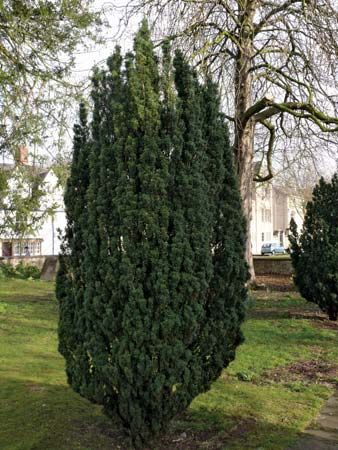
What are the key characteristics and physical features of the English yew tree?
The English yew (Taxus baccata) is a long-lived evergreen member of the yew family (Taxaceae) characterized by the following physical features and traits:
Physical Characteristics
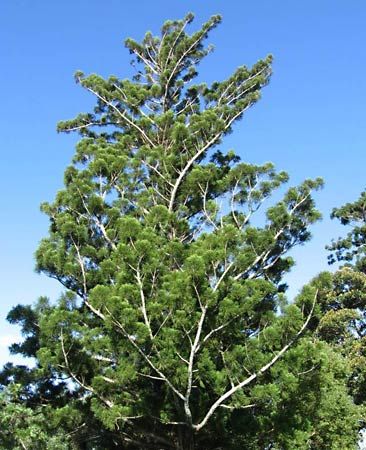
- Size and Form: The tree typically reaches heights of 10 to 30 metres (35 to 100 feet). It features spreading branches with slightly drooping branchlets.1
- Bark: The bark is reddish-brown and flaky; in very old specimens, it can become deeply fissured.1
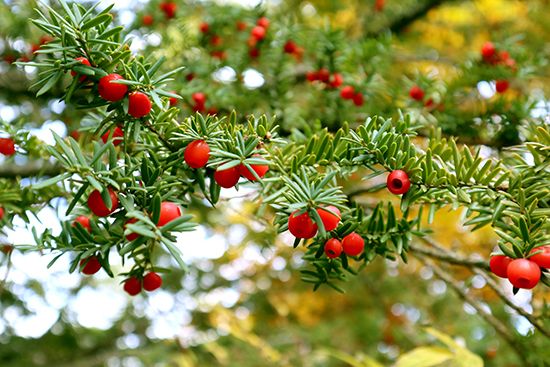
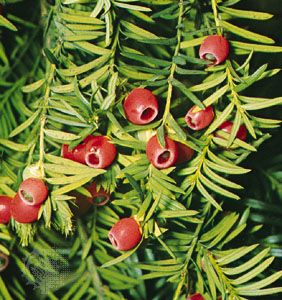
- Foliage: The tree possesses rich, dark-green, linear leaves. These leaves are attached in spirals but appear to grow in two rows due to a twist at their bases.2
- Reproductive Structures: Unlike most conifers, the English yew produces a fleshy, red, cup-shaped aril that envelops the seed.12
Key Biological Traits
- Growth Habit: It is one of the few conifers capable of producing new growth from behind the ends of cut branches, which allows it to be regularly trimmed into hedges.1
- Toxicity: All parts of the tree, excluding the fleshy aril, contain alkaloids that are poisonous to humans and many animals.12
- Longevity: The species is exceptionally long-lived, with some individuals, such as the Fortingall Yew, estimated to be thousands of years old.1
How long can English yew trees live, and what makes them so resilient?
English yew trees (Taxus baccata) are renowned for their exceptional longevity. Some specimens, such as the famous Fortingall Yew in Scotland, are estimated to have lived for 2,000 to 5,000 years, making them among the oldest living trees in Europe.1
Their resilience is attributed to several biological factors:
- Slow Growth: Yew trees are characterized by a slow growth rate, which contributes to their long-term stability and durability.2
- Pest Resistance: The species is only moderately susceptible to attacks by pests, allowing individuals to survive for centuries in various environments.2
- Regenerative Capacity: Unlike most conifers, the English yew can easily produce new growth from behind the ends of cut branches. This unique ability allows the tree to recover from damage or pruning that might otherwise harm or kill other species.1
- Chemical Defense: The tree contains alkaloids throughout its foliage and seeds, which serve as a natural deterrent against many herbivores, protecting the tree from being consumed.12
Sources
- English yew — Encyclopædia Britannica
- yew — Encyclopædia Britannica
- yew — Merriam-Webster
- Taxaceae — Encyclopædia Britannica
- Japanese yew — Encyclopædia Britannica
Published on · 3 min read