Port Arthur
During the colonial period of Australia, Port Arthur served as a significant penal colony located on the Tasman Peninsula in Tasmania. Established in 1830 by…
How was Port Arthur used during the colonial period of Australia?
During the colonial period of Australia, Port Arthur served as a significant penal colony located on the Tasman Peninsula in Tasmania. Established in 1830 by George Arthur, the site was primarily used to punish transported convicts who had committed further offenses after their arrival in the colony.1
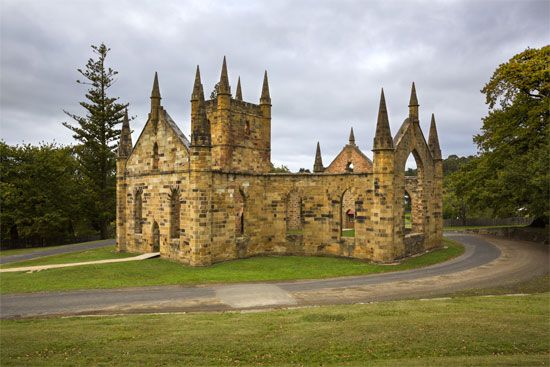
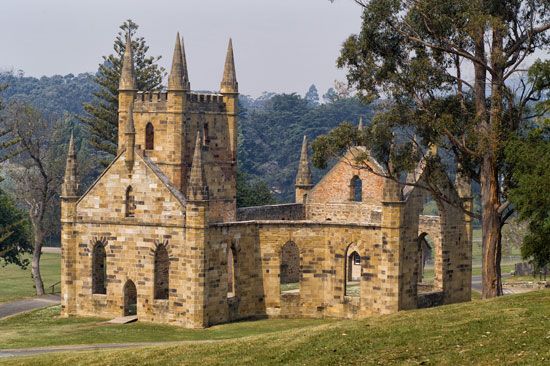
The facility functioned as a harsh environment for thousands of prisoners; between 12,000 and 14,000 convicts were held there throughout its operation. In addition to the main prison, the site included a model reformatory for boys at Point Puer, which operated from 1835 to 1849. Although the transportation of convicts to the region officially ceased in 1853, the complex remained in use for another 24 years. Today, the site is recognized as part of Australia’s National Estate, preserving the history of this era through its ruins, including a convict-built church and the “Isle of the Dead”.1
What are the main attractions and landmarks at the Port Arthur Historic Site today?
The Port Arthur Historic Site in Tasmania features several significant landmarks that reflect its history as a 19th-century penal colony. These sites are preserved as part of Australia’s National Estate and serve as major tourist attractions.1
Key landmarks include:
- Convict-built Church: Constructed between 1836 and 1840, this structure remains a prominent feature of the site’s ruins.1
- Isle of the Dead: A small island located in the inlet that served as the burial ground for the settlement, containing many unmarked graves, primarily of convicts.1
- Point Puer: A rocky headland where a model reformatory for boys operated from 1835 to 1849.1
- Eaglehawk Neck: Located on the nearby Forestier Peninsula, this narrow isthmus was the only land route out of the penal colony. It was famously guarded by chained dogs to prevent prisoners from escaping.3
The site also serves as a place of remembrance following the tragic 1996 event where a gunman killed 35 people at the location.1
What is the geographical location of Port Arthur, and how does it relate to Tasmania’s landscape?
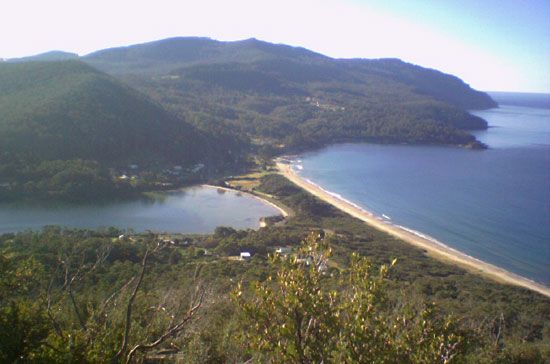
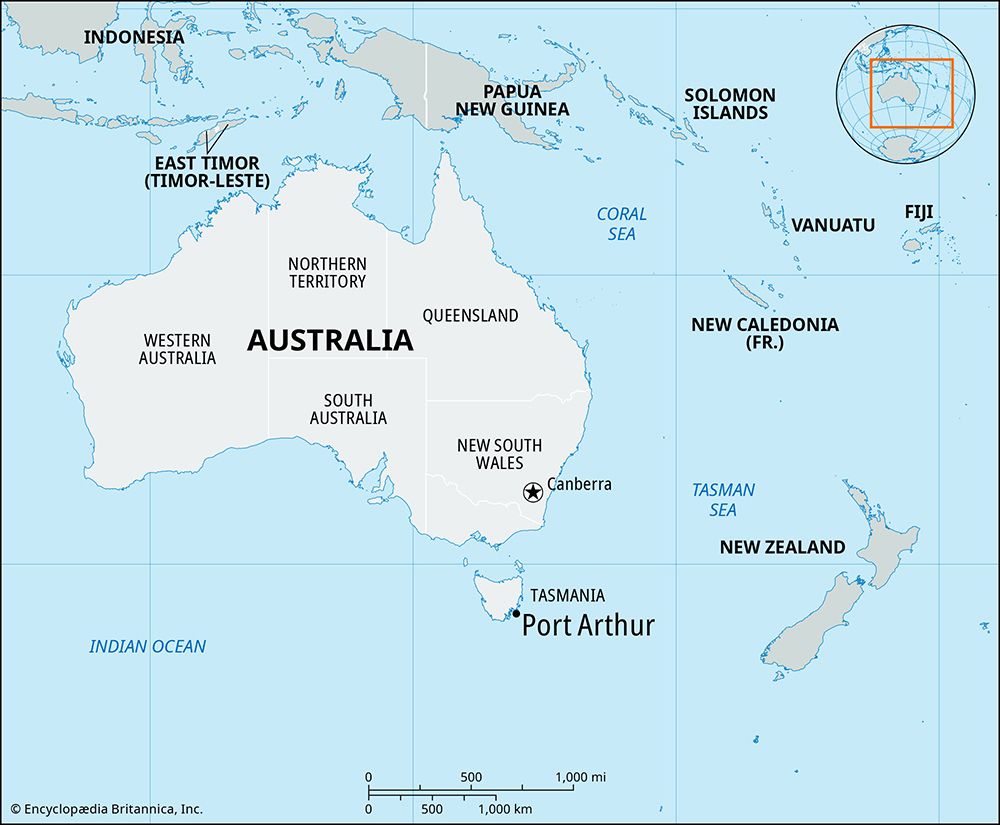
Port Arthur is an inlet of the Tasman Sea located on the south coast of the Tasman Peninsula in southeastern Tasmania, Australia. It is situated approximately 63 miles (101 km) southeast of Hobart.14
The landscape of the Tasman Peninsula, where Port Arthur is situated, is defined by heavily wooded hills rising over 1,500 feet (460 m) and a coastline characterized by significant erosion. This environment features dramatic sea cliffs, vertical rock formations known as stacks, and blowholes. The peninsula is connected to the mainland via the Forestier Peninsula through a narrow isthmus called Eaglehawk Neck. Historically, this narrow land bridge served as a natural barrier that isolated the penal colony at Port Arthur, providing the only land route to the rest of Tasmania. The entire peninsula is now registered as part of Australia’s National Estate, preserving both its unique geological features and its historical significance.431
How does Port Arthur’s history relate to the broader story of convict transportation to Australia?
Port Arthur serves as a critical chapter in the broader history of convict transportation to Australia. Established in 1830 by George Arthur, it functioned specifically as a secondary penal settlement for recidivists—convicts who had committed further offenses after their initial arrival in the colonies.1
While the British government used transportation to manage its convict population for over 50 years, the system evolved to include specialized sites for severe punishment. Port Arthur, along with other stations like Macquarie Harbour and Maria Island, represented the harsher end of this spectrum, designed to deter reoffending through strict discipline and labor. Between 12,000 and 14,000 prisoners passed through Port Arthur, which remained operational for 24 years after the general cessation of transportation to Tasmania in 1853.561
The site also highlights the dual nature of the convict system: while it provided the labor force that built public works and infrastructure across the colonies, it was also a place of profound human suffering and social control. The eventual movement to end transportation, led by reformers in the 1840s and 1850s, reflected a growing moral opposition to the system, mirroring contemporary anti-slavery crusades.56
Sources
- Port Arthur — Encyclopædia Britannica
- Port Arthur — Encyclopædia Britannica
- Forestier Peninsula — Encyclopædia Britannica
- Tasman Peninsula — Encyclopædia Britannica
- New South Wales - Prehistory and early British settlement — Encyclopædia Britannica
- Tasmania - Prehistory and European exploration — Encyclopædia Britannica
- Queensland - The penal settlement — Encyclopædia Britannica
- Colonization of Australia - The penal settlement — Encyclopædia Britannica
- Colonization of Australia - Tasmania — Encyclopædia Britannica
Published on · 3 min read