Reelfoot Lake
The legend of Reelfoot Lake centers on a 19th-century Chickasaw chief known as Reelfoot, who earned his name due to a deformed foot.
What Native American legends are associated with Reelfoot Lake?
The legend of Reelfoot Lake centers on a 19th-century Chickasaw chief known as Reelfoot, who earned his name due to a deformed foot.
According to the folklore, the chief defied the Great Spirit by stealing a bride from a neighboring tribe. This act of defiance was said to have angered the Great Spirit, resulting in the massive earthquakes that occurred along the New Madrid Fault during the winter of 1811–12. The resulting upheaval caused the land to sink, creating the depression that filled with water from the Mississippi River to form the lake as it exists today.1
While this legend provides a cultural narrative for the lake’s origin, geologically, the formation was the direct result of seismic activity along the New Madrid Fault zone.1
What is the geological origin of Reelfoot Lake, and when was it formed?
Reelfoot Lake was formed during the winter of 1811–1812 as a direct result of the New Madrid earthquakes.
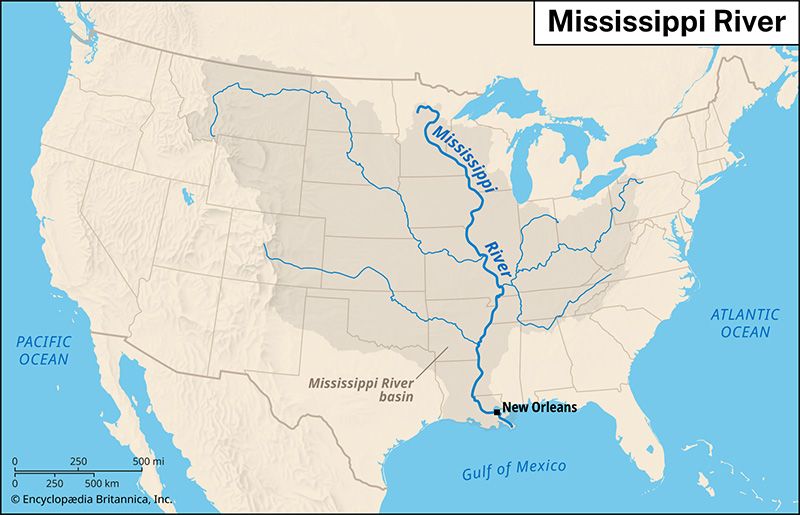
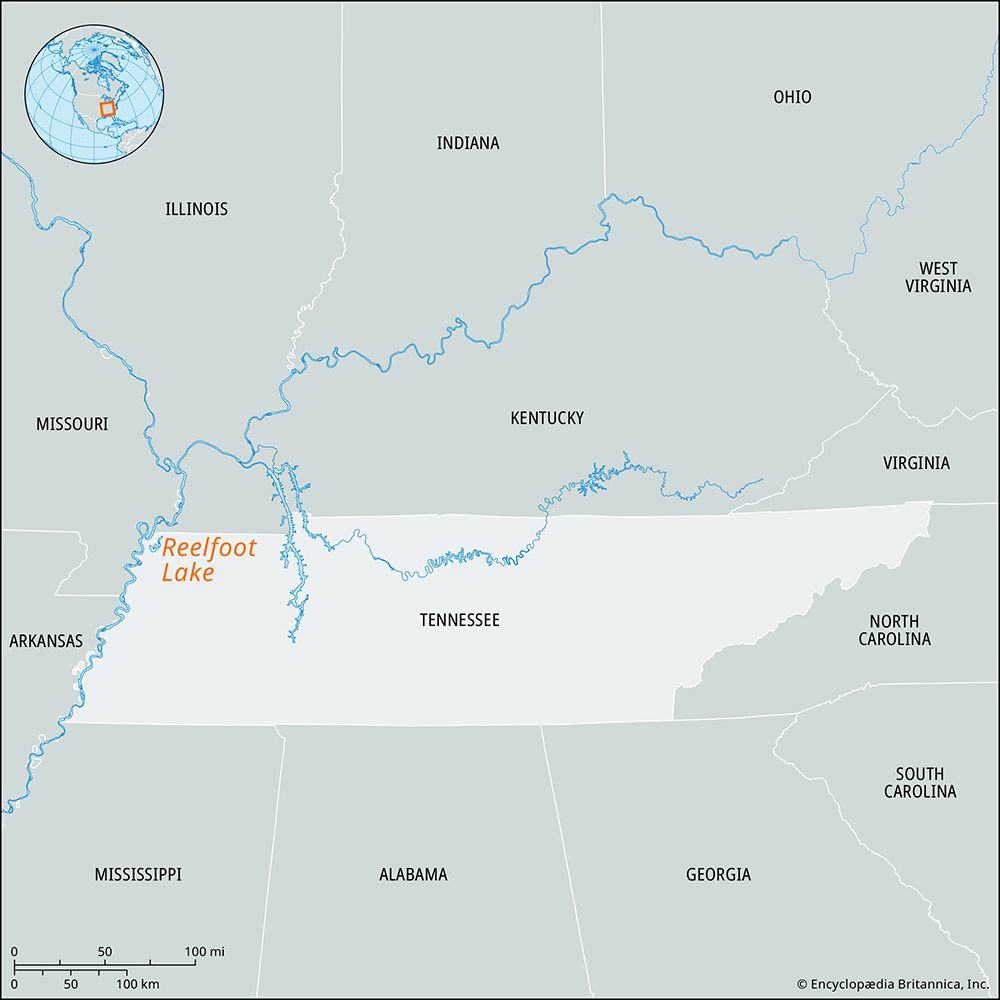
The geological origin of the lake is tied to intense seismic activity along the New Madrid Seismic Zone. During the earthquake sequence, significant crustal deformation occurred, characterized by both subsidence (sinking) and uplift of the land. Specifically, an area of land located approximately 15 miles south of the earthquake’s epicenter experienced an upthrust that pushed water into a basin that had dropped between 5 and 20 feet. This depression was subsequently filled by water from the Mississippi River, creating the lake near present-day Tiptonville, Tennessee.13
What role does Reelfoot Lake play in flood control for the surrounding area?
Reelfoot Lake does not serve as a primary flood control reservoir for the surrounding region. While the lake is connected to the regional drainage system via Reelfoot Bayou, which flows southward to join the Obion River and eventually the Mississippi River, its primary function is as a state park and wildlife refuge rather than a managed flood mitigation structure.
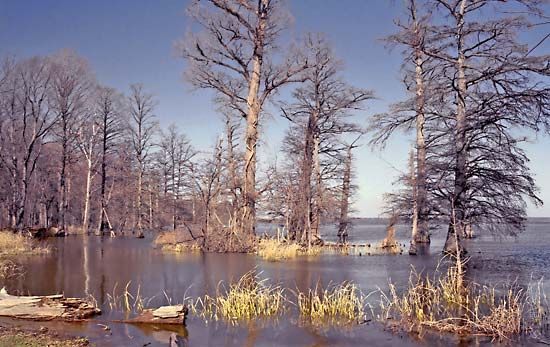
The lake is characterized by its shallow depth, averaging only about 5 feet, and its ecosystem of cypress trees and aquatic habitats. Because it is a natural feature formed by seismic activity rather than an engineered dam or levee system, it does not possess the capacity to regulate large-scale floodwaters for the surrounding area.1
How did the New Madrid earthquakes of 1811-1812 contribute to the creation of Reelfoot Lake?
The New Madrid earthquakes of 1811–1812 were responsible for the creation of Reelfoot Lake. During this series of powerful seismic events, the landscape in northwestern Tennessee underwent dramatic topographical changes, including significant subsidence and upheaval.14
As the earth shifted, a large section of land on the east side of the Mississippi River sank, forming a deep depression. The force of the earthquakes was so intense that it altered the local topography, allowing water from the Mississippi River to rush into this newly created basin, effectively filling it to form the lake. Today, the lake remains a shallow body of water, averaging about 5 feet in depth, and is noted for the cypress trees that stand within its waters, a remnant of the forests that existed before the land subsided.1
Sources
- Reelfoot Lake — Encyclopædia Britannica
- Reelfoot — Merriam-Webster
- New Madrid earthquakes of 1811–12 — Encyclopædia Britannica
- New Madrid Seismic Zone — Encyclopædia Britannica
Published on · 2 min read