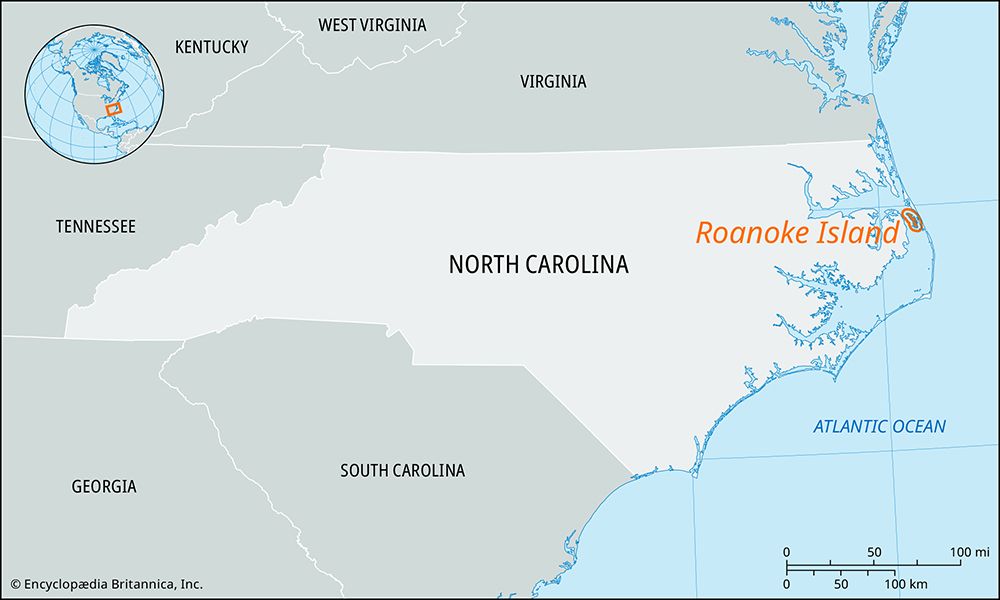
Roanoke Island
The disappearance of the Lost Colony on Roanoke Island remains one of the most enduring mysteries in American history. When Governor John White returned in…
What theories exist about the fate of the Lost Colony?
The disappearance of the Lost Colony on Roanoke Island remains one of the most enduring mysteries in American history. When Governor John White returned in 1590 after a three-year delay, he found the settlement abandoned, with only the word “CROATOAN” and the letters “CRO” carved into a post and a tree.12
Several theories attempt to explain the settlers’ fate:
- Integration with Native Peoples: Many historians believe the colonists moved to nearby Croatoan Island (now Hatteras Island) to join the Hatteras tribe, seeking survival through their resources and knowledge of the land. Archaeological evidence, including English-made artifacts discovered in former Croatoan villages, supports the theory of interaction between the two groups.2
- Hostile Conflict: Another prominent theory suggests the settlers were killed by local Native American groups due to existing tensions.1
- The Dare Stones: Some accounts point to the Dare Stones, which purportedly detail the colonists’ fates. While most are considered hoaxes, some scholars have debated the authenticity of individual stones.2
Who were some of the key figures involved in the Roanoke Island settlement attempts?
Several key figures were instrumental in the attempts to establish an English settlement on Roanoke Island during the late 16th century:
- Sir Walter Raleigh: An English adventurer and favorite of Queen Elizabeth I, Raleigh sponsored the expeditions to North America. Although he envisioned a colony in the region he named Virginia, he never personally visited the site.34
- John White: An artist and explorer who served as the governor of the 1587 colony. He is well known for his detailed sketches of the region’s flora, fauna, and native peoples. White returned to England to secure supplies, but the war with Spain delayed his return to Roanoke until 1590, by which time the settlers had vanished.35
- Sir Richard Grenville: A commander who led the first group of 108 settlers to Roanoke in 1585. He later returned to England to gather supplies, leaving the colony under the command of Ralph Lane.6
- Ralph Lane: Appointed by Grenville to govern the first colony after Grenville returned to England. Faced with food shortages and conflict with local Native Americans, Lane and his group eventually abandoned the settlement in 1586.65
- Virginia Dare: Born on August 18, 1587, she was the first English child born in the Americas and the granddaughter of John White.36
- Manteo and Wanchese: Two Native Americans who were brought to England by explorers Philip Amadas and Arthur Barlowe in 1584, providing early information about the region to the English.6
How has the story of Roanoke Island been portrayed in popular culture and literature?
The mystery of the Lost Colony has captured the public imagination for centuries, becoming a staple of American folklore and historical storytelling.
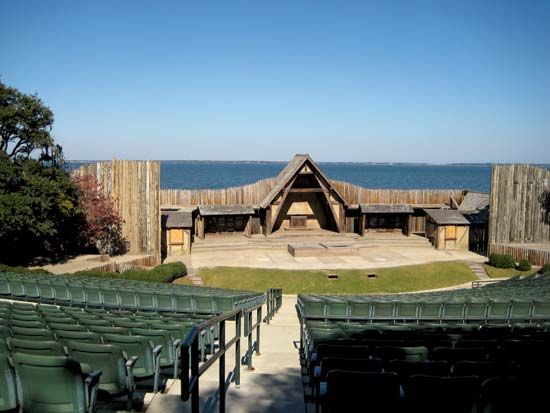
The most prominent cultural representation of the event is the outdoor symphonic drama titled The Lost Colony, written by playwright Paul Green. Since its debut in 1937, the production has been performed near Manteo, North Carolina, on Roanoke Island, serving as a long-running tribute to the settlers who vanished between 1587 and 1590.14
Beyond this theatrical tradition, the site itself functions as a living monument to the event. The Fort Raleigh National Historic Site offers a restoration of the original English settlement, while the nearby Elizabeth II State Historic Site features a replica of the vessel used by the original explorers. These locations, along with the towns of Manteo and Wanchese, continue to draw visitors interested in the enduring enigma of the colony’s disappearance.4
While the provided search results focus on these specific historical and theatrical portrayals, the story remains a frequent subject of broader literary and media speculation.
What happened to the ‘Lost Colony’ of Roanoke, and why is it considered a mystery?
The “Lost Colony” of Roanoke refers to a group of approximately 100 English settlers who vanished from Roanoke Island between 1587 and 1590. The settlement was intended to be a permanent English presence in the New World, but when Governor John White returned from England after a three-year delay caused by the Spanish Armada, he found the colony deserted.12
The event is considered a profound mystery because of the lack of concrete evidence regarding the settlers’ fate. The only clues left behind were the word “CROATOAN” carved into a post and the letters “CRO” etched into a tree.12
Prominent theories suggest the colonists may have been killed by local Native peoples or, more likely, that they integrated with the Hatteras tribe on nearby Croatoan Island to survive. Archaeological findings, such as English artifacts discovered in Croatoan village sites, support the theory of interaction between the groups. Despite these clues and historical speculation—including the controversial Dare Stones—the ultimate fate of the colonists remains unsolved.12
Sources
- Lost Colony — Encyclopædia Britannica
- The Lost Colony of Roanoke — Encyclopædia Britannica
- Virginia Dare — Encyclopædia Britannica
- Roanoke Island — Encyclopædia Britannica
- John White — Encyclopædia Britannica
- Sir Walter Raleigh — Encyclopædia Britannica
Published on · 4 min read