Rocky Mountain National Park
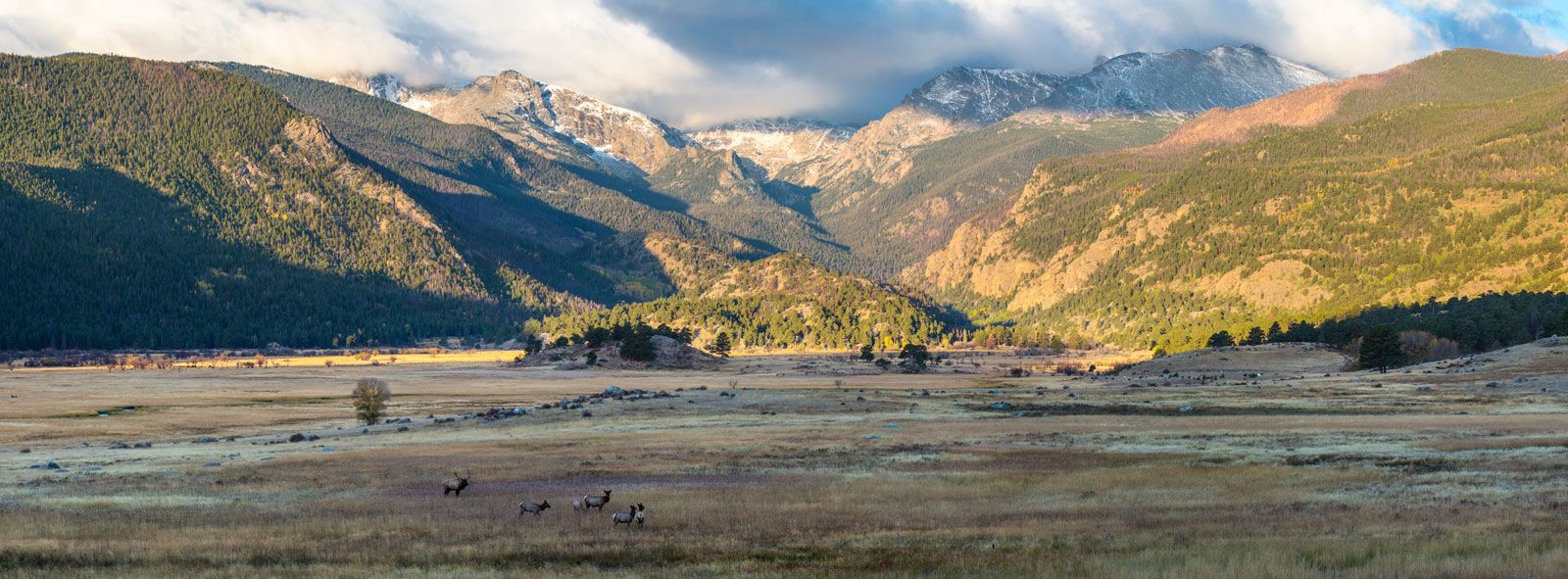
Rocky Mountain National Park, located in north-central Colorado, is defined by its dramatic high-altitude landscape and diverse biological zones.
What are the main geological features and ecosystems found in Rocky Mountain National Park?
Rocky Mountain National Park, located in north-central Colorado, is defined by its dramatic high-altitude landscape and diverse biological zones.1
Geological Features
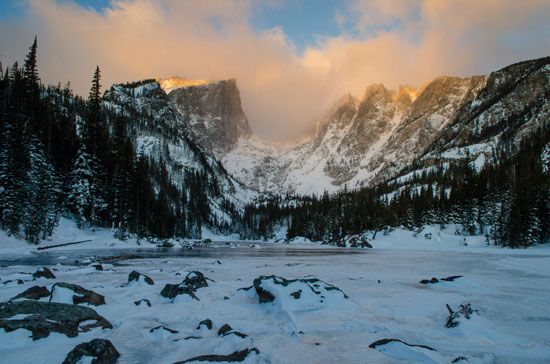
The park is part of the Front Range, featuring dozens of peaks exceeding 12,000 feet, with Longs Peak reaching 14,259 feet. The terrain is shaped by:1
- Glacial Legacy: The landscape features broad, glacier-carved valleys, gorges, and rolling moraines resulting from past Ice Age activity.1
- Hydrology: The Continental Divide runs through the park’s center. It serves as the source of the Colorado River, which flows along the park’s western edge.1
- Alpine Features: The park contains numerous alpine lakes and plunging streams.1
Ecosystems
The park supports three primary ecosystems, which transition based on elevation:1
- Montane: Found at lower elevations, characterized by forests of aspen, pine, and other trees.1
- Subalpine: Dominated by spruce and fir forests.1
- Alpine Tundra: Covering one-third of the park, this high-country zone acts as an island of arctic vegetation.1
Wildlife includes elk, moose, black bears, mountain lions, bobcats, and bighorn sheep.1
What is the geographical location and size of Rocky Mountain National Park?
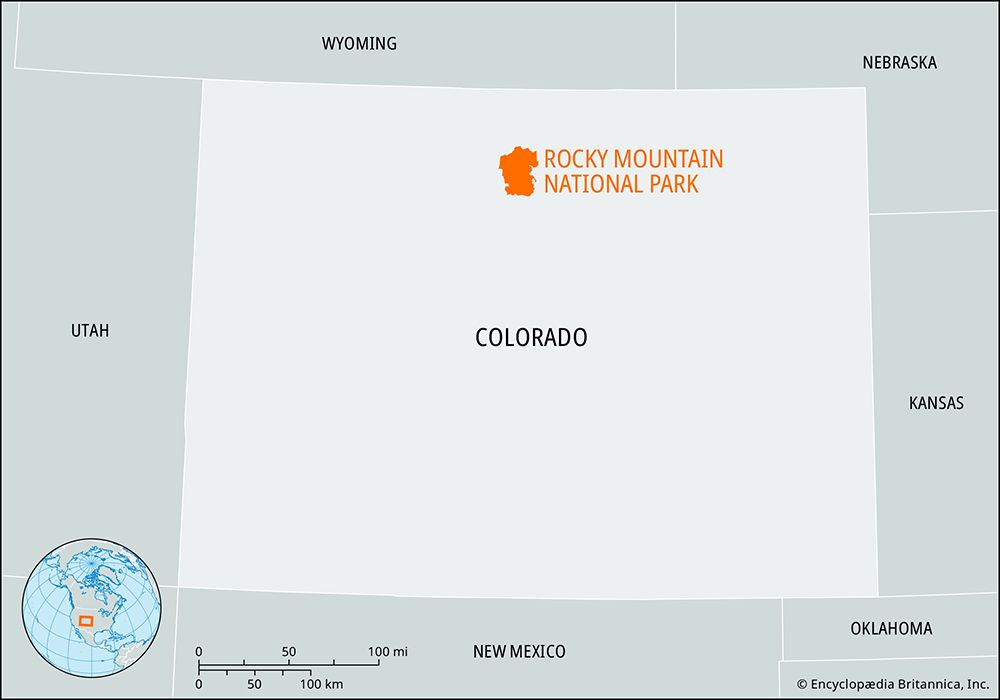
Rocky Mountain National Park is located in a mountainous region of north-central Colorado, United States. It is situated just west of the town of Estes Park and approximately 70 miles (115 km) northwest of Denver.1
The park encompasses an area of 415 square miles (1,075 square km).1
What are some popular activities and attractions for visitors to Rocky Mountain National Park?
Visitors to Rocky Mountain National Park can enjoy a variety of recreational activities and attractions throughout the year:
- Scenic Driving: The Trail Ridge Road is a premier attraction, serving as one of America’s most scenic highways and reaching elevations of over 12,000 feet.1
- Hiking and Trails: With approximately 350 miles of trails, the park is a destination for hikers. The Continental Divide National Scenic Trail also traverses the park.1
- Summer Recreation: Popular warm-weather activities include fishing, rock climbing, and horseback riding.1
- Winter Sports: During the winter months, visitors can engage in snowshoeing and cross-country skiing.1
- Educational Exhibits: Several visitor centers provide opportunities to explore the region’s natural history and cultural heritage through various exhibits.1
What Native American tribes have historical connections to the area now known as Rocky Mountain National Park?
The area now known as Rocky Mountain National Park is situated within a region with a long history of human presence, dating back to between 10,000 and 8,000 BCE.67
The Ute people are historically connected to this area, as their traditional lands encompassed much of western Colorado and eastern Utah. Additionally, the Arapaho people, who were nomadic equestrians during the 19th century, inhabited the plains and mountain regions of what is now Colorado, frequently interacting and competing with other groups in the area, including the Ute and the Shoshone. Other groups, such as the Cheyenne, also ranged into the eastern portions of the Rocky Mountains.6789
These indigenous groups maintained deep connections to the landscape, though European expansion and intertribal conflicts in the 19th century led to significant migrations and the eventual displacement of many tribes onto reservations.698
Sources
- Rocky Mountain National Park — Encyclopædia Britannica
- Rocky Mountains - Physiography — Encyclopædia Britannica
- Exploring 7 of Earth’s Great Mountain Ranges - Rocky Mountains — Encyclopædia Britannica
- glacial landform - Striations — Encyclopædia Britannica
- Colorado - Plant and animal life — Encyclopædia Britannica
- Rocky Mountains - The people of the Rocky Mountains — Encyclopædia Britannica
- Arapaho — Encyclopædia Britannica
- Rocky Mountains: Top Questions — Encyclopædia Britannica
- Ute — Encyclopædia Britannica
Published on · 3 min read