Saguaro National Park
Saguaro National Park is divided into two distinct districts separated by the city of Tucson, Arizona. While both areas protect the iconic saguaro cactus and…
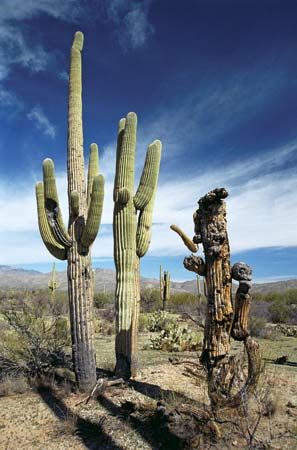
What are the differences between the Tucson Mountain District and the Rincon Mountain District of the park?
Saguaro National Park is divided into two distinct districts separated by the city of Tucson, Arizona. While both areas protect the iconic saguaro cactus and the surrounding Sonoran Desert ecosystem, they differ in their geography and elevation:1
- Tucson Mountain District (Saguaro West): This western section of the park is characterized by the granite peaks of the Tucson Mountains.1
- Rincon Mountain District (Saguaro East): This larger eastern section rises to the higher elevations of the Rincon Mountains. Due to this increased altitude, the landscape includes vegetation not found in the lower desert, such as fir and juniper trees.1
Both districts offer scenic drives through the saguaro forests and serve as habitats for diverse wildlife, including Gila monsters, kangaroo rats, and various desert birds.1
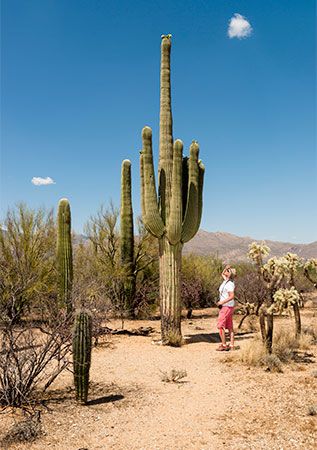
Where is Saguaro National Park located, and what are its main geographical features?
Saguaro National Park is located in southern Arizona, United States, and is divided into two distinct districts—Saguaro West and Saguaro East—which are separated by the city of Tucson.12
The park encompasses a total area of 143 square miles (370 square km) within the Sonoran Desert, a region characterized by its relatively lush desert vegetation and high summer temperatures. Its primary geographical features include:1
- Tucson Mountain District (West): This section features the granite peaks of the Tucson Mountains.1
- Rincon Mountain District (East): This larger section rises to the higher elevations of the Rincon Mountains, where the climate supports vegetation such as fir and juniper trees.1
- Saguaro Forests: Both districts are defined by extensive forests of the saguaro, a giant, long-lived cactus that serves as a vital habitat for various desert wildlife.1
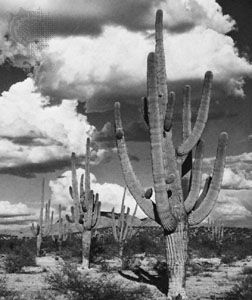
How do the Tohono O’odham people traditionally use saguaro cacti and their fruit?
The saguaro cactus has long been a vital resource for Indigenous peoples of the Americas, including the Tohono O’odham. The plant provides edible crimson fruits that serve as an important food source, and the woody skeletons of the cactus are also utilized for various purposes.34
While the provided search results confirm that these Indigenous groups traditionally rely on the fruit for food and the woody remains for structural or other uses, they do not offer specific details regarding the cultural preparation methods or the full range of traditional applications unique to the Tohono O’odham people.3
What kinds of wildlife can be found in Saguaro National Park?
Saguaro National Park is home to a diverse array of wildlife adapted to the arid conditions of the Sonoran Desert. The park’s iconic saguaro cacti play a central role in this ecosystem, as holes excavated in their trunks by Gila woodpeckers and gilded flickers provide essential nesting sites for various small birds, including owls and wrens.15
Common animal residents found within the park include:
- Mammals: Peccaries (javelinas) and kangaroo rats.1
- Reptiles: Gila monsters, desert tortoises, and various species of rattlesnakes.1
- Birds: In addition to the woodpeckers mentioned above, the park is inhabited by quail and a variety of other avian species.1
The park’s varied elevations, ranging from the desert floor to the higher reaches of the Rincon Mountains, support these species by providing different microclimates and habitats.1
Sources
- Saguaro National Park — Encyclopædia Britannica
- Tucson — Encyclopædia Britannica
- Did you know? — Merriam-Webster
- saguaro — Encyclopædia Britannica
- Sonoran Desert — Encyclopædia Britannica
- Arizona-Sonora Desert Museum — Encyclopædia Britannica
Published on · 3 min read