Scottish Terrier
The Scottish terrier, often called a "Scottie," is a short-legged terrier breed historically associated with the Scottish Highlands. It is a small, sturdy…
What is Scottish terrier?
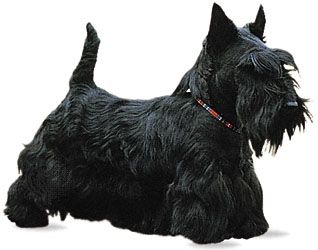
The Scottish terrier, often called a “Scottie,” is a short-legged terrier breed historically associated with the Scottish Highlands. It is a small, sturdy, and bewhiskered dog characterized by a long head, small erect ears, a powerful muzzle, and a broad, deep chest.12
Physically, the breed stands about 10 inches (25 cm) tall and weighs between 18 and 22 pounds (8 to 10 kg). It possesses a distinctive rolling gait and a hard, wiry coat that can appear in various colors, including black, brindle, gray, grizzled blue-gray, sand-colored, or wheaten.1
Like other members of the terrier group, the Scottish terrier is known for being strong, plucky, and tenacious. These dogs were historically developed for their spirited personalities and ability to confront prey. Because they are independent and energetic, they require consistent training and regular exercise.13
What are some other types of Highland terriers?
Scotland is the origin of several distinct terrier breeds, many of which share common ancestral stock and were historically developed to hunt vermin or work in rugged terrain.45
Beyond the Scottish terrier, other notable Highland terriers include:
- West Highland white terrier: A playful, energetic breed known for its pure white, double-layered coat. It was developed in Argyll, Scotland, and is believed to share ancestry with other Scottish terriers.45
- Cairn terrier: Named for its historical role in routing vermin from cairns (piles of rocks), this breed is hardy, alert, and spirited. It is a small, compactly built dog with a harsh coat.516
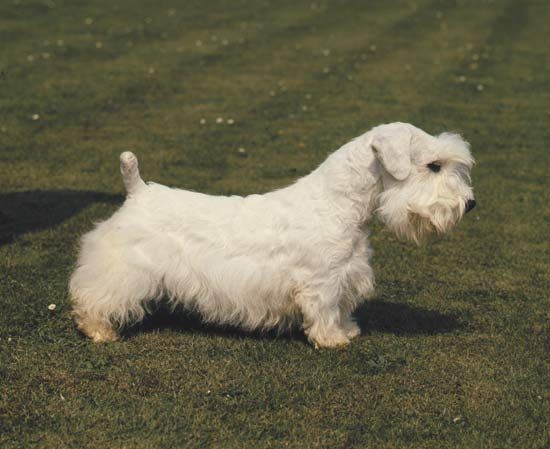
- Skye terrier: Originating from the Isle of Skye, this breed has remained relatively unchanged for centuries. It is characterized by a long, low body and a long, straight coat that veils its eyes.57
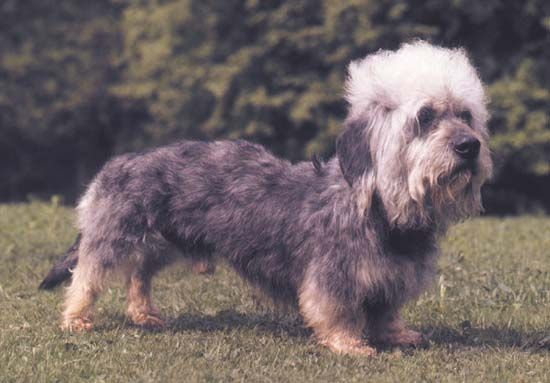
- Dandie Dinmont terrier: Often cited alongside the Scottish, Cairn, and West Highland white terriers as part of the ancestral group of Scottish terriers.45
Why were terriers originally bred to hunt underground?
Terriers were originally bred to hunt underground primarily to serve as effective vermin controllers and to assist in small-game hunting. The name terrier itself is derived from the Old French chien terrier, meaning “earth dog,” which highlights their historical inclination to pursue prey into burrows.26
Their physical traits were specifically developed to support this function:
- Size and Build: Smaller terriers were bred with short legs and compact bodies to fit easily into rodent burrows and tunnels.26
- Tenacity: Unlike other hunting dogs that might only track or chase quarry, terriers were often required to confront and kill prey that frequently fought back, resulting in their characteristic fearless and pugnacious temperament.26
- Physical Features: They typically possess a tough, wiry coat for protection while working in rough environments. Additionally, many breeds developed for underground work have a strong tail, which historically allowed hunters to pull the dog out of a burrow if it became stuck.26
These specialized traits are still celebrated today in Earthdog competitions, which test a dog’s ability to navigate tunnels and locate scented prey.10
What is the difference between plucking and clipping a dog’s coat?
The primary difference between plucking (often called hand-stripping) and clipping lies in how the hair is removed and the resulting effect on the dog’s coat texture.
- Plucking (Hand-Stripping): This process involves removing the dead, outer guard hairs by pulling them out from the root, often using a stripping knife or stripping comb. This technique is typically used for wire-haired breeds to maintain the coat’s harsh, weather-resistant texture and vibrant color. Because the hair is removed at the root, it encourages new, coarse hair to grow in its place.
- Clipping: This method uses mechanical clippers to cut the hair to a specific length. While faster and easier, clipping cuts the hair shaft rather than removing it from the root. Over time, this can cause the coat to lose its natural wire-haired texture, often resulting in a softer, fluffier, and sometimes lighter-colored coat that may lose its protective, water-repellent qualities.
Sources
- Scottish terrier — Encyclopædia Britannica
- terrier — Encyclopædia Britannica
- Scottish terrier — Merriam-Webster
- Skye terrier — Merriam-Webster
- West Highland white terrier — Encyclopædia Britannica
- dog - Terriers — Encyclopædia Britannica
- cairn terrier — Encyclopædia Britannica
- cairn terrier — Merriam-Webster
- Skye terrier — Encyclopædia Britannica
- dog sports - Earthdog and barn hunt — Encyclopædia Britannica
- stripping knife — Merriam-Webster
Published on · 3 min read