Shenandoah National Park
Shenandoah National Park is characterized by a diverse landscape that supports a variety of flora and fauna. The park is heavily forested, featuring a mix of…
What types of wildlife and plant species can be found in Shenandoah National Park?
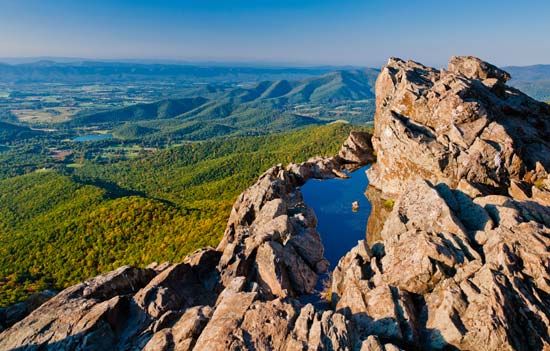
Shenandoah National Park is characterized by a diverse landscape that supports a variety of flora and fauna. The park is heavily forested, featuring a mix of hardwoods, such as hickory and oak, alongside various conifers like pine. From spring through autumn, the area is also known for a succession of brilliant wildflowers.1
The park’s wildlife includes a range of mammals, most notably deer, bears, foxes, and squirrels. Additionally, the park serves as a habitat for numerous bird species, some of which are migratory and depart during the winter months. This ecosystem represents a successful recovery, as the land—which was once overused by mountain farmers—has been allowed to return to its natural state.1
Where is Shenandoah National Park located, and what are its main geographical features?
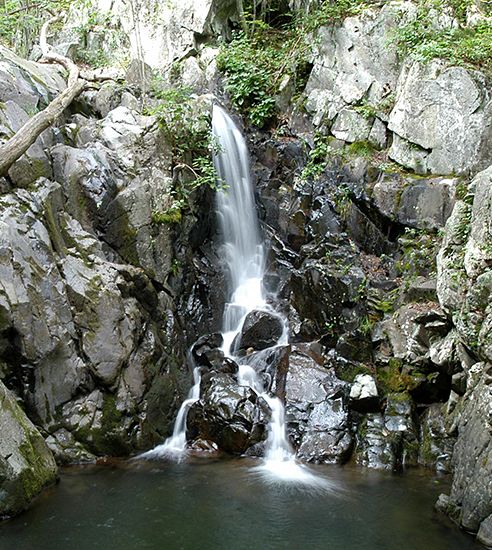
Shenandoah National Park is located in northern Virginia, U.S., situated within the Blue Ridge section of the Appalachian Mountains.1
The park’s geography is defined by its ancient granitic and metamorphosed basaltic mountains, which have been rounded and worn down by millions of years of erosion. Key features include:1
- Topography: The landscape consists of peaks, valleys, and gaps, offering panoramic views.1
- Skyline Drive: This 105-mile (169-km) road runs the length of the park from north to south, winding along the crest of the Blue Ridge.14
- Trails: The Appalachian National Scenic Trail roughly parallels Skyline Drive throughout the park.1
- Vegetation: The area is primarily covered by dense forests of hardwoods, such as oak and hickory, and conifers like pine, interspersed with occasional grassy meadows.1
How does the Skyline Drive contribute to the visitor experience in Shenandoah National Park?
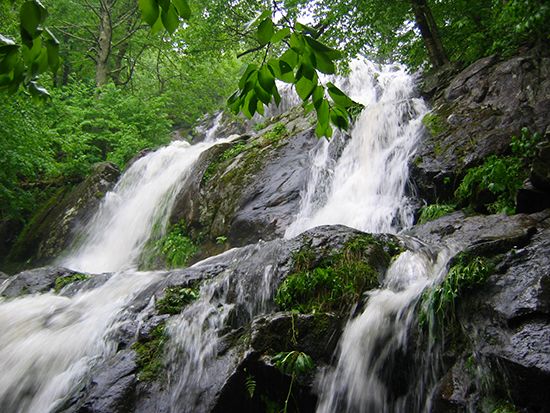
Skyline Drive is central to the visitor experience in Shenandoah National Park, serving as a primary artery that facilitates exploration of the park’s rugged terrain. Spanning 105 miles (169 km), the road runs the entire length of the park from north to south, winding along the crest of the Blue Ridge.14
By following the mountain peaks, valleys, and gaps, the drive provides visitors with convenient access to some of the most spectacular panoramic views in the eastern United States. Furthermore, the road acts as a navigational anchor for hikers, as the Appalachian National Scenic Trail roughly parallels the drive throughout the park, allowing for seamless transitions between scenic driving and backcountry exploration. Together with the Blue Ridge Parkway to the south, it forms a continuous, iconic route along the mountain crests that attracts tourists to the region.14
How did the Civilian Conservation Corps (CCC) contribute to the development of Shenandoah National Park?
The Civilian Conservation Corps (CCC) played a foundational role in developing the infrastructure of the National Park System, including Shenandoah National Park. Established during the Great Depression to provide employment for young men, the CCC was instrumental in transforming raw land into accessible public parkland.5
The contributions of the CCC to parks like Shenandoah included:
- Infrastructure Development: Workers constructed extensive networks of roads and trails, which were essential for making previously inaccessible wilderness areas available to the public.5
- Facility Construction: The corps built numerous structures, including cabins, bridges, and water supply systems, which remain integral to the park’s operational infrastructure.5
- Conservation Efforts: CCC crews engaged in significant environmental work, such as planting trees, fighting forest fires, and implementing soil erosion control measures to protect the natural landscape.5
By providing the labor necessary for these large-scale projects, the CCC helped shape the physical character of the park, ensuring it could serve as a protected space for recreation and conservation.5
Sources
- Shenandoah National Park — Encyclopædia Britannica
- Blue Ridge — Encyclopædia Britannica
- Virginia - Plant and animal life — Encyclopædia Britannica
- Shenandoah Valley — Encyclopædia Britannica
- Civilian Conservation Corps — Encyclopædia Britannica
Published on · 3 min read