The Wildfowl and Wetlands Trust
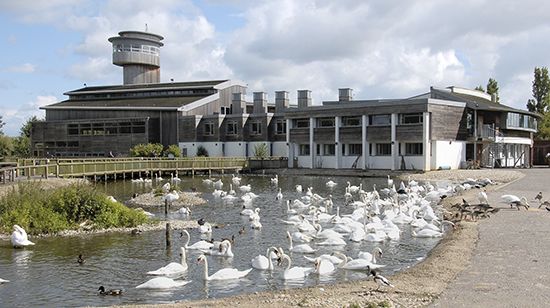
The Wildfowl and Wetlands Trust (WWT) was established in 1946 by Sir Peter Scott along the River Severn in Slimbridge, Gloucestershire, England. Spanning 418…
What is the history and mission of the Wildfowl and Wetlands Trust (WWT)?
The Wildfowl and Wetlands Trust (WWT) was established in 1946 by Sir Peter Scott along the River Severn in Slimbridge, Gloucestershire, England1. Spanning 418 acres, the site serves as the center of the world’s largest collection of waterfowl, housing nearly 3,000 birds across approximately 200 species.12
The trust’s mission centers on wildlife conservation, education, and research. By maintaining a comprehensive collection of waterfowl, the WWT provides a vital resource for studying these species and developing breeding programs to restore populations in the wild. A primary success of this mission is the recovery of the Hawaiian goose; once near extinction in the 1950s with only about 30 individuals remaining, the population grew to over a thousand within two decades due to avicultural efforts at Slimbridge and in Hawaii. The trust continues to operate through public support, utilizing its refuge to protect traditional wintering grounds and promote the preservation of essential wetland habitats.21
What role does the Wildfowl and Wetlands Trust play in international conservation efforts?
The Wildfowl and Wetlands Trust (WWT) plays a significant role in international conservation by providing technical expertise, implementation assistance, and funding support for global environmental initiatives. A key component of this involvement is its collaboration with the Ramsar Convention, an international treaty dedicated to the sustainable use and protection of wetlands worldwide, which serve as critical habitats for migratory waterbirds.13
Beyond its policy-level contributions, the WWT serves as a global hub for research and species recovery. By maintaining the world’s largest collection of waterfowl, the trust utilizes its facilities for educational and scientific purposes, including the development of breeding programs designed to restore populations in the wild. A notable success of this international effort is the recovery of the Hawaiian goose; through collaborative avicultural work, the species was brought back from the brink of extinction in the 1950s, with hundreds of birds eventually released back into their original habitats.24
What are some of the most successful breeding programs conducted at the WWT Slimbridge centre?
The Wildfowl and Wetlands Trust (WWT) at Slimbridge, England, maintains an extensive collection of nearly 3,000 birds representing approximately 200 species, with a highly successful record of captive breeding. More than 100 of these species have successfully bred at the centre, providing a vital resource for both education and scientific research.12
The most notable success story at the Slimbridge centre is the recovery of the Hawaiian goose, also known as the nene. In the 1950s, the species was on the brink of extinction, with only about 30 individuals remaining in the wild. Through dedicated avicultural efforts led by Sir Peter Scott and his team at Slimbridge, in collaboration with efforts in Hawaii, the population rebounded significantly. Within 20 years, the number of Hawaiian geese grew to over a thousand, with several hundred birds successfully released back into their original habitats to sustain the population.126
Who was Sir Peter Scott and what was his contribution to conservation?
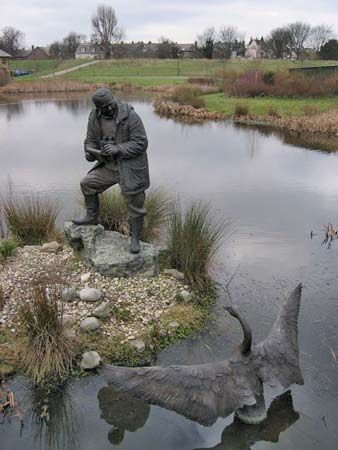
Sir Peter Markham Scott (1909–1989) was a distinguished British conservationist, artist, and athlete. The son of Antarctic explorer Robert Falcon Scott, he gained early recognition as a wildlife painter and an Olympic yachtsman before dedicating his life to environmental protection.6
His contributions to conservation were foundational and global in scope:
- Founding Institutions: In 1946, he established the Slimbridge Refuge, which became the Wildfowl and Wetlands Trust. He was also instrumental in founding the World Wildlife Fund (now the World Wide Fund for Nature) in 1961.6
- Species Recovery: At Slimbridge, he pioneered captive breeding programs, most notably saving the nene, or Hawaiian goose, from extinction during the 1950s.6
- Global Advocacy: As a member of the International Union for Conservation of Nature, he created the Red Data books, which serve as the official lists of endangered species.6
Through his writing, television appearances, and leadership, Scott became a prominent voice for wildlife preservation. He was knighted in 1973 for his lifelong commitment to the natural world.6
Sources
- The Wildfowl and Wetlands Trust — Encyclopædia Britannica
- Anseriform - Importance to humans — Encyclopædia Britannica
- Ramsar Convention: Top Questions — Encyclopædia Britannica
- Wetland - Wetland management — Encyclopædia Britannica
- BirdLife International — Encyclopædia Britannica
- Sir Peter Markham Scott — Encyclopædia Britannica
Published on · 3 min read