Tugela Falls
Tugela Falls is a series of spectacular cataracts located in the Drakensberg mountains of KwaZulu-Natal province, South Africa. Situated within the Royal…
What is Tugela Falls?
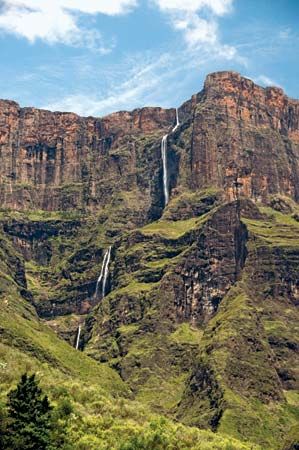
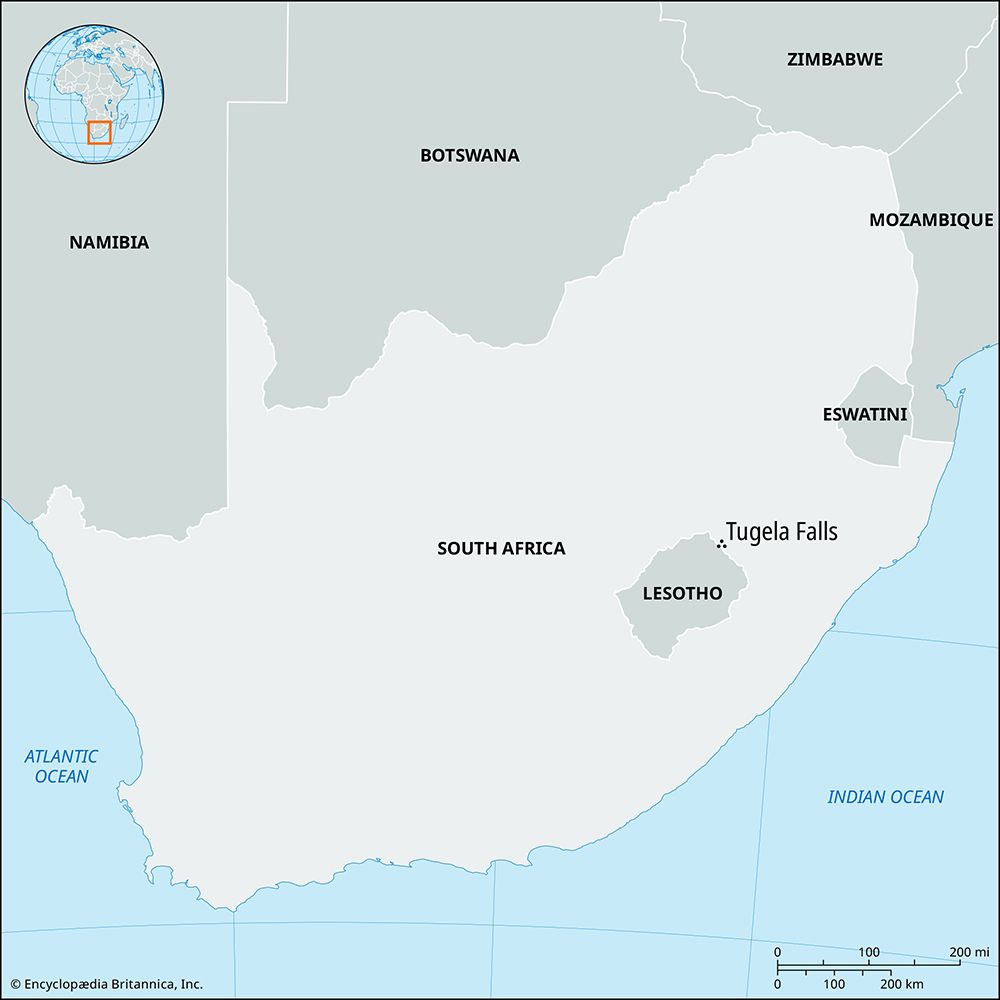
Tugela Falls is a series of spectacular cataracts located in the Drakensberg mountains of KwaZulu-Natal province, South Africa. Situated within the Royal Natal National Park near the source of the Tugela River, the falls are recognized as one of the highest in the world. They feature an impressive total drop of 3,110 feet (947 metres), which includes an uninterrupted leap of 1,350 feet (411 metres).1
What are the Drakensberg mountains?
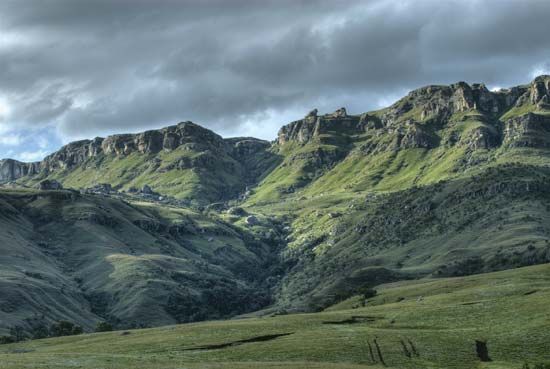
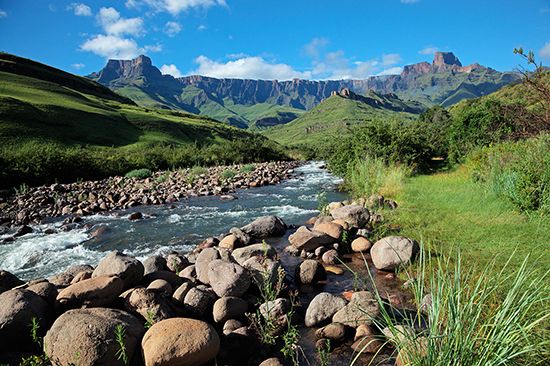
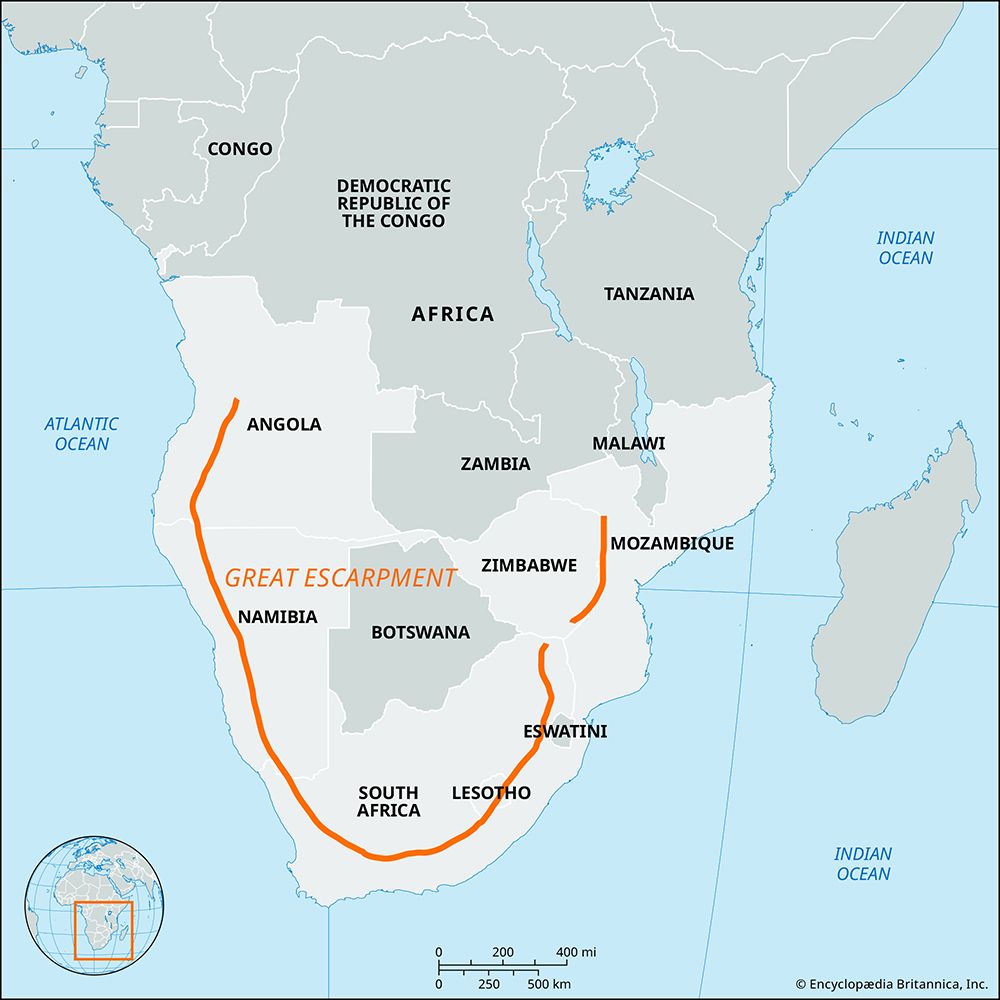
The Drakensberg is the primary mountain range of Southern Africa, extending approximately 700 miles (1,125 km) parallel to the southeastern coast of South Africa. Part of the Great Escarpment, the range separates the high interior plateaus from the lower coastal lands.2
Geography and Features
The range reaches elevations exceeding 11,400 feet (3,475 metres). Its highest point is Thabana Ntlenyana, which stands at 11,424 feet (3,482 metres) and is the tallest peak in Africa south of Kilimanjaro. The eastern face, known locally as Quathlamba (meaning “barrier of pointed spears”), is characterized by steep, rugged scarps and basalt pinnacles.23
The Drakensberg serves as South Africa’s main watershed and is the source of the Orange River. The region is rich in natural beauty, featuring deep gorges, waterfalls, and ancient cave art. In 2000, the uKhahlamba/Drakensberg Park was designated a UNESCO World Heritage site.2
How do waterfalls form in nature?
Waterfalls form when a river’s flow is abruptly interrupted, causing water to drop vertically. While rivers naturally work to smooth their gradients over time through erosion and deposition, several geological and structural conditions create these temporary features:
- Differential Erosion: When a river flows from a resistant rock bed to a softer one, it erodes the softer rock more quickly, steepening the gradient at the junction. Hard rock “bars” in a riverbed can also create cataracts as softer surrounding material is worn away.5
- Land Structure: Uplifted plateaus or steep scarp slopes often force rivers to drop over the edge of a resistant platform.5
- Tectonic Activity: Movement along a fault can create cliffs or scarps that disrupt drainage systems, leading to the development of waterfalls.56
- Glaciation: Glaciers can over-deepen main valleys, leaving tributary valleys “hanging” high above the valley floor. When glaciers retreat, streams from these hanging valleys must fall to join the main drainage.56
- Karst Topography: In areas where carbonate rocks dissolve, water may flow through cave systems and create waterfalls where there are discontinuities in cavern levels.6
What is the difference between a cataract and a waterfall?
The terms waterfall and cataract are often used interchangeably to describe areas where a river drops abruptly and nearly vertically. However, there is a subtle distinction in their usage based on the scale and volume of the water involved.7
- Waterfall: This is the general term for any location where flowing river water drops over a precipice, representing a major interruption in the river’s natural flow.7
- Cataract: This term is specifically applied to waterfalls that involve large volumes of water rushing over a precipice.87
While both terms describe the same geological phenomenon, “cataract” emphasizes the magnitude and power of the flow. In contrast, smaller falls with less steepness are often referred to as cascades, and turbulent, shallow sections of a river are known as rapids. Ultimately, both waterfalls and cataracts are temporary features that rivers naturally work to erode and smooth out over time.7
Sources
- Tugela Falls — Encyclopædia Britannica
- Drakensberg — Encyclopædia Britannica
- Thabana Ntlenyana — Encyclopædia Britannica
- Drakensberg — Merriam-Webster
- waterfall — Encyclopædia Britannica
- river - Falls attributable to discordance of river profile — Encyclopædia Britannica
- waterfall — Merriam-Webster
- cataract — Encyclopædia Britannica
- cataracts — Merriam-Webster
- cataract — Merriam-Webster
Published on · 3 min read