Veld
The veld is a term used to describe various types of open country in Southern Africa that are utilized for pasturage and farmland. While the term is often…
What is the veld and where is it primarily located in Africa?
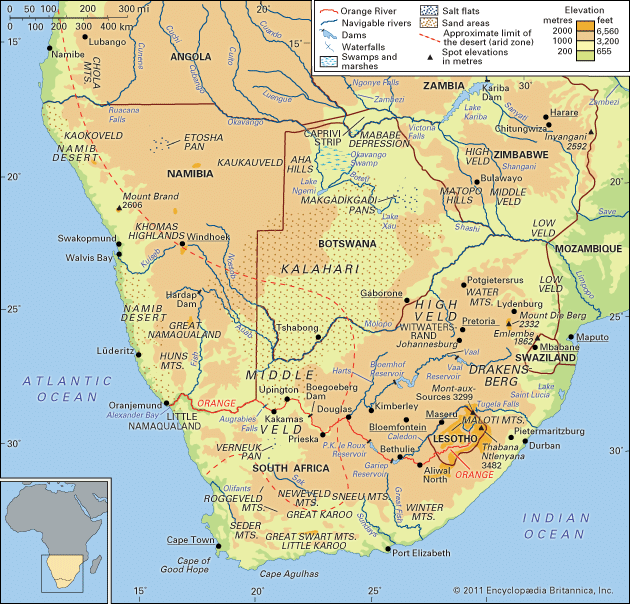
The veld is a term used to describe various types of open country in Southern Africa that are utilized for pasturage and farmland. While the term is often applied generally by local inhabitants, it is categorized into three primary regions based on elevation:1
- Highveld: Comprising the high-plateau country, this region generally lies between 4,000 and 6,000 feet above sea level. It is characterized by flat plains, kopjes, and, in some areas, pans.2
- Middleveld: Located at altitudes between 2,000 and 4,000 feet, this region is found in parts of South Africa, Namibia, and Zimbabwe.2
- Lowveld: Situated at elevations between 500 and 2,000 feet, these areas are found in parts of South Africa, Eswatini, and southeastern Zimbabwe.2
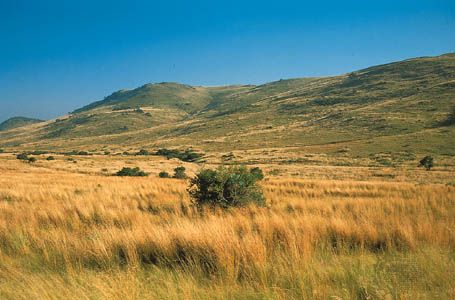
The vegetation varies significantly across these regions, ranging from the grass-dominated landscapes of the Highveld to the parklike cover and thornveld found in lower or drier areas.3
How does the climate of the veld influence its vegetation and wildlife?
The climate of the veld, characterized by mild winters, hot summers, and high-energy summer thunderstorms, is a primary driver of its diverse vegetation and wildlife distribution.3
Influence on Vegetation
Rainfall patterns and soil moisture dictate the types of plant life found across the region. In the Highveld, moderate rainfall supports vast grasslands dominated by red grass. These are classified as “sweetveld” or “sourveld” based on soil fertility and moisture; sweetvelds remain palatable to livestock, while sourvelds become less nutritious as they mature.41
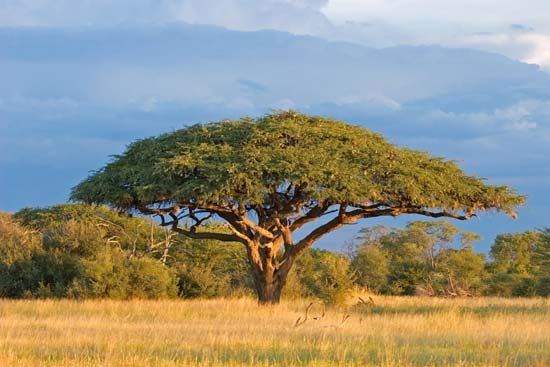
As aridity increases toward the west and north, the grass cover becomes sparser, giving way to drought-resistant species, thornveld, and desert scrub. In the warmer, lower-elevation Lowveld, the climate supports parklike savanna featuring trees such as acacia, marula, and, in drier river valleys, succulents and baobabs.4
Influence on Wildlife
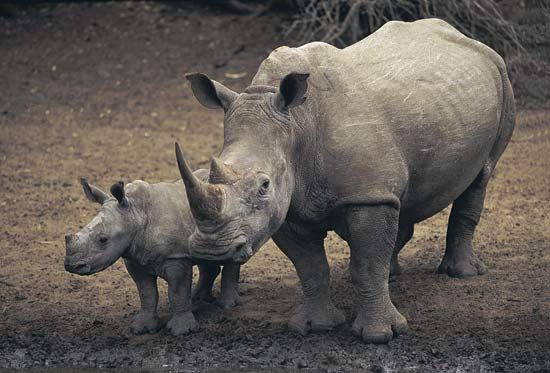
The climate and resulting vegetation provide varied habitats for a rich array of fauna. While large mammals—including lions, elephants, and various antelope—were once widespread, habitat changes and human expansion have largely restricted them to protected reserves. The region’s diverse habitats support over 800 bird species, including both resident populations and migrants that travel from as far as Europe and Asia to take advantage of the seasonal conditions. Additionally, the presence of rivers in the Lowveld provides essential environments for species like crocodiles.51
What economic activities are common in the veld regions of Africa?
The veld regions of Southern Africa serve as vital hubs for diverse economic activities, ranging from traditional subsistence practices to large-scale commercial and industrial operations.
Agriculture and Livestock
Agriculture is a cornerstone of the economy in these regions. The Highveld, in particular, is highly suitable for large-scale cereal cultivation, producing the majority of the corn (maize) crops for South Africa and Zimbabwe. Other significant crops include wheat, sugarcane, sorghum, peanuts, citrus, and tobacco. Livestock farming is also widespread, with cattle, sheep, goats, and pigs raised for meat, wool, and dairy products. While some rural households engage in subsistence farming, commercial production is supported by government services and infrastructure.781
Mining and Energy
The veld is exceptionally rich in mineral resources, which form the core of the regional economy. Key activities include:
- Gold and Diamonds: Historically centered around Johannesburg and Kimberley, these remain significant, though production levels have fluctuated.9
- Coal and Platinum: Large coal deposits beneath the Mpumalanga and Free State Highveld support both export markets and domestic electricity generation. South Africa is also a leading global producer of platinum and chromium.9
- Other Minerals: The region yields iron ore, manganese, uranium, and various other industrial metals.9
Industry and Services
The Highveld hosts the major population centers of South Africa, Botswana, and Zimbabwe, which serve as hubs for commercial and industrial activity. Manufacturing sectors focus on processing agricultural and livestock products, as well as textiles, beverages, and light industry. Additionally, tourism is an increasingly important economic driver, with visitors drawn to national parks, historic sites, and ecotourism opportunities that highlight the region’s unique natural and cultural heritage.71011
What are some traditional African cultures that have lived on the veld for generations?
Several traditional cultures have inhabited the veld regions of Southern Africa for generations, adapting their lifestyles to the environment’s unique ecological conditions.
The Khoisan
The Khoisan are among the oldest inhabitants of the region, with archaeological evidence of their presence dating back thousands of years. Historically, they were divided into two primary groups:1314
- San: Traditionally hunter-gatherers who lived in small, nomadic groups. They are well-known for their extensive rock art found on the kopjes of the Highveld across South Africa, Zimbabwe, Lesotho, and Botswana.137
- Khoekhoe: Historically pastoralists who herded cattle and small stock. While they once grazed their livestock on the central grasslands, colonial expansion and conflict significantly altered their traditional way of life, leading many to settle in reserves or integrate into other communities.1516
Bantu-Speaking Peoples
Bantu-speaking groups migrated into the veld over many centuries, bringing with them iron-working technology and agricultural practices that supported larger, more permanent settlements.151317
- Sotho: A major cultural and linguistic group that has long occupied the high grasslands. The Sotho (including the Pedi, Tswana, and southern Sotho) traditionally relied on a mix of cultivation—such as corn, millet, and beans—and animal husbandry. They are known for their distinct settlement patterns, which often featured circular huts and, in some cases, large towns.18
- Other Groups: Throughout history, various other groups, including the Zulu, Swazi, and Ndebele, competed and interacted within the veld regions, often forming complex political states and engaging in trade and agriculture.19
These cultures have historically maintained permeable boundaries, often exchanging techniques and resources, which contributed to the rich, hybrid traditions seen in the region today.20
Sources
- veld — Encyclopædia Britannica
- veld - Physiography — Encyclopædia Britannica
- veld - Plant life — Encyclopædia Britannica
- veld - Climate — Encyclopædia Britannica
- South Africa - Flora and fauna — Encyclopædia Britannica
- Eswatini - Plant and animal life — Encyclopædia Britannica
- veld - The people and economy — Encyclopædia Britannica
- South Africa - Services — Encyclopædia Britannica
- South Africa - Resources and power — Encyclopædia Britannica
- South Africa - Agriculture, forestry, and fishing — Encyclopædia Britannica
- Eswatini - Industry — Encyclopædia Britannica
- Botswana - Economy — Encyclopædia Britannica
- Southern Africa - The Khoisan — Encyclopædia Britannica
- Sotho — Encyclopædia Britannica
- South Africa - Disputes in the north and east — Encyclopædia Britannica
- Southern Africa - The spread of Bantu languages — Encyclopædia Britannica
- Khoekhoe — Encyclopædia Britannica
- Southern Africa - Food production — Encyclopædia Britannica
- veld - Study and exploration — Encyclopædia Britannica
- Botswana - Khoisan-speaking hunters and herders — Encyclopædia Britannica
Published on · 4 min read