Virgin Islands Coral Reef National Monument
The Virgin Islands Coral Reef National Monument is a protected marine area located off the coast of St. John in the United States Virgin Islands. Established…
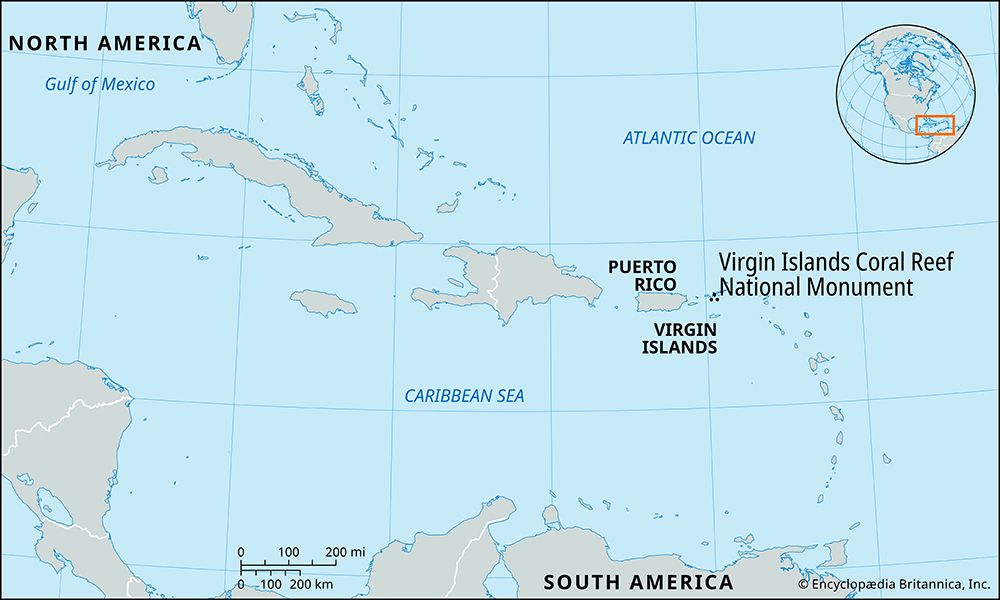
What is Virgin Islands Coral Reef National Monument?
The Virgin Islands Coral Reef National Monument is a protected marine area located off the coast of St. John in the United States Virgin Islands. Established in 2001, it was created to provide additional protection for the marine resources surrounding the Virgin Islands National Park.12
The monument covers approximately 22 square miles (56 square km) of submerged reefs and marine environments. To support the recovery of damaged reefs and depleted fish populations, the area is strictly designated as a “no-take” zone, meaning fishing is prohibited. Beyond its conservation goals, the monument enhances regional tourism by expanding available recreational space. While it is accessible by boat, there is also one land-based access point at Hurricane Hole.1
What makes coral reefs so important to ocean ecosystems?
Coral reefs are vital to ocean ecosystems, serving as one of the most biologically diverse environments on Earth. Often compared to tropical rainforests, these ecosystems support approximately 25 percent of all known marine species.34
Their importance is rooted in several key functions:
- Habitat Provision: Coral colonies act as the foundational structure for reef ecosystems. They provide essential living space and food sources for a vast array of fishes, mollusks, echinoderms, and other marine life.34
- Structural Complexity: Beyond the living coral, the reef complex includes carbonate sand, mud, and associated features like mangroves and sea grasses. These elements stabilize sediment and create diverse niches that support complex community dynamics.5
- High Biological Productivity: Reefs function as “oases” in the open ocean. Through a symbiotic relationship with zooxanthellae—photosynthetic algae—corals accelerate the formation of their calcium carbonate skeletons while efficiently recycling nutrients.46
- Coastal Protection: The physical structure of the reef helps dissipate wave energy, protecting shorelines and creating sheltered lagoons that foster rapid biological turnover.56
Because these ecosystems are so interconnected, the decline of coral—often caused by coral bleaching—can lead to a catastrophic loss of habitat, threatening the survival of numerous species.34
What are the main threats currently facing coral reefs?
Coral reefs face a variety of existential threats, primarily driven by human activity and global environmental changes. The most significant challenges include:
- Climate Change and Coral Bleaching: Rising seawater temperatures are the primary driver of coral bleaching. When temperatures become too high, corals expel the symbiotic zooxanthellae living in their tissues, leaving them white and vulnerable to death if the algae do not return.910
- Ocean Acidification: As the oceans absorb increased levels of carbon dioxide from the atmosphere, the water becomes more acidic. This reduces the availability of carbonate ions, making it difficult for corals to build and maintain their calcium carbonate skeletons.4
- Pollution: Runoff from land, including fertilizers and pesticides, introduces excess nutrients that can trigger harmful algal blooms and degrade water quality. Additionally, chemicals from sunscreens and other personal care products have been linked to viral infections in corals.91011
- Destructive Fishing Practices: Methods such as the use of dynamite and poisons to capture fish cause direct physical destruction to reef structures. Furthermore, bottom trawling can crush and bury corals and other bottom-dwelling organisms.12
- Sedimentation and Coastal Development: Deforestation and land erosion wash sediments into the sea, which can smother reefs. Coastal development further exacerbates these issues by increasing runoff and physical disturbance.912
- Disease and Predation: Outbreaks of disease, often exacerbated by pollution and environmental stress, have caused significant declines in major reef-building coral species.911
How does a no-take zone help fish populations recover?
A “no-take” zone is a specific type of marine protected area (MPA) where all forms of harvesting and damaging activities are strictly prohibited. These zones help fish populations recover through several key mechanisms:14
- Safe Havens: By prohibiting commercial fishing and other extractive activities, no-take zones provide a secure retreat for fish, including apex predators and other vulnerable species, allowing them to live, grow, and reproduce without the pressure of human exploitation.1415
- Population Stabilization: Research indicates that areas with high levels of protection—particularly those that are large, remote, and well-enforced—experience a decrease or even a reversal in the decline of fish populations.14
- Increased Biodiversity: These zones foster high levels of biodiversity, which strengthens the overall health and resilience of the marine ecosystem.14
- Spillover Effects: Because these zones act as protected nurseries and habitats, they help stabilize populations not only within the reserve but also in nearby unprotected areas, as fish move between these regions.1415
By limiting human interference, no-take zones allow ecosystems to maintain their natural structure and support the recovery of species that have been depleted by overharvesting.1614
Sources
- Virgin Islands Coral Reef National Monument — Encyclopædia Britannica
- Virgin Islands Coral Reef National Monument — Merriam-Webster
- coral reef - Corals and other reef-building organisms — Encyclopædia Britannica
- Coral bleaching — Encyclopædia Britannica
- Coral Bleaching: A Threat to Our Reefs — Encyclopædia Britannica
- coral reef - Structure — Encyclopædia Britannica
- coral reef - Other threats — Encyclopædia Britannica
- coral reef - Biological factors — Encyclopædia Britannica
- coral reef - Coral bleaching — Encyclopædia Britannica
- ocean acidification — Encyclopædia Britannica
- conservation - In the oceans — Encyclopædia Britannica
- conservation - Pollution — Encyclopædia Britannica
- coral reef - Threats to coral reefs — Encyclopædia Britannica
- overharvesting — Encyclopædia Britannica
- marine protected area — Encyclopædia Britannica
- Saving Sharks in the 2020s — Encyclopædia Britannica
Published on · 3 min read