Virginia Opossum
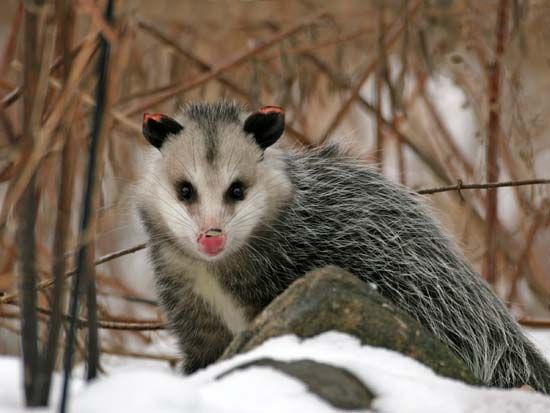
The Virginia opossum (Didelphis virginiana) is a highly adaptable marsupial with a diverse, opportunistic diet and a significant role in its ecosystem.
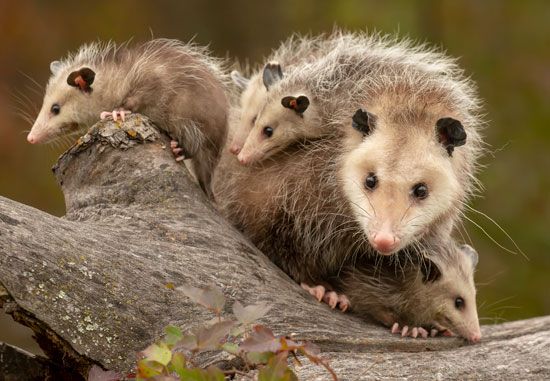
What are the Virginia opossum’s dietary habits and ecological role?
The Virginia opossum (Didelphis virginiana) is a highly adaptable marsupial with a diverse, opportunistic diet and a significant role in its ecosystem.
Dietary Habits
Virginia opossums are omnivorous scavengers that eat almost anything available in their environment. Their diet includes:
- Plant matter: Fruits and occasionally cultivated crops.12
- Invertebrates: Insects and earthworms.12
- Vertebrates: Small mammals, birds, nestlings, reptiles, and amphibians.12
- Carrion: They frequently consume dead animal matter.1
Notably, they are known to prey on snakes, including venomous species, as they possess a protein in their blood called lethal toxin-neutralizing factor (LTNF) that detoxifies various poisons, including snake, bee, and scorpion venom.12
Ecological Role
As opportunistic omnivores, Virginia opossums function as important scavengers and predators within their habitats. They help control populations of insects and small rodents while serving as a food source for various predators, including foxes, coyotes, and birds of prey. Their ability to thrive in diverse environments—from forests to human-altered landscapes—makes them a resilient component of North American ecosystems.12
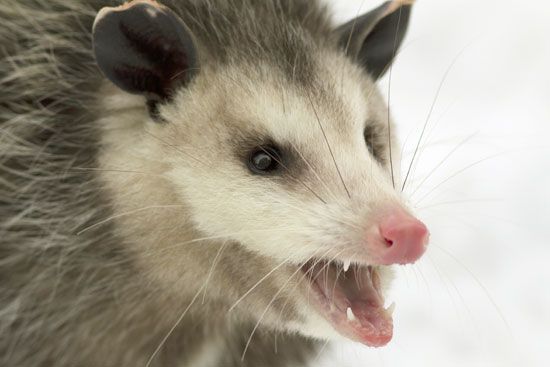
How long do Virginia opossums typically live in the wild versus in captivity?
The life span of the Virginia opossum is notably short. In the wild, most reproductive females are under a year old, and very few individuals survive long enough to breed for a second year. The oldest documented free-living Virginia opossum was a three-year-old male from Maryland.1
The provided search results do not contain specific data regarding the typical life span of Virginia opossums in captivity.
What are some common misconceptions about Virginia opossums?
Several persistent myths surround the Virginia opossum, often stemming from misunderstandings of their unique anatomy and behaviors:
- Birth through the nose: It is a common myth that opossums give birth through their nostrils. This misconception likely arises from the female’s habit of licking her pouch and surrounding fur to clean it just before birth. Additionally, the male’s bifurcated penis and the female’s divided birth canal are anatomical curiosities that have historically fueled this false belief.12
- Fused mouth and nipple: There is a false notion that the mouth of a young opossum fuses to its mother’s nipple. In reality, the young anchor themselves to the nipple using transverse plates on the roof of their mouths. If a young opossum is pulled away before it can detach on its own, the nipple may tear and bleed, which has contributed to the mistaken idea that they are physically grown together.1
- Albino misidentification: Opossums with white fur but dark eyes, eye rings, feet, and tail bases are often incorrectly labeled as albino. True albinos possess white fur, pink eyes, and pink skin; the common white-furred variant is simply a different color phase.1
What is the geographical range and habitat of the Virginia opossum?
The Virginia opossum (Didelphis virginiana) is the only marsupial found north of Mexico, with a geographical range extending from southern Canada and the Puget Sound region southward to northern Costa Rica. Populations located in western Canada and along the Pacific coast are the result of human introductions from the eastern United States.12
Regarding their habitat, Virginia opossums are highly adaptable and occupy a wide variety of environments, provided that water is available. Because they are largely arboreal, they are notably absent from treeless, dry areas. They are commonly found denning in:12
Sources
- Virginia opossum — Encyclopædia Britannica
- opossum — Encyclopædia Britannica
- Tonic immobility — Encyclopædia Britannica
Published on · 3 min read