Cicada
The primary difference between annual and periodical cicadas lies in the length and synchronization of their life cycles.
What is the difference between annual and periodical cicadas?
The primary difference between annual and periodical cicadas lies in the length and synchronization of their life cycles.
Periodical Cicadas
Periodical cicadas (genus Magicicada) are characterized by highly synchronized, long-term life cycles that last either 13 years or 17 years. They emerge from the soil in massive numbers during the spring of their emergence year, mate, and die within a few weeks. These insects are typically smaller than annual species and are often identified by their red eyes and black thoraxes. Their emergence is organized into distinct broods based on their geographic location and year of appearance.12
Annual Cicadas
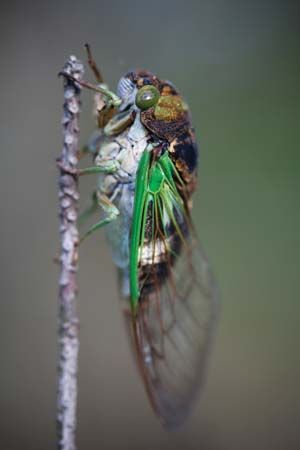
In contrast, annual cicadas are seen every summer. Despite the name, their individual life cycles typically span 2 to 5 years; however, because their generations overlap, adults appear every year. They are generally larger than periodical cicadas and are often green in color. Common examples include the dog-day cicadas and scrub cicadas.12
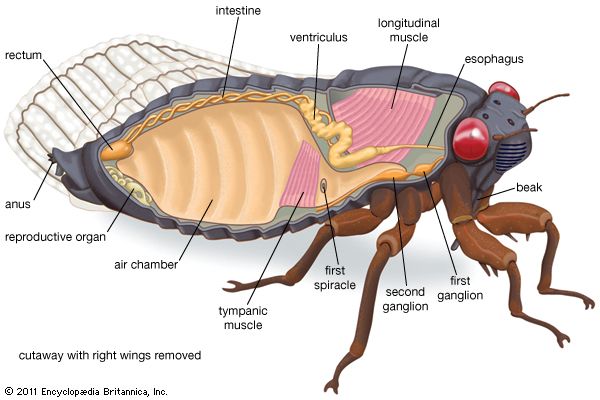
What are the distinctive physical characteristics of cicadas?
Cicadas are medium to large insects, typically ranging from 2 to 5 cm (0.8 to 2 inches) in length, and are characterized by a stout body and a wide, blunt head. Their physical features include:42
- Eyes: They possess two prominent compound eyes and three simple eyes (ocelli) arranged in a triangle between the compound eyes.42
- Wings: They have two pairs of transparent, membranous wings that are generally longer than their bodies. While most species have clear wings, some, such as Tacua speciosa, have opaque wings.423
- Mouthparts: Equipped with strawlike, sap-sucking mouthparts, cicadas lack mandibles and are unable to bite.423
- Sound-producing organs: Male cicadas feature specialized membranes called tymbals located near the base of the abdomen, which they vibrate to produce their characteristic songs.423
- Coloration: Appearance varies by species; for example, periodical cicadas are often identified by their red eyes and black thoraxes, whereas annual cicadas are frequently green.23
Cicadas do not possess stingers, as they lack the modified ovipositor required for that function.2
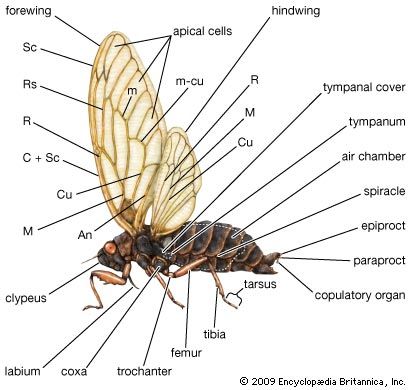
What are some of the most common species of cicadas found around the world?
With over 3,000 species worldwide, cicadas exhibit significant diversity across tropical and temperate regions. Notable species and groups include:
- Periodical Cicadas (Magicicada): Famous for their long, synchronized life cycles, this genus includes seven North American species that emerge in 13- or 17-year intervals.2
- Annual Cicadas: These include the dog-day cicadas (genus Neotibicen), scrub cicadas (Diceroprocta), and members of the genera Neocicada and Okanagana. They are seen every summer due to overlapping generations.25
- European and Middle Eastern Species: The common or ash cicada (Cicada orni) is widely recognized in Europe, while the New Forest cicada (Cicadetta montana) is the only species native to the United Kingdom.2
- Asian Giants: Southeast Asia is home to the largest species, such as the empress cicada (Megapomponia imperatoria), which reaches lengths of 7 cm. Tacua speciosa is also notable for its unique opaque wings.2
- African Species: The thorntree cicada (Brevisana brevis) is considered the world’s loudest insect, with songs exceeding 106 decibels.2
What predators commonly feed on cicadas?
When cicadas emerge in large numbers, they become a bountiful food source for a wide variety of animals. Common predators include:
- Mammals: Bears, opossums, shrews, and raccoons are known to feed on them.3
- Birds: Many bird species prey on cicadas, and some have even been observed producing larger clutches of eggs during years when periodical cicadas emerge.3
- Other Animals: Fish also consume them when they are available.3
- Parasitoids: Female cicada-killer wasps are specialized predators that hunt cicadas to provide food for their larvae. These wasps paralyze the cicada with venom and store it in an underground burrow, where the wasp larva then feeds on the living insect.37
To mitigate the impact of predation, periodical cicadas utilize an evolutionary strategy known as predator satiation. By emerging in overwhelming numbers, they ensure that even after significant predation, enough adults survive to successfully mate and lay eggs.3
Sources
- homopteran - Periodical cicada — Encyclopædia Britannica
- cicada — Encyclopædia Britannica
- periodical cicada — Encyclopædia Britannica
- Did you know? — Merriam-Webster
- dog-day cicada — Merriam-Webster
- cicada: Top Questions — Encyclopædia Britannica
- cicada-killer wasp — Encyclopædia Britannica
Published on · 3 min read