What Is Known (and Not Known) About the Tunguska Event
The Tunguska event was a massive explosion that occurred over central Siberia on June 30, 1908. It released energy equivalent to approximately 15 megatons of…
What is What Is Known (and Not Known) About the Tunguska Event?
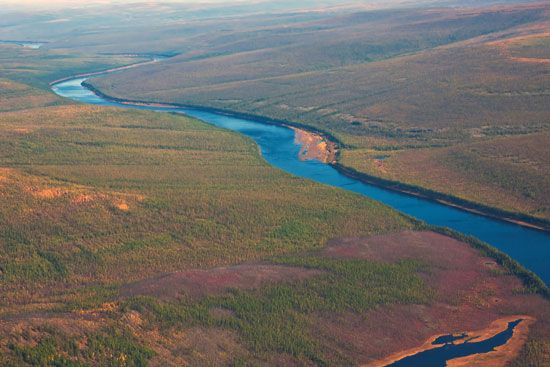
The Tunguska event was a massive explosion that occurred over central Siberia on June 30, 1908. It released energy equivalent to approximately 15 megatons of TNT, flattening 2,000 square kilometers of forest.1
What is Known
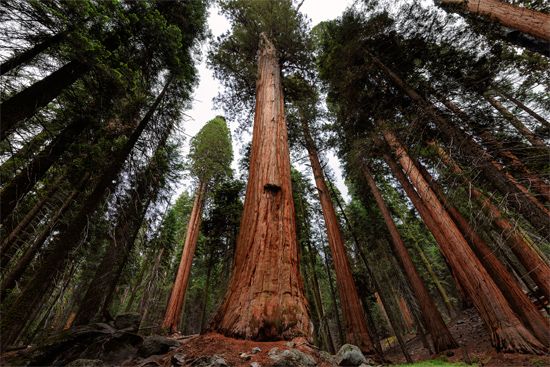
- The Blast: The object detonated at an altitude of 5–10 km, creating a powerful blast wave and fireball that charred trees but left no impact crater.1
- Physical Evidence: Expeditions led by Leonid Kulik found trees felled in a radial pattern, confirming the epicenter. Seismographs recorded the event, and the explosion caused abnormally bright nighttime skies across Europe and Siberia due to dispersed gases.1
- The Object: Scientists generally agree the event was caused by a comet or a stony/carbonaceous asteroid roughly 50–100 meters in diameter.1
What is Not Known
- Definitive Origin: While evidence points to a comet or asteroid, the exact nature of the object remains debated. Only microscopic fragments have been recovered, leaving the specific composition unconfirmed.1
What is the difference between a comet and an asteroid?
Comets and asteroids are distinct types of small bodies in the solar system, primarily differentiated by their composition, origin, and orbital paths.2
Key Differences
- Composition: Comets are composed of volatile ices—such as water, carbon dioxide, and ammonia—mixed with dust. When nearing the Sun, these ices sublimate, creating a glowing atmosphere called a coma and often a tail. Asteroids are primarily made of rock and metal and lack these volatile components.2
- Origin: Comets generally originate from the distant Oort cloud or the Kuiper belt. Asteroids are mostly found in the asteroid belt between Mars and Jupiter, representing leftover building blocks of the rocky planets.2
- Orbits: Comets typically follow highly eccentric, erratic orbits. Asteroids generally have more stable, circular orbits within the inner solar system.2
While these distinctions are standard, classification can be complex. Some objects, such as main-belt comets, exhibit both asteroidal orbits and cometary activity.3
How do scientists study impact events without a crater?
When an object explodes in the atmosphere rather than striking the surface, it does not create an impact crater. In such cases, scientists rely on alternative evidence to reconstruct the event:
- Blast Patterns: Investigators examine the orientation of felled trees. In the case of the Tunguska event, trees were found lying in a radial pattern, allowing researchers to pinpoint the epicenter directly beneath the point of the explosion.
- Seismic and Atmospheric Data: Scientists analyze historical records from seismographs to estimate the energy released. Additionally, they study reports of atmospheric phenomena, such as abnormally bright nighttime skies, which indicate the dispersal of vaporized material into the upper atmosphere.
- Physical Remains: Researchers search for microscopic fragments of the object. While large pieces are often absent in airbursts, finding tiny, non-terrestrial particles can help identify the composition of the impactor.
- Eyewitness Accounts: Historical reports of fireballs, ground tremors, and intense heat winds provide crucial data regarding the timing, trajectory, and intensity of the blast.
What are noctilucent clouds and how do they form?
Noctilucent clouds are rare, silvery or bluish-white clouds that occur at an altitude of approximately 82 km (50 miles), making them the highest cloud form in the atmosphere. They are typically visible during summer nights in high latitudes and often display tenuous, wavy patterns caused by strong winds at that altitude.6
These clouds form through the following process:
- Composition: They are likely composed of ice crystals that form around dust particles originating from meteor smoke.6
- Temperature: The altitude at which they form is the coldest region in the upper atmosphere, allowing even minute amounts of water vapour to freeze into ice crystals.6
- Water Vapour Source: While water vapour is scarce at such heights, methane molecules in the upper atmosphere undergo chemical reactions that contribute to the production of water vapour. Increasing methane concentrations have led to more frequent sightings of these clouds in lower latitudes since the early 21st century.6
Sources
- Tunguska event — Encyclopædia Britannica
- What is the difference between comets and asteroids? — Encyclopædia Britannica
- Small body - Differences between comets and asteroids — Encyclopædia Britannica
- What Is Known (and Not Known) About the Tunguska Event — Encyclopædia Britannica
- impact structure — Encyclopædia Britannica
- Noctilucent cloud — Encyclopædia Britannica
- hydrosphere - Water vapour and precipitation — Encyclopædia Britannica
Published on · 3 min read