Tree
Trees reproduce primarily through a complex life cycle involving sexual reproduction, where the dominant, diploid sporophyte phase produces haploid…
How do trees reproduce and spread their seeds?
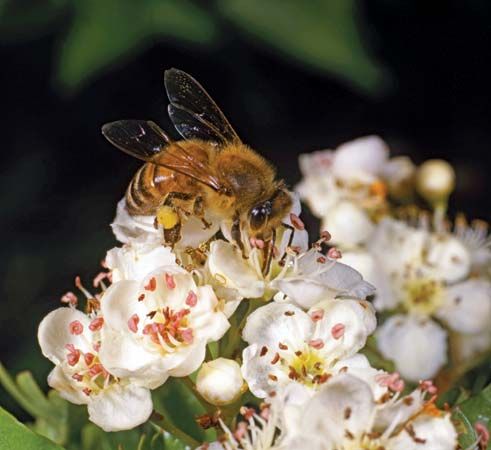
Trees reproduce primarily through a complex life cycle involving sexual reproduction, where the dominant, diploid sporophyte phase produces haploid gametophytes. In angiosperms, this involves pollination, where pollen grains (microgametophytes) reach the stigma, leading to fertilization of an egg within the ovule. This process results in the development of a seed, which contains the plant embryo, and often a fruit that protects and aids in dispersal.12
Seeds are spread away from the parent tree to reduce competition for resources and increase survival odds. The primary agents of seed dispersal include:34
- Wind (Anemochory): Trees use aerodynamic structures like wings (e.g., maples) or fine fibers (e.g., kapok) to catch air currents.54
- Water (Hydrochory): Some seeds and fruits are adapted to float, allowing them to travel across bodies of water.53
- Animals (Zoochory): Animals disperse seeds by consuming fleshy fruits and excreting the seeds elsewhere, or by carrying them externally on fur or claws.53
What impact does deforestation have on local and global ecosystems?
Deforestation has profound consequences that disrupt both local environments and global climate systems.
Local Impacts
On a local scale, the removal of forests leads to the loss of critical ecosystem services. The loss of tree roots destabilizes soil, which, combined with high rainfall on steep slopes, frequently triggers disastrous landslides. Furthermore, forests regulate local water cycles through evapotranspiration; their removal can lead to severe drought conditions, as seen in the Amazon Rainforest, where trees recycle a significant portion of regional rainfall.78
Habitat fragmentation also isolates plant and animal populations, hindering reproduction and threatening biodiversity with extinction. Additionally, clearing forests—often through burning—degrades air quality and leaves the remaining landscape more vulnerable to wildfires and drought.7
Global Impacts
Globally, deforestation is a major driver of global warming. Forests act as vital carbon sinks, sequestering carbon in biomass. When trees are cleared or burned, this stored carbon is released as carbon dioxide, a potent greenhouse gas. This process accounts for a significant portion of annual carbon emissions, exacerbating the greenhouse effect. Furthermore, land-use changes alter Earth’s albedo, or surface reflectivity, which influences global energy balances and climate patterns global energy balances and climate patterns.79108
How have humans used trees throughout history for various purposes?
Throughout history, humans have relied on trees as a fundamental resource for survival, development, and cultural expression.
Material and Economic Utility
Wood has historically been the most significant tree product, serving as a primary material for homes, canoes, weapons, and fuel. The development of Neolithic tools, such as the polished ax and chisel, allowed humans to fashion wood with precision, creating everything from furniture and utensils to structural framing for habitations.1112
Beyond timber, trees have provided a vast array of essential goods:
- Food and Spices: Humans have long harvested fruits, nuts, and spices like cinnamon and cloves, as well as sources of fats and oils such as coconuts and olives.11
- Textiles and Materials: Bark and leaves have been used for clothing and roof thatching, while products like cork, turpentine, and kapok fiber have supported various industries.11
- Medicine: Trees have served as vital sources of medicines, dyes, and tanning agents.11
Agricultural and Cultural Significance
In the Neolithic period, trees were cleared through slash-and-burn agriculture to create fields for cultivation, with the resulting ash acting as fertilizer. Culturally, the “tree of life” has emerged as a universal archetype in religion and mythology, symbolizing the cycle of life, death, and divine connection across diverse civilizations, from the Norse Yggdrasill to the Garden of Eden.121314
What are the main differences between deciduous and evergreen trees?
The primary difference between deciduous and evergreen trees lies in their leaf-retention strategies, which are adaptations to their specific environments.
Deciduous Trees
Deciduous trees typically have thin, delicate leaves that are highly efficient for photosynthesis during the growing season but are vulnerable to freezing temperatures. To survive winter or dry seasons, these trees undergo a controlled process called abscission, where they shed their leaves to prevent cell rupture from freezing water and to avoid damage from wind or snow weight. This cycle allows the tree to enter a state of dormancy, conserving energy until spring.171819
Evergreen Trees
Evergreen trees retain their foliage throughout the year, allowing them to perform photosynthesis whenever conditions—such as temperature and moisture—are favorable. Their leaves are generally thicker and more leathery than those of deciduous trees, often featuring protective waxes or resins that resist freezing and water loss. In cold climates, these adaptations protect the leaves from fracturing, while in drier environments, they help the tree manage transpiration.201817
Sources
- Angiosperm - Mechanisms of dispersal — Encyclopædia Britannica
- Seed dispersal — Encyclopædia Britannica
- "Flying" trees — Encyclopædia Britannica
- Reproduction - Life cycles of plants — Encyclopædia Britannica
- Plant reproductive system - Variations in reproductive cycles — Encyclopædia Britannica
- Angiosperm - General features — Encyclopædia Britannica
- Deforestation - Effects — Encyclopædia Britannica
- Global warming - Land-use change — Encyclopædia Britannica
- soil - Soils and global warming — Encyclopædia Britannica
- Status of the world’s tropical forests - Global implications of deforestation — Encyclopædia Britannica
- Tree - Economic importance — Encyclopædia Britannica
- Status of the world’s tropical forests — Encyclopædia Britannica
- hand tool - Neolithic tools — Encyclopædia Britannica
- Tree of life — Encyclopædia Britannica
- fire — Encyclopædia Britannica
- Alternative energy - 2000 bce - Chinese first to use coal as an energy source — Encyclopædia Britannica
- Why Do Leaves Fall in Autumn? — Encyclopædia Britannica
- Evergreen — Encyclopædia Britannica
- Plant development - Seasonal adaptations — Encyclopædia Britannica
- Temperate forest - Environment — Encyclopædia Britannica
- Temperate forest - Flora — Encyclopædia Britannica
Published on · 4 min read