White Sands National Park
White Sands National Park is located in the Tularosa Basin of south-central New Mexico, situated between the San Andres Mountains and the Sacramento…
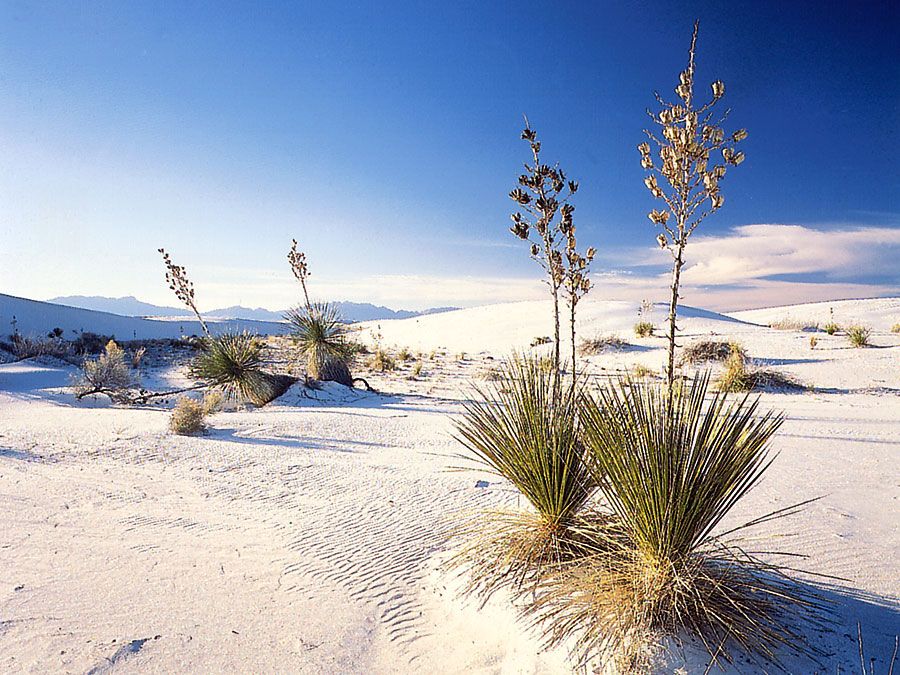
How was White Sands National Park formed, and what is its geological history?
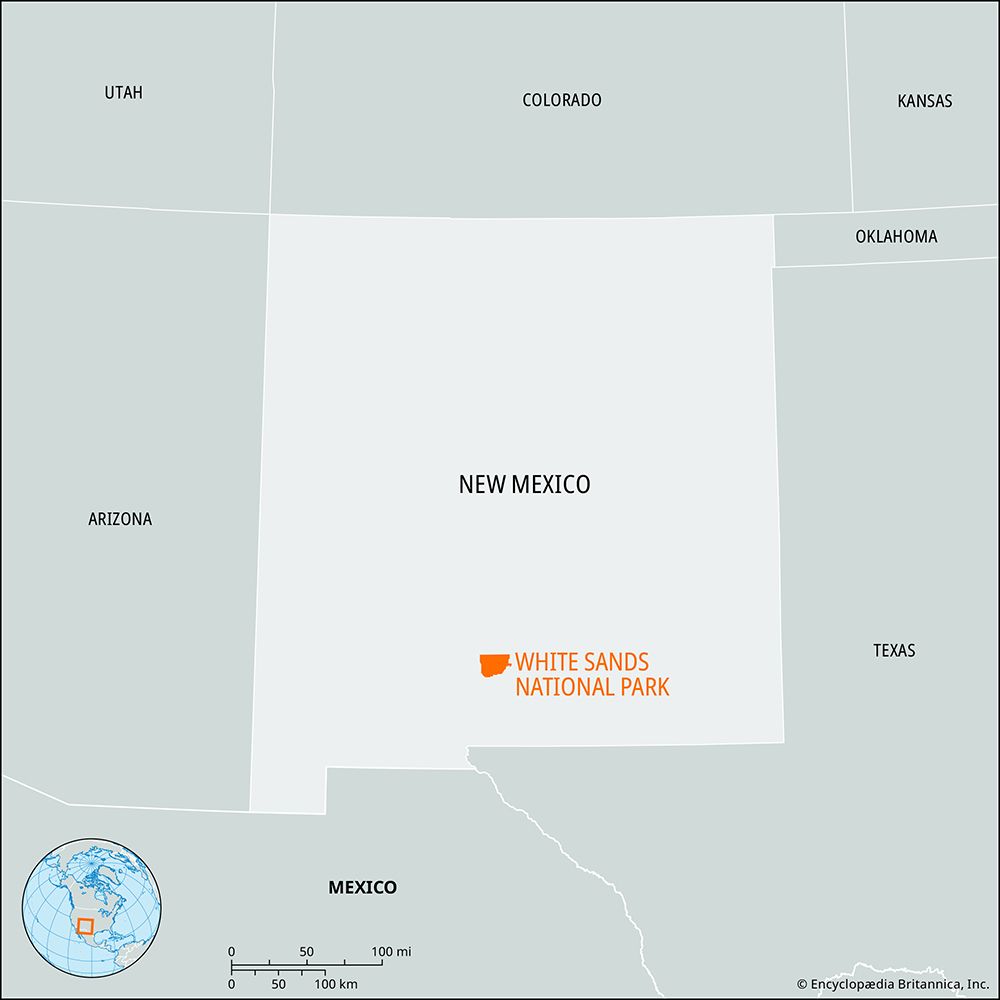
White Sands National Park is located in the Tularosa Basin of south-central New Mexico, situated between the San Andres Mountains and the Sacramento Mountains.1
The park’s unique landscape is defined by its vast dunes of gypsum, a mineral that is typically water-soluble and rare in dune formations. The geological history of the area begins with the surrounding mountains, which are composed primarily of limestone. Over time, this limestone decomposes, and gypsum-laden runoff water collects in the low-lying basin.12
In the southwest corner of the park lies Lake Lucero, an ephemeral lake or playa. As water evaporates from this lake and the nearby Alkali Flat, it leaves behind deposits of selenite crystals. These crystals are broken down into sand-sized particles, which are then transported and shaped by the wind into the park’s iconic dunes, which reach heights of 10 to 60 feet.12
What is the significance of White Sands National Park’s designation as a national park in 2019?
White Sands National Park was originally established as a national monument in 1933. Its redesignation as a national park in 2019 marked a formal elevation in its status within the United States National Park Service system.
While the provided search results confirm the 2019 change in designation, they do not explicitly detail the specific legislative or administrative significance behind this particular upgrade. Historically, the transition from a national monument—often created under the Antiquities Act of 1906 to protect specific objects of historic or scientific interest—to a national park typically reflects a broader recognition of an area’s national significance, ecological value, and potential for public recreation and preservation.
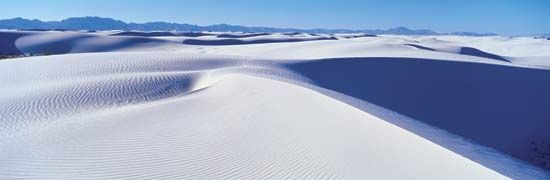
How does the gypsum dune field at White Sands compare to other desert landscapes in the United States?
White Sands National Park is distinct from most other desert landscapes in the United States due to its unique mineral composition. While the vast majority of windblown sand on Earth—and within most North American deserts—is composed of quartz, the dunes at White Sands are formed from gypsum.12
Quartz is the dominant material in most desert sand seas because it resists chemical weathering and breakdown over millions of years. In contrast, gypsum is water-soluble and typically dissolves rather than accumulating as sand. White Sands is a rare exception because it is located in a closed basin where gypsum-laden runoff from surrounding mountains collects in ephemeral lakes, such as Lake Lucero. As the water evaporates, it leaves behind selenite crystals that are broken down into sand-sized particles and shaped by the wind.21
This process creates a dazzling white landscape that contrasts sharply with the typical quartz-based dunes found elsewhere in the continental United States.12
How has White Sands National Park been featured in popular culture, such as films or literature?
Sorry, the Britannica knowledge base does not contain information regarding how White Sands National Park has been featured in popular culture, such as films or literature.
Sources
- White Sands National Park — Encyclopædia Britannica
- sand dune - Sands — Encyclopædia Britannica
- White Sands National Monument — Merriam-Webster
- National Park Service - Origins of the U.S. national park system — Encyclopædia Britannica
- National Park Service - Establishment of the NPS — Encyclopædia Britannica
- North American Desert - Soils — Encyclopædia Britannica
Published on · 2 min read