Yukon–Charley Rivers National Preserve
Visitors to the Yukon–Charley Rivers National Preserve primarily engage in recreational activities during the warmer months of June through August. Popular…
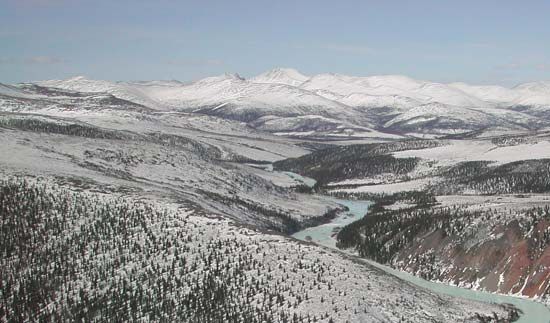
What recreational activities are available for visitors to the Yukon-Charley Rivers National Preserve?
Visitors to the Yukon–Charley Rivers National Preserve primarily engage in recreational activities during the warmer months of June through August. Popular options include:1
- Float Trips: Many visitors enjoy taking float trips down the Yukon River.1
- White-water Rafting: Travelers can fly to the headwaters of the Charley River to experience white-water rafting.1
- Sightseeing and Exploration: The preserve offers opportunities to explore numerous cabins and relics from the 1890s Klondike gold rush, as well as various paleontological and archaeological sites.1
- Wildlife Viewing: The area is home to diverse wildlife, including peregrine falcons, caribou, moose, Dall sheep, wolves, and brown (grizzly) bears.1
Access to the preserve is typically achieved by small boat from Eagle or by light aircraft capable of landing on unimproved interior strips.1
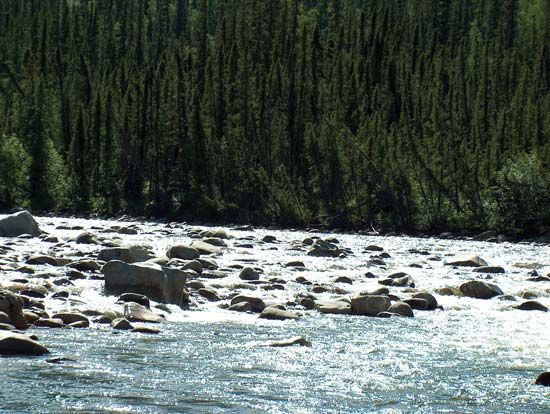
What is the geographical location and size of Yukon-Charley Rivers National Preserve?
The Yukon–Charley Rivers National Preserve is a protected river-basin region located in east-central Alaska, United States.1
Geography and Size
- Location: The preserve extends westward from the border of the Yukon territory in northwestern Canada. It encompasses approximately 130 miles (210 km) of the Yukon River and includes the entire drainage basin of the 108-mile (174-km) Charley River, which flows into the Yukon from the south.12
- Total Area: The preserve covers a total area of 3,948 square miles (10,225 square km).1
The preserve’s headquarters are situated in the town of Eagle, located along the Yukon River.1
How was the Yukon-Charley Rivers National Preserve established, and when did it become a protected area?
The Yukon–Charley Rivers National Preserve was initially established as a national monument in 1978. Following subsequent legislative adjustments to its boundaries and designation, it was officially re-established as a national preserve in 1980.1
How does the preserve’s ecosystem reflect the subarctic environment of interior Alaska?
The ecosystem of the Yukon–Charley Rivers National Preserve is a quintessential reflection of the subarctic environment found in interior Alaska. This region is characterized by a complex interplay of tundra vegetation and boreal forest elements, shaped by the harsh realities of a continental climate.16
Vegetation and Terrain
The preserve’s plant life is primarily composed of tundra vegetation, which thrives in the region’s short growing season and cold temperatures. Along the river corridors and streams, the landscape transitions to include willows, various conifers, and other tree species, forming a mosaic typical of subarctic river basins. These riparian zones are often more productive than the surrounding uplands, benefiting from the dynamic nature of river floodplains that are frequently renewed by sediment deposits.17
Environmental Drivers
The ecosystem is heavily influenced by the presence of permafrost, which restricts root growth and limits nutrient availability in many areas. The interior Alaskan climate, marked by cold winters and significant temperature fluctuations, dictates the distribution of plant communities; for instance, south-facing slopes and well-drained river terraces support more robust forest growth compared to the colder, permafrost-laden basins.78
Wildlife
The preserve supports a diverse array of subarctic fauna adapted to these conditions, including:
Sources
- Yukon–Charley Rivers National Preserve — Encyclopædia Britannica
- Yukon River - People and economy — Encyclopædia Britannica
- Yukon River - History — Encyclopædia Britannica
- Yukon River - Physiography and hydrology — Encyclopædia Britannica
- Noatak National Preserve — Encyclopædia Britannica
- Arctic - Vegetation — Encyclopædia Britannica
- Alaska - Climate of Alaska — Encyclopædia Britannica
- Arctic - Climate of the Arctic — Encyclopædia Britannica
- Taiga - Soils — Encyclopædia Britannica
Published on · 3 min read