Australian Federal Election of 2010
A federal election in Australia is the process by which citizens elect representatives to the two houses of the federal parliament: the House of…
What is a federal election in Australia?
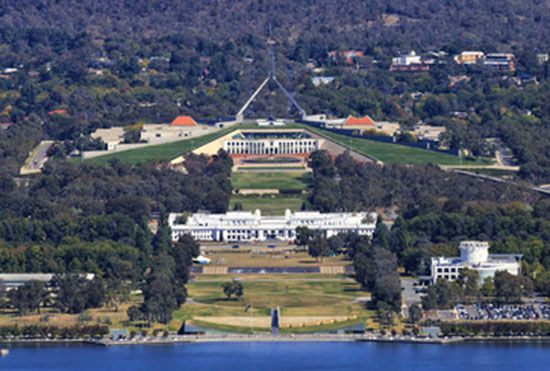
A federal election in Australia is the process by which citizens elect representatives to the two houses of the federal parliament: the House of Representatives and the Senate. Australia operates as a constitutional monarchy and a federal parliamentary state, where the leader of the party or coalition that wins the majority in the House of Representatives becomes the prime minister.12
Key features of the Australian electoral process include:
- Compulsory Voting: All citizens aged 18 and older are required to vote, and failure to do so may result in a fine.3
- The Australian Ballot: Australia pioneered the secret ballot, ensuring voter privacy.3
- Preferential Voting: For the House of Representatives, voters rank candidates by preference. This system allows for the reallocation of votes from losing candidates, giving minor parties indirect influence.3
- Proportional Representation: The Senate uses a single-transferable-vote system, which allocates seats in proportion to the share of the vote, generally providing better representation for minor parties.3
When did the Australian federal election of 2010 take place?
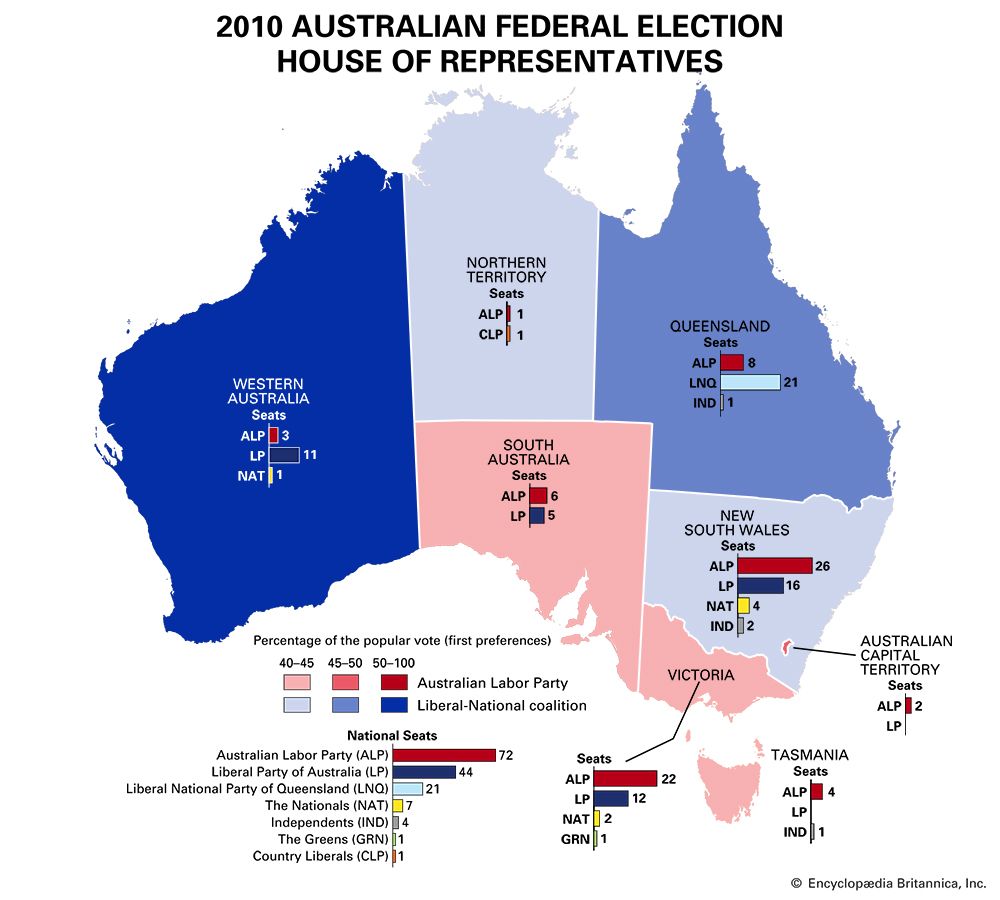
The Australian federal election of 2010 took place on August 21, 2010.45
Prime Minister Julia Gillard called the election eight months earlier than constitutionally required, following her rise to the leadership of the Australian Labor Party in June of that year. The election resulted in a hung parliament, as neither the Labor Party nor the Liberal Party of Australia alliance secured an outright majority of seats. Ultimately, Labor formed a minority government in early September with the support of several independent members and a representative from the Greens.645
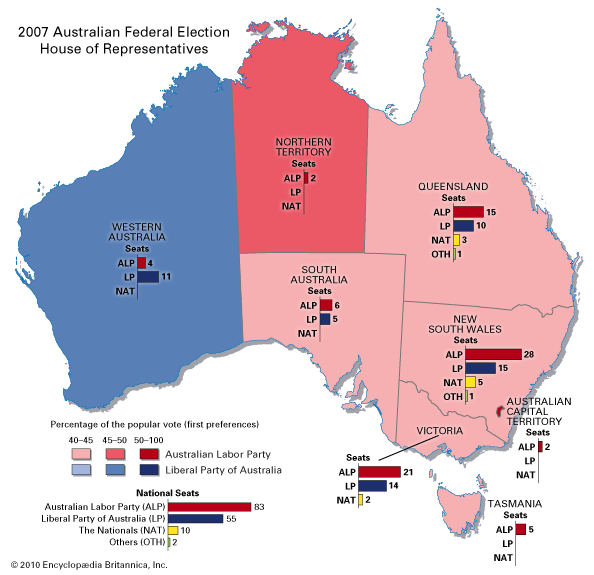
Which main political parties competed in the 2010 election?
The 2010 Australian federal election was primarily a contest between two major political forces:
- The Australian Labor Party (ALP): Led by Prime Minister Julia Gillard, who had replaced Kevin Rudd as party leader shortly before the election.47
- The Liberal-National Coalition: An alliance between the Liberal Party of Australia and the Nationals.78
The election resulted in a hung parliament, as neither the Labor Party nor the Liberal-National coalition secured an outright majority of seats in the House of Representatives. To form a minority government, the Labor Party successfully negotiated the support of several independent members of Parliament and the Greens, including Adam Bandt, who had won the Greens’ first seat in the House of Representatives.476
Why is the 2010 federal election considered important in Australia?
The 2010 Australian federal election is considered a landmark event in the country’s political history primarily because it resulted in the formation of Australia’s first minority government since 1940.4
The election was significant for several key reasons:
- Hung Parliament: Neither the Australian Labor Party nor the Liberal-National coalition secured an outright majority of seats in the House of Representatives, leading to a hung parliament.45
- Negotiated Governance: To secure power, Prime Minister Julia Gillard had to negotiate formal support from independent members of Parliament and the Greens, fundamentally changing the legislative process for that term.104
- Context of Leadership Change: The election followed a period of intense internal party instability, during which Gillard had replaced Kevin Rudd as leader of the Labor Party in June 2010, becoming Australia’s first woman prime minister.104
The outcome reflected a deeply divided electorate and marked a departure from the stable majority governments that had characterized much of the preceding decades.4
Sources
- Australia - Elections — Encyclopædia Britannica
- Australia - Constitutional framework — Encyclopædia Britannica
- Australia: Country Facts — Encyclopædia Britannica
- Australia - The premierships of Kevin Rudd (2007–10 and 2013) and Julia Gillard (2010–13) — Encyclopædia Britannica
- Australian federal election of 2010 — Encyclopædia Britannica
- Liberal Party of Australia — Encyclopædia Britannica
- the Greens — Encyclopædia Britannica
- Australian Labor Party — Encyclopædia Britannica
- Australia - Political parties — Encyclopædia Britannica
- hung parliament — Merriam-Webster
Published on · 3 min read