Rudd
The rudd (Scardinius erythrophthalmus) is a stout-bodied freshwater fish belonging to the carp family, Cyprinidae.
What is rudd?
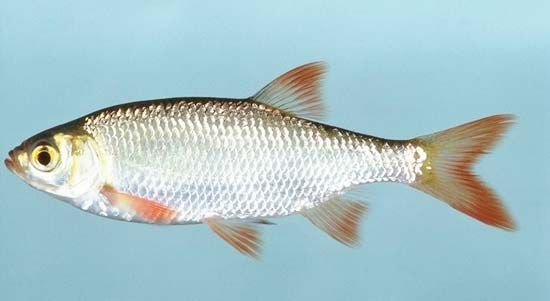
The rudd (Scardinius erythrophthalmus) is a stout-bodied freshwater fish belonging to the carp family, Cyprinidae.1
Distinguished by its golden appearance, the rudd features yellow-orange eyes, deep red fins, and a sharp-edged belly. It is native to Europe and Asia Minor, though it has been introduced to the United States, where it is sometimes referred to as the American or pearl roach. These schooling fish typically inhabit slow-moving rivers and lakes with dense vegetation, where they feed on insects, small animals, and plants. A mature rudd generally reaches a maximum length of 35–40 centimetres (14–16 inches) and a weight of 1–2 kilograms (2–4 1/2 pounds).1
What are other members of the carp family?
The family Cyprinidae, commonly known as the carp family, is a diverse group of freshwater fish that includes thousands of species. Beyond the rudd, other notable members of this family include:23
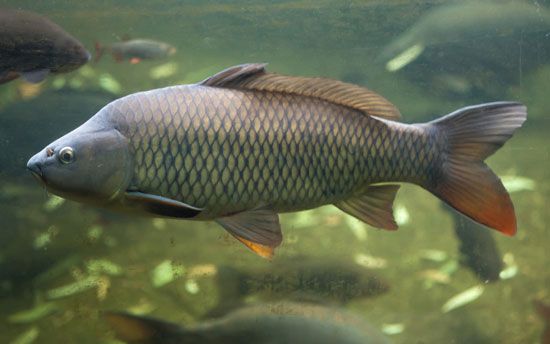
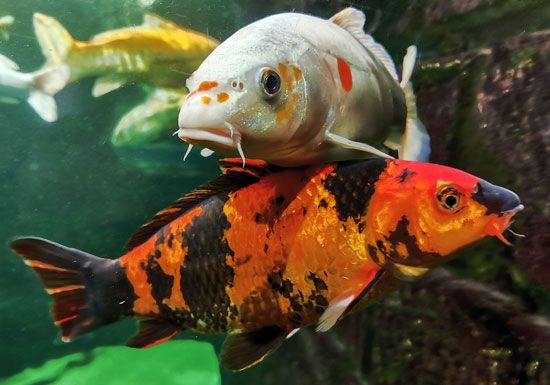
- Common Carp: The common carp (Cyprinus carpio) is a hardy, omnivorous fish native to Eurasia, often raised for food or kept as koi in ornamental ponds.2
- Asian Carp: This group includes several invasive species such as the grass carp, bighead carp, black carp, and silver carp, which have significantly impacted aquatic ecosystems in North America.2
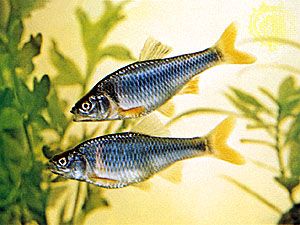
- Minnows: In North America, the term minnow refers to various small cyprinids, including the golden shiner and the fathead minnow. In Europe and northern Asia, the term specifically refers to Phoxinus phoxinus.4
- Other Varieties: The family also encompasses goldfish, bitterlings, and barbs.3
Why is the rudd considered an invasive species in some areas?
The provided search results do not contain information explaining why the rudd is considered an invasive species in specific areas. While the text notes that the rudd has been introduced into the United States, it does not detail the ecological consequences or classification of the fish as an invasive nuisance.
In contrast, the search results do provide extensive information regarding other members of the carp family, such as the common carp and various Asian carp species, which are widely recognized as invasive due to their tendency to compete with native species, disrupt food webs, and increase water turbidity.
How do freshwater fish adapt to living in reedy lakes?
Freshwater fish that inhabit reedy lakes and similar environments have evolved specific structural and physiological adaptations to thrive in these complex, often quiet habitats.
Structural and Behavioral Adaptations
- Body Shape: Fish living in relatively quiet waters, such as lake shores, are often not built for sustained high-speed swimming. Instead, many possess laterally compressed (flattened) bodies, which allow for quick bursts of speed to maneuver through dense vegetation or escape predators.1
- Camouflage: Many species are cryptically colored and shaped to match their environment, rendering them nearly invisible against the background of plants and debris. This concealment is essential for survival in areas where they can hide among reeds and tall grasses.78
- Respiration: In environments where oxygen levels may fluctuate, some fish have developed specialized breathing mechanisms. For example, the reedfish utilizes a primitive lung to gulp air at the surface, supplementing the oxygen it receives through its gills and skin.8
- Foraging Strategies: Species like the rudd are well-adapted to these thickly planted areas, where they school and feed on a varied diet of plants, small animals, and insects. Similarly, other fish may remain concealed in vegetation by day and forage at night to avoid detection.98
Sources
- rudd — Encyclopædia Britannica
- carp — Encyclopædia Britannica
- atheriniform - Natural history — Encyclopædia Britannica
- ostariophysan - Annotated classification — Encyclopædia Britannica
- minnow — Encyclopædia Britannica
- rudd — Merriam-Webster
- fish - Structural diversity — Encyclopædia Britannica
- fish - Locomotion — Encyclopædia Britannica
- reedfish — Encyclopædia Britannica
- scorpaeniform - Camouflage and coloration — Encyclopædia Britannica
Published on · 3 min read