9 Animals That Look Like Leaves
Mimicry is a remarkable evolutionary adaptation where animals resemble their surroundings or other species to avoid predators or ambush prey. Leaf mimicry is…
What are 9 Animals That Look Like Leaves?
Mimicry is a remarkable evolutionary adaptation where animals resemble their surroundings or other species to avoid predators or ambush prey. Leaf mimicry is a particularly effective form of camouflage found across various species.1
Here are nine animals known for their striking resemblance to leaves:
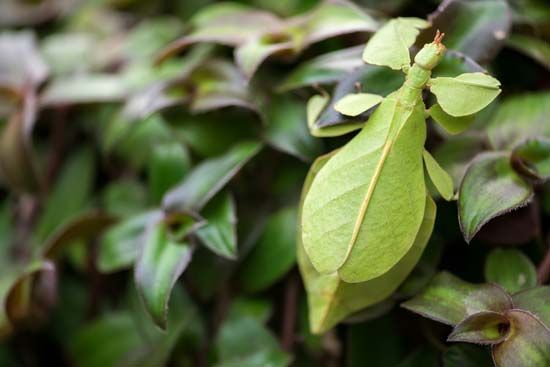
- Giant leaf insect (Phyllium giganteum): Found in Southeast Asia and Australia, these insects possess wings and legs that closely imitate the color and form of leaves.12
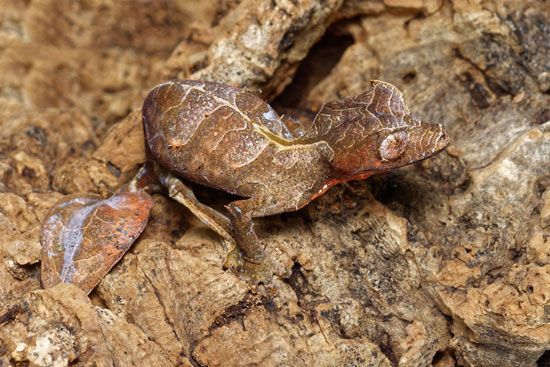
- Satanic leaf-tailed gecko (Uroplatus phantasticus): A master of disguise native to Madagascar.1
- Indian oakleaf butterfly (Kallima inachus): A butterfly from tropical Asia that mimics a dead leaf when its wings are closed.1
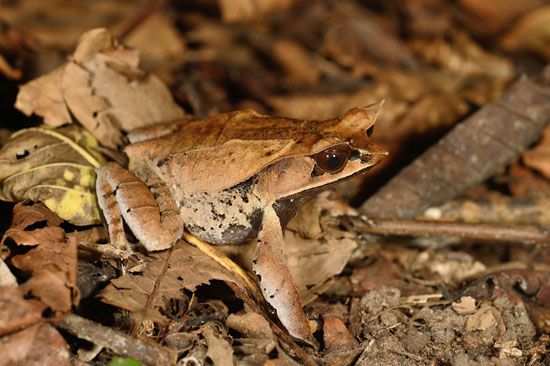
- Malayan leaf frog (Megophrys nasuta): Endemic to the rainforests of the Malay Peninsula, Sumatra, and Borneo.1
- Moss mantis (Haania confusa): A mantis species native to Asia.1
- Dead-leaf grasshopper (Chorotypus saussurei): Native to Malaysia.1
- South American leaf fish (Monocirrhus polyacanthus): Found in the Amazon River basin.1
- Leaf katydid (Pycnopalpa bicordata): Distributed throughout Central America, Mexico, and northern South America.1
- Dead-leaf moth (Uropyia meticulodina): Native to China and Taiwan.1
How does camouflage differ from mimicry in the animal kingdom?
While camouflage and mimicry both involve deceptive appearances, they are distinguished by the nature of the signal and the role of the observer.
In camouflage (often referred to as crypsis), an organism seeks to avoid detection by blending into its neutral background. The goal is to become invisible or indistinguishable from the environment, such as a lizard matching the color of its substrate or a flatfish mimicking the pattern of the seafloor.456
In contrast, mimicry involves a specialized signal that has specific significance for a receiver. The mimic evolves to resemble a “model”—another organism—to deceive a third party (such as a predator or prey) that interacts with that model. For example, an insect might mimic a wasp to deter predators, or an anglerfish might use a lure to trick prey.478
The fundamental difference lies in the receiver’s reaction:
- Camouflage: The receiver fails to detect the sender because it perceives the sender as part of the background.4
- Mimicry: The receiver detects the sender but misidentifies it, reacting to it as if it were the model.4
What are some other types of animal camouflage besides looking like leaves?
Beyond mimicking leaves, animals employ several sophisticated strategies to conceal themselves from predators and prey. These methods rely on manipulating how light, color, and form are perceived by an observer:
- Background Matching: This is the most common form of concealment, where an animal’s coloration, form, or movement resembles its immediate environment. Some animals, such as flatfishes, can actively change their skin patterns to match the seafloor, while others, like decorator crabs, physically attach algae or sponges to their bodies to blend in.1011
- Disruptive Coloration: This technique uses bold patterns that break up the animal’s recognizable outline. By preventing the observer from identifying the shape or boundaries of the body, the animal effectively “disappears” against its surroundings.10
- Countershading: Many animals are darker on their upper surfaces and lighter on their undersides. This gradient counteracts the effects of natural light, which typically creates shadows that reveal an animal’s three-dimensional form. By eliminating these shadows, the animal appears flatter and less conspicuous.109
- Active Camouflage: Cephalopods like octopuses and squids use specialized pigment cells called chromatophores to rapidly change their color and skin texture, allowing them to imitate objects like sand, coral, or seaweed in real time.12
- Counter-illumination: Some deep-sea creatures use photophores (light-producing organs) on their undersides to match the dim light coming from above. This obliterates their silhouette, making them invisible to predators looking up from below.9
How do predators evolve to see through these clever disguises?
Predators do not simply “see through” disguises; rather, they evolve alongside their prey in a process known as an evolutionary arms race, where natural selection progressively escalates both defenses and counterdefenses.13
To overcome camouflage, predators have developed several specialized sensory strategies:
- Enhanced Sensory Systems: Predators often evolve sensory capabilities specifically tuned to detect prey. For example, some snakes use infrared receptors to detect the heat signatures of warm-blooded prey, allowing them to strike accurately in the dark regardless of visual camouflage. Others rely on chemoreception, using the Jacobson’s organ to track chemical scent particles, effectively bypassing visual deception entirely.14
- Visual Specialization: The effectiveness of camouflage depends entirely on the visual system of the “third party” (the predator). Predators evolve to perceive specific contrasts, shapes, or movements that the prey’s camouflage fails to mask. For instance, while some insects are invisible to human eyes, they may be easily detected by predators whose eyes are sensitive to ultraviolet light.15
- Behavioral Adaptation: Predators may use movement to break a disguise. Because many visual systems are highly responsive to flickering or moving stimuli, predators can often identify prey that might otherwise be perfectly camouflaged when stationary.15
Sources
- 9 Animals That Look Like Leaves — Encyclopædia Britannica
- leaf insect — Encyclopædia Britannica
- insect - Protection from enemies — Encyclopædia Britannica
- mimicry - Aggressive mimicry — Encyclopædia Britannica
- mimicry — Encyclopædia Britannica
- mimicry - The importance of the signal receiver — Encyclopædia Britannica
- crypsis — Merriam-Webster
- protective coloration — Merriam-Webster
- coloration - Background matching — Encyclopædia Britannica
- concealing coloration — Encyclopædia Britannica
- cephalopod - Behaviour — Encyclopædia Britannica
- coloration - Countershading — Encyclopædia Britannica
- coloration - Optical functions: combination of concealing and advertising coloration — Encyclopædia Britannica
- reptile - Chemoreception — Encyclopædia Britannica
- coloration - Disruptive coloration — Encyclopædia Britannica
- coloration - The selective agent — Encyclopædia Britannica
- community ecology - Predator-prey interactions — Encyclopædia Britannica
Published on · 4 min read