Bitis
The Bitis genus consists of a group of venomous snakes within the family Viperidae, all of which are native to Africa. These snakes are generally…
What are the key characteristics that define the Bitis snake genus?
The Bitis genus consists of a group of venomous snakes within the family Viperidae, all of which are native to Africa. These snakes are generally characterized by their heavy-bodied, stocky builds and a somewhat sluggish demeanor.12
Key defining characteristics include:
- Size: Species range in length from approximately 30 cm to 1.8 meters (12 inches to 6 feet).1
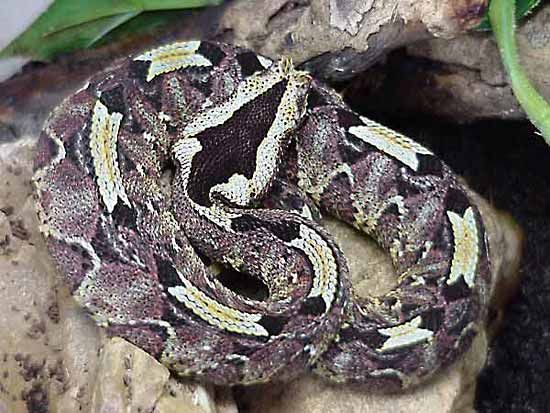
- Physical Appearance: They typically possess a flat, triangular head and scales that provide concealing coloration, often featuring U- or V-shaped patterns that aid in camouflage.3
- Defensive Behavior: Many species, including the puff adder, the Gaboon viper, and the rhinoceros viper, are known for inflating their bodies with air and hissing loudly when threatened to deter predators.13
- Venom: They are highly venomous, possessing long fangs that can reach up to 5 cm (about 2 inches) in length.3
Which species are considered the most dangerous within the Bitis genus?
Within the Bitis genus, the puff adder (Bitis arietans) is widely considered the most dangerous to humans, as it is responsible for more snakebite deaths in Africa annually than any other snake species. While its reputation for lethality may be somewhat overstated—as its venom is relatively slow-acting and rarely causes death when treated—it is responsible for a significant number of bites on the continent, which can lead to severe pain, blistering, and tissue damage that may result in the loss of limbs.1
Other notable species within the genus include:
- Gaboon viper (B. gabonica): This is the heaviest venomous snake in Africa and possesses the longest fangs of any snake, measuring up to 4 cm (1.6 inches). Despite being extremely venomous, it is generally described as a docile, sluggish snake that rarely bites unless provoked.4
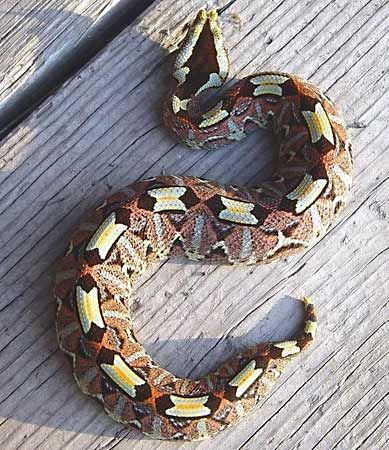
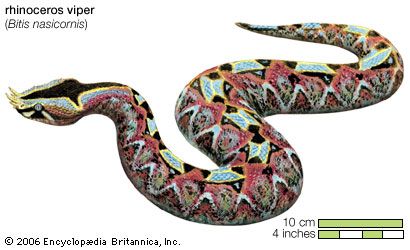
- Rhinoceros viper (B. nasicornis): Known for its vibrant coloration and hornlike scales on its snout, this species also produces a significant amount of venom. However, it has a mild disposition and rarely bites or causes human fatalities.2
What is the evolutionary history of the Bitis genus?
The provided search results do not contain information regarding the specific evolutionary history or phylogenetic origins of the Bitis genus.
The genus Bitis is classified within the family Viperidae, which consists of venomous snakes found globally, including the Old World vipers (subfamily Viperinae) to which Bitis belongs. While these snakes are recognized for their distinct physical traits—such as heavy, stocky bodies and specialized venom-injecting fangs—the available data does not detail their evolutionary timeline or ancestral development.163
We could dive deeper into the broader classification of the Viperidae family or explore the general characteristics of Old World vipers if you would like to know more.
How are Bitis snakes distributed geographically across Africa?
All species within the Bitis genus are native to the African continent. Their distribution varies significantly depending on the specific species and their preferred environmental niches:1
- Puff Adder (Bitis arietans): This species is widely distributed across the semiarid regions of sub-Saharan Africa. It is highly adaptable and common throughout most of its range, with the exception of a small, rare population in Morocco. Notably, its range also extends into the western and southern coastal areas of the Arabian Peninsula.2
- Gaboon Viper (Bitis gabonica): This snake is primarily found in the tropical forests of central and western Africa.45
- Rhinoceros Viper (Bitis nasicornis): This species inhabits the rainforests and swamps of West and Central Africa, showing a distinct preference for wet or damp environments, including plantations.7
Across these regions, Bitis snakes occupy diverse habitats ranging from dry, rocky terrain and grasslands to dense, humid forest floors and wetlands.247
Sources
- Bitis — Encyclopædia Britannica
- puff adder — Encyclopædia Britannica
- Bitis — Merriam-Webster
- Gaboon viper — Encyclopædia Britannica
- rhinoceros viper — Encyclopædia Britannica
- viper — Encyclopædia Britannica
- Gaboon viper — Merriam-Webster
Published on · 3 min read