Abemama Atoll
Abemama Atoll is a coral atoll located in the northern Gilbert Islands, which are part of the nation of Kiribati in the west-central Pacific Ocean.
What is Abemama Atoll?
Abemama Atoll is a coral atoll located in the northern Gilbert Islands, which are part of the nation of Kiribati in the west-central Pacific Ocean.1
Historically significant, the atoll served as the seat of the region’s ruling family during the 19th century and was the site where the Gilbert Islands were formally annexed by the British in 1892. During World War II, it was occupied by Japanese forces before becoming a U.S. military base. Although it was once considered as a potential capital for Kiribati, Tarawa was ultimately chosen in 1947 due to its more navigable lagoon.1
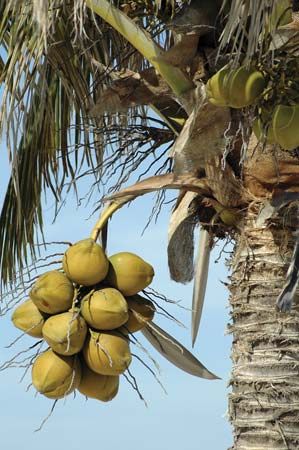
Today, the atoll’s administrative headquarters are located at Kariatebike, and the local economy includes the export of copra. The island also features an airfield and a hospital to support its population.1
How are coral atolls formed?
Coral atolls are typically formed through the process of subsidence as proposed by Charles Darwin. Initially, coral reefs grow as fringing reefs around a volcanic island. As the island gradually sinks or the sea level rises, the reef continues to grow upward and outward to remain in shallow, sunlit waters.23
Over time, a lagoon forms between the reef and the shoreline, creating a barrier reef. Eventually, the volcanic island subsides completely below the surface, leaving behind a ring-shaped reef that encloses a central lagoon.23
Additionally, some atolls may form through the erosion of uplifted limestone platforms. In these cases, subaerial erosion creates a saucer-shaped interior, and subsequent submergence allows coral and algal growth to resume along the rim, forming the characteristic atoll structure. Geologic evidence, such as drilling into volcanic rock deep beneath modern reefs, supports the subsidence model.23
What is the history of the Gilbert Islands?
The Gilbert Islands are a group of 16 coral islands and atolls in the west-central Pacific Ocean. The indigenous population is Micronesian, and while Spanish explorers may have sighted the islands as early as the 16th century, formal European discovery occurred between 1765 and 1826 by British explorers, including Capt. Thomas Gilbert.
The islands were proclaimed a British protectorate in 1892. In 1916, they were incorporated into the Gilbert and Ellice Islands Colony. During World War II, the islands were occupied by Japanese forces in 1941. Allied troops launched an offensive to recapture them in November 1943, securing the islands after intense fighting on Tarawa and Makin atolls.
Following the war, the colony remained under British administration until 1979, when it was divided to form the independent Republic of Kiribati (which includes the Gilbert Islands) and the nation of Tuvalu.
What is copra and how is it produced?
Copra is the dried meat of the coconut, which is the kernel of the fruit from the coconut palm. It is primarily valued for the coconut oil extracted from it, while the remaining residue, known as coconut-oil cake, is commonly used as livestock feed.9
Production Process
The production of copra involves several steps to reduce the moisture content of the coconut meat:
- Preparation: Coconuts are husked by hand or mechanically, and the shells are cracked into halves to expose the meat.9
- Drying: This is the critical stage to convert the meat into copra. There are three primary methods:
- Sun drying: The oldest method, involving exposure to air and sun, which produces high-quality white copra.9
- Kiln drying: A faster process often used in high-humidity areas, where copra is placed on a grid over a fire pit.9
- Hot-air drying: A method where copra is moved through a heated tunnel against a countercurrent of hot air, resulting in a uniform, high-value product.9
Well-dried copra typically contains 4 to 5 percent moisture and 63 to 70 percent oil. The oil is subsequently extracted through pressing or solvent extraction.910
Sources
- Abemama Atoll — Encyclopædia Britannica
- coral reef - Origin and development of reefs — Encyclopædia Britannica
- atoll — Encyclopædia Britannica
- coral reef - Types of coral reefs — Encyclopædia Britannica
- Gilbert Islands — Encyclopædia Britannica
- Gilbert and Ellice Islands — Encyclopædia Britannica
- Gilbert Islands — Merriam-Webster
- Pacific War - The Aleutians, Rabaul, and the Gilberts — Encyclopædia Britannica
- Copra — Encyclopædia Britannica
- coconut oil — Encyclopædia Britannica
- Pacific Islands - Growth of trading communities — Encyclopædia Britannica
Published on · 3 min read