Coconut Palm
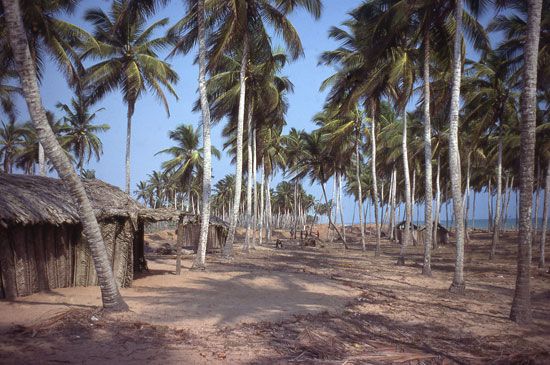
Coconut palms (Cocos nucifera) are found in tropical coastal areas nearly worldwide, with their origins likely traced to the Indo-Malaya region. As a…
Where do coconut palm trees typically grow, and what climate conditions do they prefer?
Coconut palms (Cocos nucifera) are found in tropical coastal areas nearly worldwide, with their origins likely traced to the Indo-Malaya region. As a pantropical species, they are uniquely adapted to thrive in specific environmental conditions.12
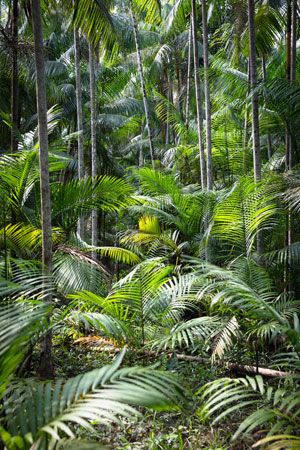
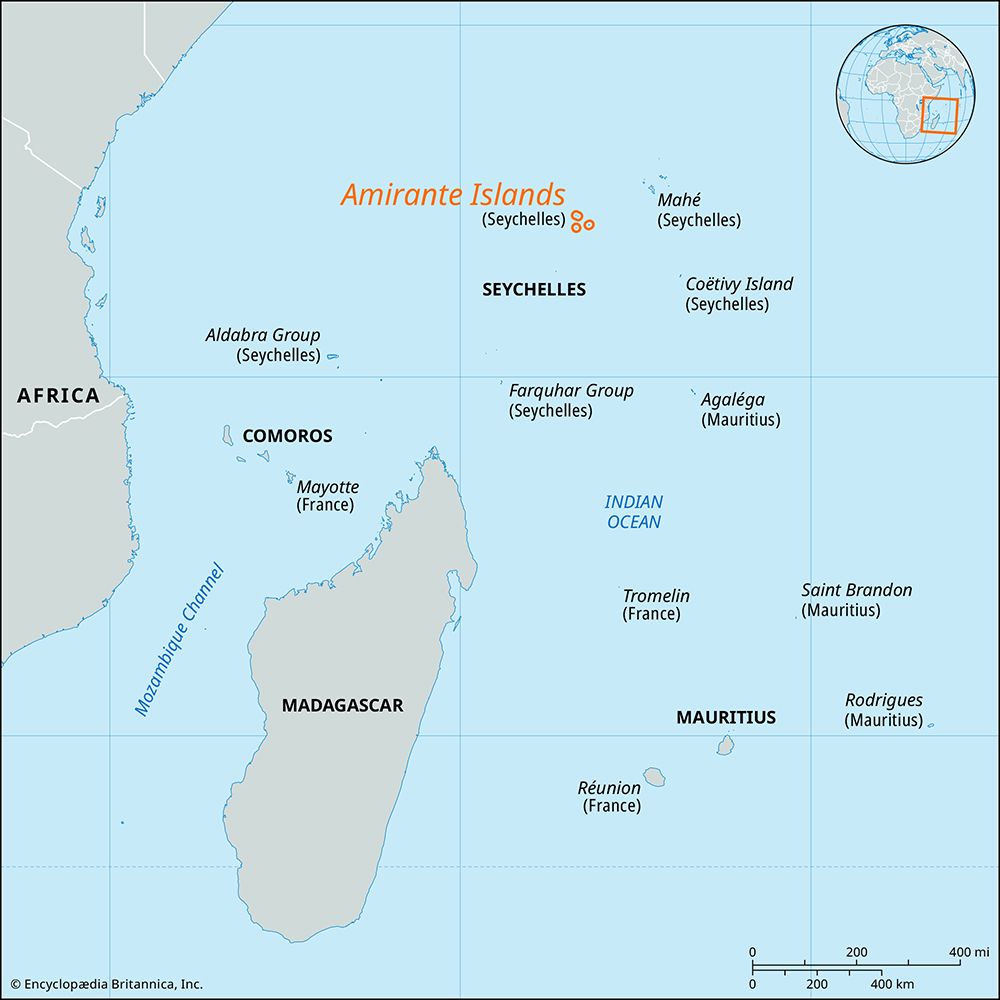
These palms flourish best in low-lying areas close to the sea, typically just a few feet above high-water marks. They require a climate that provides ample rainfall and access to circulating groundwater. Because they are a tropical species, they are generally restricted to warm regions; while palms as a family are distributed between latitudes 44° N and 44° S, they are most abundant within the 30° N to 30° S range, corresponding to zones with mean annual temperatures between 15 and 21 °C (60 and 70 °F).12
What are the nutritional benefits of coconuts and their various products?
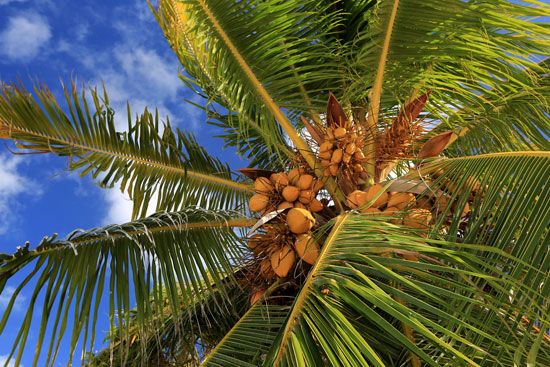
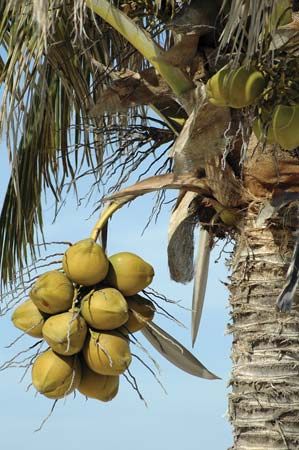
Coconuts are a significant source of nutrition, primarily characterized by their high fat content found in the meat of the fruit. This versatile fruit provides several products with distinct culinary and nutritional roles:3
- Coconut Meat: The kernel, or meat, is rich in fat and can be consumed fresh or dried. When dried, it is known as copra, which serves as the primary source for extracting coconut oil, a major vegetable oil.3
- Coconut Milk: Created by mixing grated meat with water, this product is used in cooking and serves as a common substitute for cow’s milk.3
- Coconut Cream: This is a thicker, white liquid obtained by compressing the meat of fresh coconuts, often used as a primary sauce or flavoring.4
- Coconut Water: Found within young, fresh coconuts, this clear liquid is widely consumed as a beverage.35
While coconuts are a staple crop in the tropics, the provided information focuses on their physical composition and culinary utility rather than specific micronutrient profiles.
What is the scientific name of the coconut palm tree and what family does it belong to?
The scientific name of the coconut palm tree is Cocos nucifera. It belongs to the family Arecaceae, which is part of the order Arecales.671
How long does it take for a coconut palm tree to grow and produce fruit?
The growth and production cycle of a coconut palm (Cocos nucifera) involves several stages:
- Nursery Phase: Propagation begins by placing unhusked ripe nuts in nursery beds. Seedlings are typically ready to be transplanted into the field after 4 to 10 months.1
- Initial Bearing: Once transplanted, coconut palms generally begin producing fruit after 5 to 6 years.1
- Full Production: A tree reaches its full bearing capacity approximately 15 years after planting.1
- Ripening: Once the tree begins to produce, individual fruits require one year to ripen.1
- Productive Lifespan: A tree can maintain profitable yields until it is about 50 years old, with a good annual yield typically averaging around 50 fruits per tree.1
Sources
- Coconut palm — Encyclopædia Britannica
- Palm - Distribution — Encyclopædia Britannica
- Coconut — Encyclopædia Britannica
- coconut water — Merriam-Webster
- coconut cream — Merriam-Webster
- Arecales — Encyclopædia Britannica
- Palm — Encyclopædia Britannica
- coconut palm — Merriam-Webster
Published on · 2 min read