Acid Rain
Acid rain impacts human health primarily through indirect pathways, as the pollutants that cause it—sulfur dioxide and nitrogen oxides—are also linked to…

How does acid rain impact human health directly and indirectly?
Acid rain impacts human health primarily through indirect pathways, as the pollutants that cause it—sulfur dioxide and nitrogen oxides—are also linked to broader environmental and food chain disruptions.
Indirect Impacts
The most significant indirect threat to humans involves the bioaccumulation of methyl mercury. High acidity in aquatic environments accelerates the conversion of elemental mercury into this potent neurological toxin. As methyl mercury moves up the food chain, it concentrates in the tissues of fish. Because humans often consume these top predators, they are exposed to levels of mercury that can be harmful, leading to government health advisories regarding fish consumption.1
Direct Impacts
While the primary focus of acid rain research is ecological, the gases that form it—emitted by power plants, vehicles, and industrial facilities—are recognized air pollutants that directly affect human respiratory and cardiovascular health when inhaled. Additionally, acid deposition can indirectly threaten human safety through geological instability; for example, it has been implicated in weakening rock layers, potentially contributing to catastrophic landslides.234
What exactly is acid rain and how does it form?
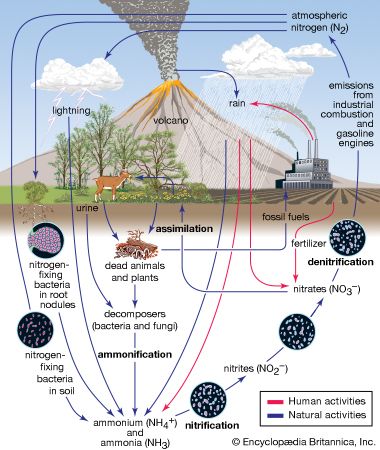
Acid rain is defined as precipitation with a pH of approximately 5.2 or lower. While natural phenomena like volcanic eruptions and lightning can contribute to acidity, the phenomenon is primarily driven by human activities.173
How It Forms
The process begins with the emission of sulfur dioxide (SO₂) and nitrogen oxides (NOₓ) into the atmosphere. These pollutants are released largely through the combustion of fossil fuels—such as coal, oil, and natural gas—by power plants, vehicles, and industrial facilities.31
Once these gases are airborne, they travel long distances and react with water, oxygen, and other chemicals to form sulfuric acid (H₂SO₄) and nitric acid (HNO₃). These acids eventually mix with cloud moisture, resulting in rain, snow, or fog that carries a higher concentration of hydrogen ions than normal, lowering the pH of the precipitation that falls to the ground.31
What role do sulfur dioxide and nitrogen oxides play in the formation of acid rain?
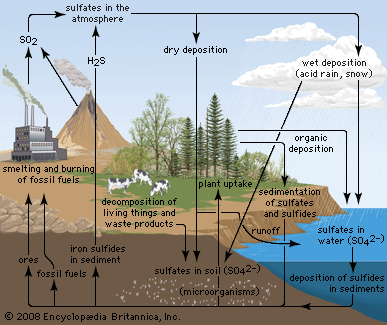
Sulfur dioxide (SO₂) and nitrogen oxides (NOₓ) are the primary precursors to acid rain, also known as acid deposition. These pollutants are released into the atmosphere largely through the combustion of fossil fuels—such as coal, oil, and natural gas—by power plants, vehicles, and industrial facilities.18
Chemical Transformation
Once emitted, these gases travel through the atmosphere and react with water, oxygen, and other chemicals to form acidic compounds. The fundamental chemical reactions include:18
- Sulfuric Acid Formation: SO₂ reacts with oxygen and water to produce sulfuric acid (H₂SO₄).8
- Nitric Acid Formation: NO₂ reacts with water to produce nitric acid (HNO₃).8
These acids mix with cloud moisture, significantly lowering the pH of precipitation. While these reactions typically occur in the aqueous phase within clouds, they can also produce acidic dry deposition in the gaseous phase or on atmospheric particles. Because these pollutants can be transported over long distances, the resulting acid rain often impacts regions far from the original emission sources.18
How is the pH scale used to measure the acidity of rain?
The pH scale is a quantitative measure used to determine the acidity or basicity of aqueous solutions, with values typically ranging from 0 to 14. In the context of acid rain, the scale identifies precipitation as acidic when its pH falls below 5.2.1153
Measuring Acidity
The pH value is defined operationally as the negative logarithm of the hydrogen ion activity (aH+a_{H^+}), expressed as: pH=−logaH+pH = -\log a_{H^+} Because pure water is neutral with a pH of 7, any value lower than 7 indicates an acidic solution. While rainwater naturally equilibrates with atmospheric carbon dioxide to reach a pH of approximately 5.7, the presence of sulfur and nitrogen compounds from industrial emissions drives the pH significantly lower.113
Tools for Measurement
Scientists and researchers typically use a pH meter to obtain precise readings. This device functions as a voltmeter that measures the difference in electric potential between a pH-responsive glass electrode and a reference electrode immersed in the sample. For less precise field assessments, litmus paper or indicator dyes may be used to estimate acidity by observing color changes.11
Sources
- What causes acid rain? — Encyclopædia Britannica
- Acid rain - Effects on forested and mountainous regions — Encyclopædia Britannica
- hydrosphere - Acid rain — Encyclopædia Britannica
- Acid rain - Effects on lakes and rivers — Encyclopædia Britannica
- Acid rain — Encyclopædia Britannica
- What Happened to Acid Rain? — Encyclopædia Britannica
- acid rain — Merriam-Webster
- oxyacid - Nitric acid and nitrate salts — Encyclopædia Britannica
- Acid rain - Chemistry of acid deposition — Encyclopædia Britannica
- air pollution - Criteria pollutants — Encyclopædia Britannica
- pH — Encyclopædia Britannica
Published on · 4 min read