Air Pollution
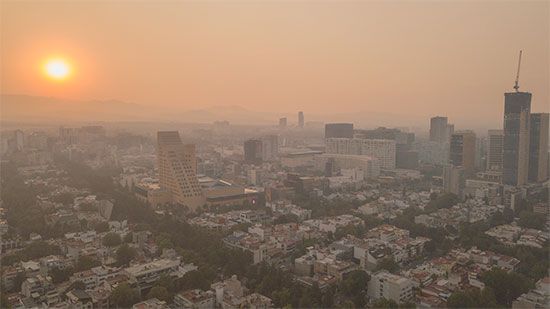
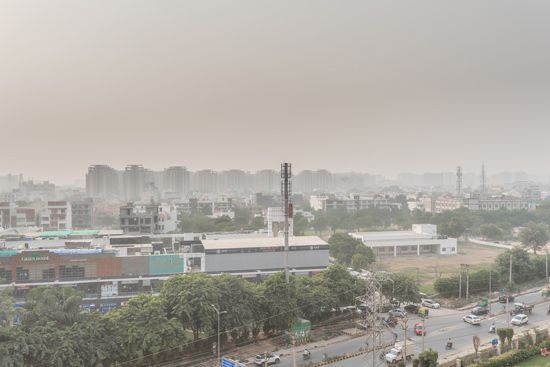
Air pollution in urban and industrial areas primarily stems from the combustion of fossil fuels and various industrial processes.
What are the main sources of air pollution in urban and industrial areas?
Air pollution in urban and industrial areas primarily stems from the combustion of fossil fuels and various industrial processes.12
Major Sources
- Transportation: Automobiles are a leading source of urban air pollution, releasing carbon monoxide, nitrogen oxides, and particulate matter through exhaust.132
- Industrial Facilities: Factories, power plants, and refineries act as “point sources” for pollutants. These include sulfur dioxide, heavy metals like mercury, and volatile organic compounds (VOCs) used in manufacturing and solvents.124
- Area Sources: Smaller, dispersed contributors include dry-cleaning facilities, gas stations, and residential heating systems.24
- Waste Management: Municipal waste incinerators can release hazardous substances, including dioxins and various toxic metals.4
These emissions contribute to the formation of smog and acid rain, posing significant risks to human health and the environment. Addressing these sources through emission controls and cleaner technology is essential for public health and environmental protection.15234
How does air pollution affect human health and the environment?
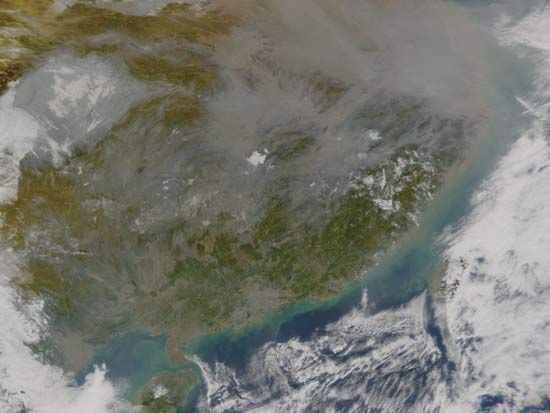
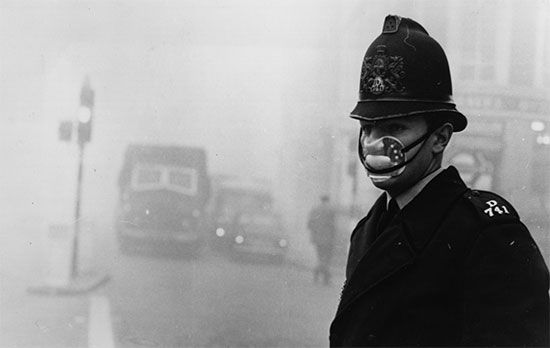
Air pollution poses severe risks to both human health and the global environment. Because pollutants can be transported long distances by wind, these effects often transcend local and national boundaries.16
Impact on Human Health
Air pollution is a leading environmental health risk, with exposure linked to approximately seven million premature deaths annually. It primarily affects the respiratory and cardiovascular systems:7
- Respiratory Issues: Pollutants like sulfur dioxide and particulate matter irritate airways, causing inflammation and contributing to chronic bronchitis and asthma.18
- Cardiovascular Effects: Fine particulates ($PM_{2.5}$) can enter the bloodstream, increasing the risk of heart attack, stroke, and irregular heartbeats.18
- Long-term Risks: Chronic exposure is associated with lung cancer and impaired cognitive function. Children, the elderly, and those with pre-existing conditions are most vulnerable.18
Impact on the Environment
Air pollution alters natural ecosystems and global climate patterns:
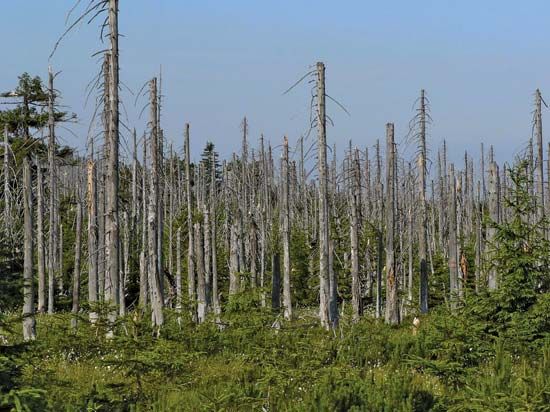
- Acid Rain: Formed when sulfur dioxide and nitrogen oxides combine with atmospheric water, acid rain damages soil, forests, and aquatic life, while also corroding buildings and monuments.169
- Climate Change: The emission of greenhouse gases like carbon dioxide drives global warming, leading to rising sea levels, melting ice caps, and disrupted weather patterns.16
- Ozone Depletion: Pollutants such as chlorofluorocarbons (CFCs) damage the stratospheric ozone layer, increasing human exposure to harmful ultraviolet radiation.16
- Agricultural Damage: Acid gases can cause cell death in plants, reducing crop health and productivity.10
We could dive deeper into the specific international agreements, such as the Montreal Protocol, designed to mitigate these environmental threats.
How does indoor air pollution differ from outdoor air pollution?
Indoor and outdoor air pollution differ primarily in their sources, the environments in which they accumulate, and the strategies required for mitigation.
Indoor Air Pollution
Indoor air quality is a significant concern because people spend the majority of their time inside homes and workplaces. Contaminants often accumulate due to efforts to increase energy efficiency, which can lead to reduced ventilation rates.1314
- Sources: Common indoor pollutants include combustion products from stoves, fireplaces, and kerosene heaters, as well as volatile organic compounds (VOCs) from cleaning agents, paints, and pesticides. Formaldehyde can off-gas from building materials like particleboard.1314
- Biological Contaminants: Indoor spaces can harbor bacteria, viruses, molds, pollen, and dust mites, which may be spread by heating and cooling systems.1314
- Specific Hazards: Secondhand smoke and naturally occurring radon gas are major indoor-specific threats.131
Outdoor Air Pollution
Outdoor air pollution is characterized by its wide dispersal and difficulty to contain once released into the atmosphere.12
- Sources: Primary drivers include fossil fuel combustion from power plants and vehicle exhaust, which release sulfur dioxide, nitrogen oxides, and carbon monoxide.1512
- Formation: Outdoor pollutants often undergo chemical reactions in the atmosphere, such as the formation of photochemical smog and ozone in the presence of sunlight.1
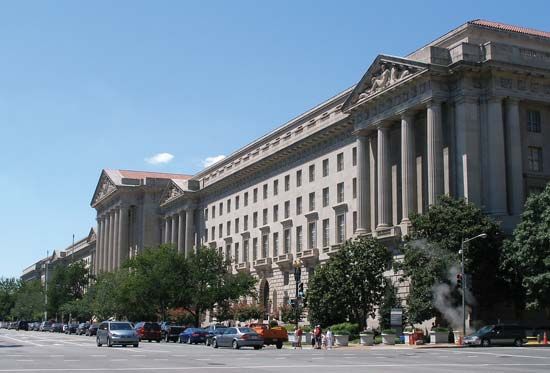
While indoor issues are often addressed through building construction and improved ventilation, outdoor pollution requires broad legislative action and emission controls.13116
What international agreements exist to address global air pollution issues?
International cooperation is essential to addressing global air pollution, as pollutants often cross national borders. The United Nations has served as the primary forum for these negotiations, fostering both legally binding treaties and nonbinding declarations.1718
Key International Agreements
- Montreal Protocol: Adopted in 1987, this landmark treaty regulates chemicals that deplete the ozone layer, such as chlorofluorocarbons (CFCs). It is widely considered a success, with the ozone layer showing signs of recovery.19
- Kyoto Protocol: Established in 1997, this legally binding agreement set specific targets for industrialized nations to reduce greenhouse gas emissions. It introduced market-based mechanisms like carbon-emission trading to help countries meet these goals cost-effectively.1718
- Paris Agreement: Signed in 2015, this global accord aims to limit the rise of global average temperatures to well below 2 °C above preindustrial levels. It requires periodic progress reviews and provides financial support to help developing nations adopt sustainable technologies.20
- Convention on Long-Range Transboundary Air Pollution: Signed in 1979, this agreement specifically targets air pollutants that travel across international borders, establishing monitoring and supervisory mechanisms.18
These agreements reflect a shift from individual state responsibility toward a collaborative international approach to environmental protection.18
Sources
- air pollution: Top Questions — Encyclopædia Britannica
- pollution in India - Industrial emissions — Encyclopædia Britannica
- pollution in India - Vehicle emissions — Encyclopædia Britannica
- air pollution - Criteria pollutants — Encyclopædia Britannica
- air pollution - Air toxics — Encyclopædia Britannica
- air pollution - The global reach of air pollution — Encyclopædia Britannica
- particulate matter — Encyclopædia Britannica
- Agricultural technology - Acid gases — Encyclopædia Britannica
- air pollution — Encyclopædia Britannica
- air pollution - Sulfur dioxide — Encyclopædia Britannica
- Urban ecosystem - The structure of urban ecosystems — Encyclopædia Britannica
- respiratory disease - Air pollution — Encyclopædia Britannica
- air pollution - Indoor air pollution — Encyclopædia Britannica
- sick building syndrome — Encyclopædia Britannica
- ventilating — Encyclopædia Britannica
- environmental health — Encyclopædia Britannica
- Montreal Protocol — Encyclopædia Britannica
- environmental policy - Global policy agreements — Encyclopædia Britannica
- Global warming policy - The Paris Agreement and future climate-change policy — Encyclopædia Britannica
- International law - Protection of the environment — Encyclopædia Britannica
- pollution in India - Solutions — Encyclopædia Britannica
Published on · 4 min read