Darwin’s Frog
Darwin’s frog (Rhinoderma darwinii) is a small frog native to Argentina and Chile, famously discovered by Charles Darwin during his travels.
What is Darwin’s frog?
Darwin’s frog (Rhinoderma darwinii) is a small frog native to Argentina and Chile, famously discovered by Charles Darwin during his travels.1
This species is renowned for its unique reproductive behavior, which represents a fascinating form of parental care. After an amplectic pair deposits 20 to 30 eggs on moist ground, the male remains with them. When the eggs are near hatching, the male picks them up with his tongue and moves them into his vocal sac through his vocal slits.2
The larvae complete their development within this distensible vocal sac, protected from the environment. Once metamorphosis is complete, the fully formed young frogs emerge from the male’s mouth. This method of mouth-brooding allows the species to bypass the need for an immediate aquatic environment during the early stages of development, though the eggs must remain in moist conditions to survive.12
How do other frog species provide parental care?
While most frogs do not provide parental care, several species have evolved unique strategies to protect their offspring, often shifting away from purely aquatic environments to ensure survival. Because these eggs lack protective shells or specialized membranes like the allantois and amnion, they must be kept in moist conditions, such as damp soil or on the parent’s body, to maintain physiological balance.23
Common methods of parental care include:
- Transporting Tadpoles: Members of the poison frog family (Dendrobatidae) lay terrestrial eggs. Once hatched, the tadpoles climb onto the back of a parent—usually the male—who carries them to water sources like streams, pools, or bromeliads.24
- Egg Carrying: The midwife toad (Alytes obstetricans) exhibits a distinct behavior where the male winds a string of fertilized eggs around his legs and waist, carrying them on land until they are ready to hatch in a pond. Other species carry eggs under a flap of skin on their backs.23
- Marsupial Frogs: In species such as Gastrotheca marsupiata, the female possesses a pouch. The male helps push fertilized eggs into this pouch, where the tadpoles develop until the female releases them into water.2
What are the main threats to the survival of Darwin’s frog?
The survival of Darwin’s frog (Rhinoderma darwinii) and many other amphibian species is threatened by a combination of environmental and biological factors.
Primary Threats
- Habitat Destruction: The loss and degradation of natural environments have severely impacted the distribution and abundance of numerous amphibian species, including Darwin’s frog.5
- Amphibian Chytridiomycosis: This pandemic disease, caused by the chytrid fungus (Batrachochytrium dendrobatidis), is a major global threat to amphibian biodiversity. The fungus infects the skin, disrupting gas exchange and electrolyte balance, which often leads to cardiac arrest and death.516
- Environmental Stressors: Factors such as acid rain, global warming, and ozone depletion are recognized as contributing to the decline of frog populations, though their specific impacts can vary by region.5
The spread of the chytrid fungus has been exacerbated by human activity, particularly through global food and pet trading networks, which facilitate the movement of the pathogen into new areas.1
What other animals did Charles Darwin discover during his travels?
During his five-year voyage on the HMS Beagle, Charles Darwin encountered and collected a vast array of animal life that significantly influenced his later work on natural selection. While he is often associated with the Galapagos Islands, his observations spanned across South America and beyond.
Fossil Discoveries
In South America, particularly at Bahía Blanca and Port St. Julian, Darwin unearthed the remains of extinct mammals. These included:
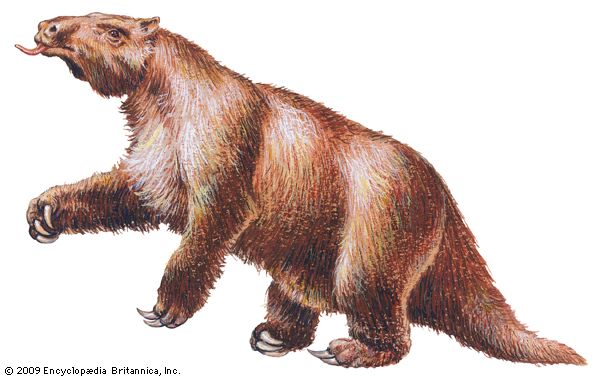
- Giant ground sloths, such as Megatherium.
- Relics he identified as mastodons, rhinoceroses, and cow-sized armadillos.
- A horse-sized mammal with a long face similar to an anteater.
Living Species
Darwin’s notes and collections included a wide variety of living creatures:
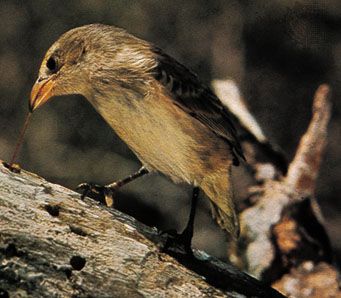
- Galapagos Fauna: He observed giant tortoises, marine iguanas, Galapagos finches, mockingbirds, blue-footed boobies, penguins, and fur seals.
- South American Wildlife: He documented flatworms, various spiders, and the parasitic ichneumon wasp. He also noted a new species of small rhea in Argentina.
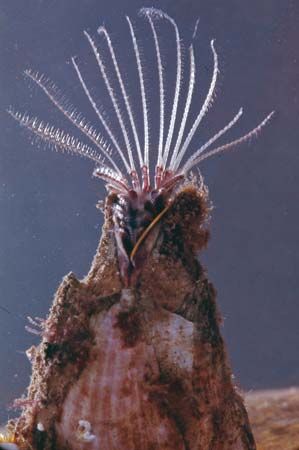
- Marine Life: Throughout his travels, he studied plankton, mussels, and later in his career, conducted an extensive study of barnacles.
Sources
- Darwin’s frog — Encyclopædia Britannica
- frog and toad - Egg laying on land — Encyclopædia Britannica
- Reproductive behaviour - Amphibians — Encyclopædia Britannica
- poison frog — Encyclopædia Britannica
- amphibian - Distribution and abundance — Encyclopædia Britannica
- amphibian chytridiomycosis — Encyclopædia Britannica
- chytridiomycosis — Merriam-Webster
- Galapagos Islands — Encyclopædia Britannica
- Charles Darwin - The Beagle voyage of Charles Darwin — Encyclopædia Britannica
- Animal behaviour - Darwin’s influence — Encyclopædia Britannica
- Biology - Biological expeditions — Encyclopædia Britannica
- Charles Darwin - The squire naturalist in Downe — Encyclopædia Britannica
- Charles Darwin - Early life and education — Encyclopædia Britannica
Published on · 3 min read