What Causes Acid Rain?
Acid rain is primarily caused by the release of sulfur dioxide and nitrogen oxides into the atmosphere. These pollutants are mainly produced by human…
What causes acid rain?
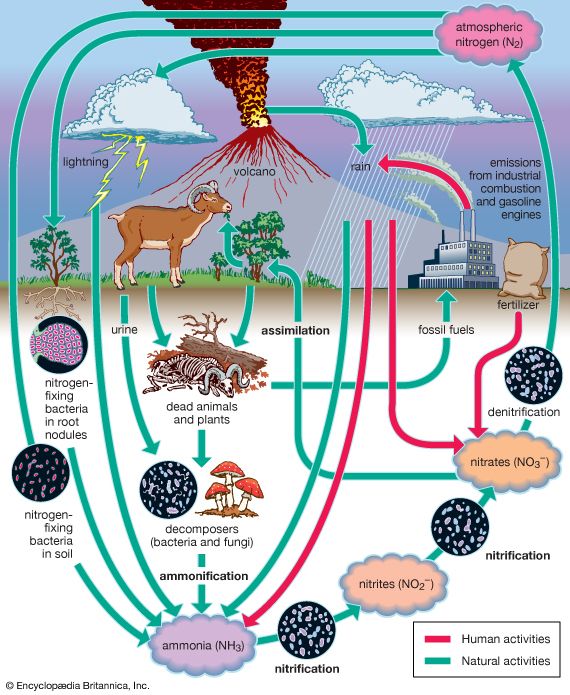
Acid rain is primarily caused by the release of sulfur dioxide and nitrogen oxides into the atmosphere. These pollutants are mainly produced by human activities, specifically the combustion of fossil fuels such as coal, oil, and natural gas in power plants, vehicles, and industrial facilities.12
Once in the air, these gases react with water, oxygen, and other chemicals to form sulfuric acid and nitric acid. These acids mix with cloud moisture, resulting in precipitation with a pH lower than 5.2. While natural sources like volcanic eruptions and lightning can contribute to the process, their impact is typically localized compared to the widespread effects of industrial pollution.12
How does acid rain affect aquatic ecosystems and fish populations?
Acid rain significantly disrupts aquatic ecosystems by increasing the acidity of lakes and rivers, particularly in regions with low buffering capacity. This acidification has devastating effects on fish populations and other aquatic organisms, leading to a marked decline in biodiversity.32
Key impacts include:
- Aluminum Toxicity: Acidification mobilizes aluminum from soils into water bodies. In its dissolved form, aluminum is toxic to aquatic life and can damage fish gills, impairing their ability to breathe.32
- Population Decline: As pH levels drop, the number of fish species in affected lakes decreases sharply. Many lakes that once supported large fish populations are now nearly barren.32
- Bioaccumulation of Toxins: High acidity accelerates the conversion of mercury into methyl mercury, a potent neurological toxin. This substance bioaccumulates in the tissues of fish, often necessitating government health advisories against their consumption.3
- Episodic Acidification: Rapid snowmelt can release a concentrated pulse of acidic water, which can be lethal to acid-sensitive organisms throughout the food web.3
We could dive deeper into how these chemical changes ripple through the broader food chain.
What role do air quality regulations play in reducing acid rain?
Air quality regulations have played a critical role in mitigating acid rain by mandating significant reductions in the emissions of sulfur dioxide and nitrogen oxides, the primary chemical precursors to acid deposition.456
Key regulatory strategies include:
- Emission Standards and Caps: Legislation such as the U.S. Clean Air Act of 1970 and its 1990 amendments established stringent limits on pollutants from power plants and industrial facilities. These laws successfully forced a dramatic decline in emissions, leading to a measurable increase in the pH of precipitation in North America and Europe.457
- Emissions Trading: The U.S. Acid Rain Program pioneered a cap-and-trade system. By setting a finite limit on total emissions and allowing companies to buy and sell allowances, this market-based approach achieved reductions more efficiently than traditional command-and-control regulations.8
- Flue Gas Treatment: Regulations often require facilities to install flue gas treatment technologies, such as scrubbers and catalytic converters, which can remove over 90 percent of sulfur dioxide and nitrogen oxides before they reach the atmosphere.2
- International Cooperation: Agreements like the Geneva Convention on Long-range Transboundary Air Pollution and the Canada–United States Air Quality Agreement have been essential in addressing pollution that travels across national borders.45
How does acid rain impact soil health and forest growth?
Acid rain significantly degrades soil health and hinders forest growth through several interconnected chemical processes.
Impact on Soil Chemistry
Soils rely on base cations—such as calcium, magnesium, potassium, and sodium—to neutralize acidity and provide essential nutrients for plants. Acid deposition depletes these vital nutrients through leaching, leaving poorly buffered soils unable to sustain healthy growth. Furthermore, increased soil acidity mobilizes aluminum, which is toxic to plant roots and interferes with nutrient uptake.9102
Effects on Forest Growth
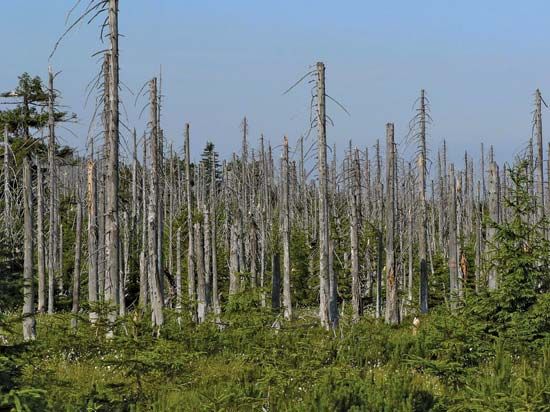
Forests suffer from both direct and indirect damage caused by acid rain:9
- Weakened Resilience: Acid-stressed trees become more susceptible to environmental stressors, including drought, insect infestations, and pathogens.910
- Direct Foliar Damage: Acids can leach nutrients directly from tree needles, as seen in red spruce, making them vulnerable to freezing temperatures.9
- Species Decline: Populations of trees like sugar maple, aspen, and birch have shown significant declines in regions heavily impacted by acid deposition.9
We could dive deeper into how specific agricultural practices contribute to soil acidification through nitrogen deposition.
Sources
- What causes acid rain? — Encyclopædia Britannica
- hydrosphere - Acid rain — Encyclopædia Britannica
- Acid rain - Effects on lakes and rivers — Encyclopædia Britannica
- What Happened to Acid Rain? — Encyclopædia Britannica
- Emissions trading — Encyclopædia Britannica
- Acid rain - History — Encyclopædia Britannica
- flue gas treatment — Encyclopædia Britannica
- The six criteria air pollutants — Encyclopædia Britannica
- Acid rain - Effects on forested and mountainous regions — Encyclopædia Britannica
- soil - Mineral content — Encyclopædia Britannica
- Acid rain — Encyclopædia Britannica
Published on · 3 min read