Adam’s Peak
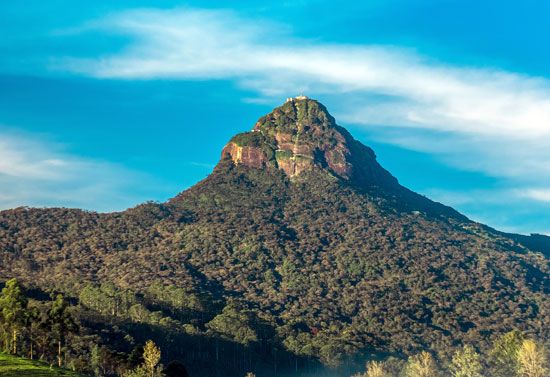
Adam’s Peak is a 7,559-foot (2,304-meter) mountain located in southwestern Sri Lanka. Known for its distinctive conical shape, the peak is famous for the Sri…
What is Adam’s Peak?
Adam’s Peak is a 7,559-foot (2,304-meter) mountain located in southwestern Sri Lanka. Known for its distinctive conical shape, the peak is famous for the Sri Pada, or “Sacred Footprint,” a hollow at the summit that resembles a human footprint.1
This site is a significant place of pilgrimage for multiple faiths:
- Buddhists believe the print was left by the Buddha.
- Hindus associate it with the god Shiva.
- Muslims identify it as the footprint of Adam.
- Christians have historically associated it with St. Thomas1.
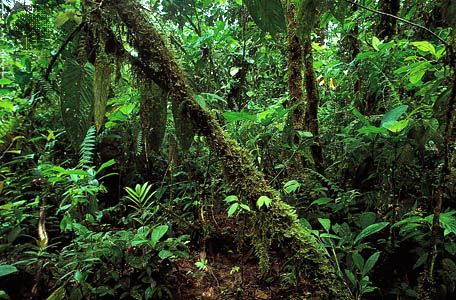
Beyond its religious importance, the mountain is situated within a tropical rainforest region known as the Peak Wilderness Sanctuary. The area is geologically rich in gemstones, including rubies and sapphires, and serves as the source for three of Sri Lanka’s major rivers. Historically, the peak has been documented by various travelers and explorers, including Marco Polo and Ibn Battuta.1
Where is Adam’s Peak located?
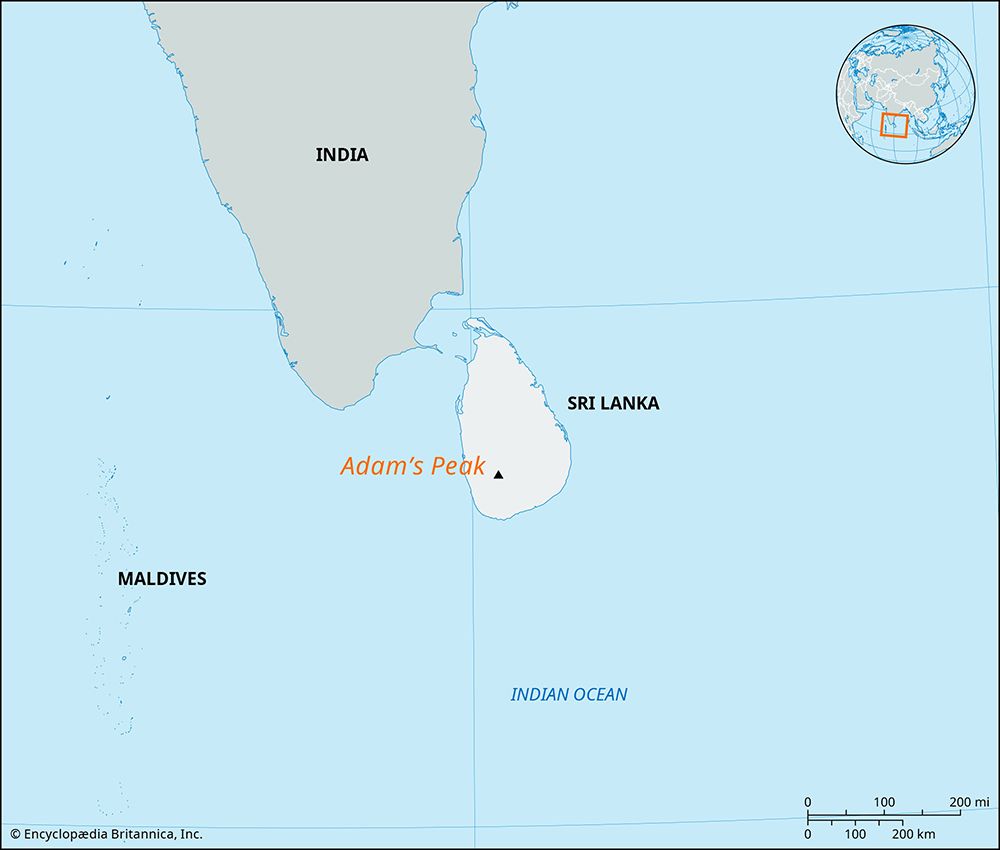
Adam’s Peak is located in southwestern Sri Lanka, specifically 11 miles (18 km) northeast of Ratnapura, the capital of the Sabaragamuwa province. While some sources identify it as being in the south-central region of the island, it stands prominently above the surrounding mountain range with a distinct conical shape.21
Why is Adam’s Peak considered important or special?
Adam’s Peak is considered a site of profound spiritual and natural significance. Its primary importance stems from the Sri Pada (Sinhala for “Sacred Footprint”), a 67-inch-long hollow at the summit that resembles a human footprint. This feature is venerated by multiple faiths: Buddhists believe it was left by the Buddha, Hindus attribute it to the god Shiva, Muslims associate it with Adam, and some Christians link it to St. Thomas.1
Beyond its religious status, the mountain is ecologically and geologically vital:
- Biodiversity: It is located within a tropical rainforest and the Peak Wilderness Sanctuary, which protects an isolated elephant population.1
- Hydrology: It serves as the origin for three of Sri Lanka’s major rivers: the Kelani, the Walawe, and the Kalu.1
- Geology: The mountain is composed of gneiss rock and is renowned for being rich in gemstones, including rubies, sapphires, and garnets.1
What is the sacred footprint found at the summit of Adam’s Peak?
The sacred footprint found at the summit of Adam’s Peak is known as the Sri Pada (Sinhala for “Sacred Footprint”). It is a hollow in the rock measuring 67 inches (170 cm) in length and 18 inches (46 cm) in width, which bears a resemblance to a human foot.1
This site is a significant place of pilgrimage and is venerated by multiple religious traditions, each attributing the impression to a different figure:
- Buddhists: Believe the print was left by the Buddha during his third and final visit to Sri Lanka.1
- Hindus: Refer to the mountain as Sivan Adi Padham, believing the god Shiva created the footprint.1
- Muslims: Associate the site with Adam, believing he stood there in penance on one foot for a thousand years after his expulsion from paradise.1
- Christians: Some traditions, particularly those noted by 16th-century Portuguese arrivals, identified the impression as the footprint of St. Thomas.1
Sources
- Adam’s Peak — Encyclopædia Britannica
- Adam's Peak — Merriam-Webster
Published on · 2 min read