African Bush Elephant
The African bush elephant (Loxodonta africana), also known as the African savanna elephant, is the largest living land animal on Earth. It is one of two…
What is an African bush elephant?
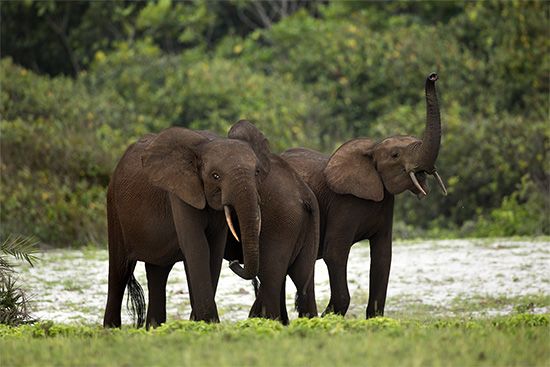
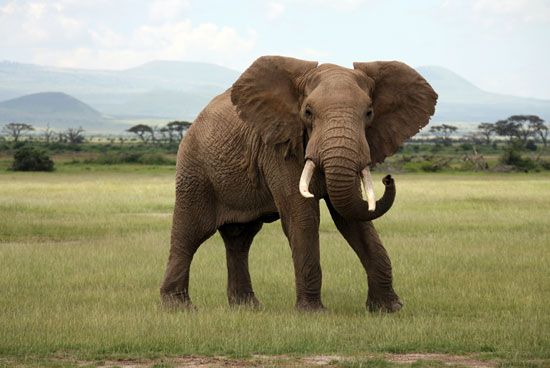
The African bush elephant (Loxodonta africana), also known as the African savanna elephant, is the largest living land animal on Earth. It is one of two distinct species of African elephants, distinguished from the smaller African forest elephant by its larger, more pointed ears and tusks that curve outward.123
These elephants can reach heights of up to 13.1 feet (4 meters) at the shoulder and typically weigh between 9,900 and 13,500 pounds, though some males can grow significantly larger. They are renowned for their long trunks, tusks, and large, sail-shaped ears, which they use to dissipate body heat.124
Currently classified as an endangered species, their populations have declined due to poaching for ivory and habitat losspoaching-law) for ivory and habitat loss. They live in matriarchal family units across various habitats in sub-Saharan Africa, ranging from savannas to deserts.24
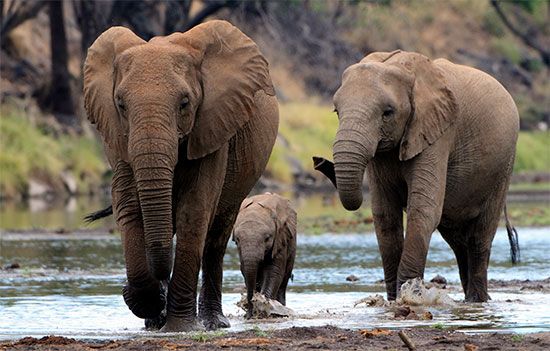
Where do African bush elephants live?
The African bush elephant was once found throughout sub-Saharan Africa. Due to the impacts of poaching and habitat loss, their geographic range has significantly declined.
At present, these elephants reside in pockets scattered across 23 African countries. They are highly adaptable and inhabit a diverse range of environments, including savannas, forests, and deserts.2
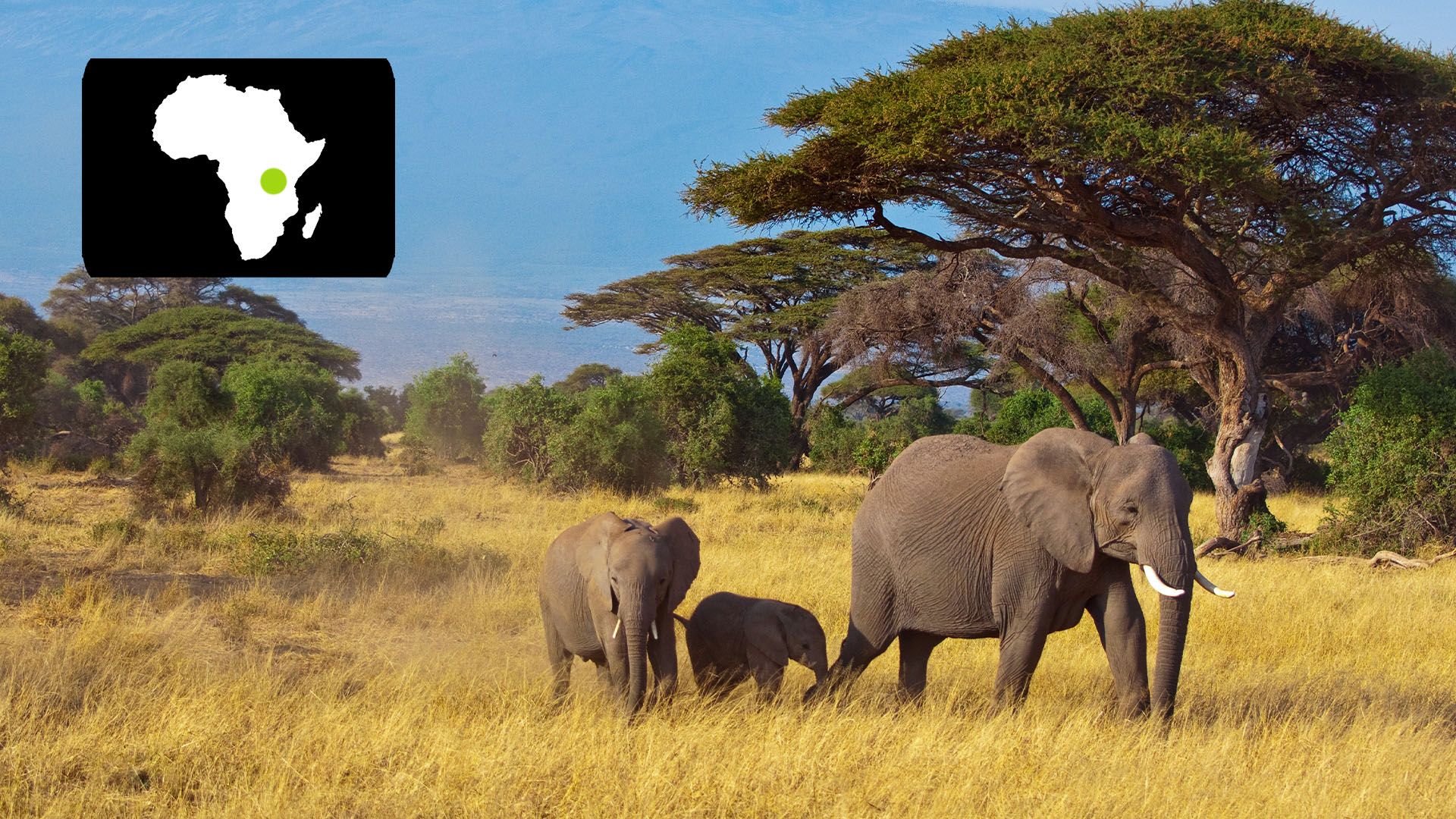
What do African bush elephants look like?
The African bush elephant (Loxodonta africana) is the largest living land animal, characterized by several distinct physical features that help it survive in its environment.12
Physical Characteristics
- Size: These elephants stand up to 13.1 feet (4 meters) tall at the shoulder. Males typically weigh between 9,900 and 13,500 pounds, though some individuals can reach up to 24,000 pounds.12
- Ears: They possess large, sail-shaped ears that can measure up to 6 feet long and 4 feet wide. These ears are more pointed and less oval-shaped than those of the African forest elephant and are essential for dissipating body heat.123
- Tusks and Head: They have rounded heads and tusks that curve outward. Unlike Asian elephants, where only males typically grow tusks, both male and female African bush elephants can develop them.23
- Trunk: Like all elephants, they are renowned for their elongated nose, or trunk, which they use for feeding, drinking, and cooling themselves by spraying water or mud on their backs.2
What do African bush elephants eat in the wild?
African bush elephants are herbivores that require a substantial daily intake of food to sustain their massive size. An individual typically consumes between 149 and 169 kg (330–375 pounds) of vegetation each day.5
Their diet is diverse and consists of:
- Grass
- Various plants
- Fruit
- Twigs
- Roots
- Tree bark
Because their standard diet often lacks sufficient sodium, these elephants must supplement their intake with minerals, particularly salt. They obtain these essential nutrients by visiting salt-rich watering holes or through geophagy, which is the practice of eating soil.5
Sources
- How much does an elephant weigh? — Encyclopædia Britannica
- African bush elephant — Encyclopædia Britannica
- What’s the Difference Between Asian and African Elephants? — Encyclopædia Britannica
- African forest elephant — Encyclopædia Britannica
- elephant: Top Questions — Encyclopædia Britannica
Published on · 3 min read