African Forest Elephant
The African forest elephant (Loxodonta cyclotis) is one of two distinct species of African elephants. While historically classified as a subspecies of the…
What is an African forest elephant?
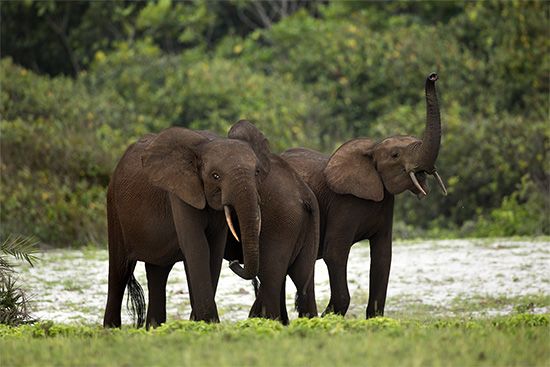
The African forest elephant (Loxodonta cyclotis) is one of two distinct species of African elephants. While historically classified as a subspecies of the African bush elephant, researchers have recognized them as a separate species since the early 21st century due to significant genetic and physical differences.12
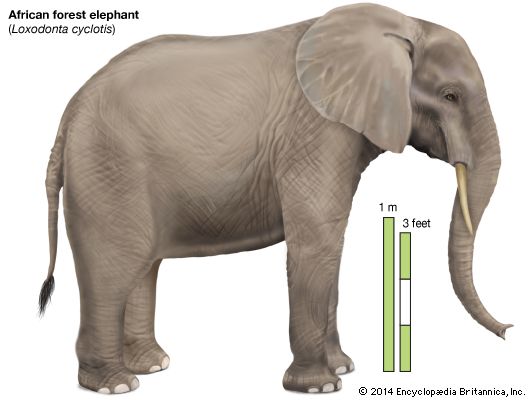
These elephants inhabit tropical forests across Central and Western Africa. Physically, they are smaller than their savanna counterparts, possessing darker grey skin, more rounded ears, and thinner, straighter tusks that point downward. They also have a distinct toenail configuration: five on the forefeet and four on the hindfeet.1324
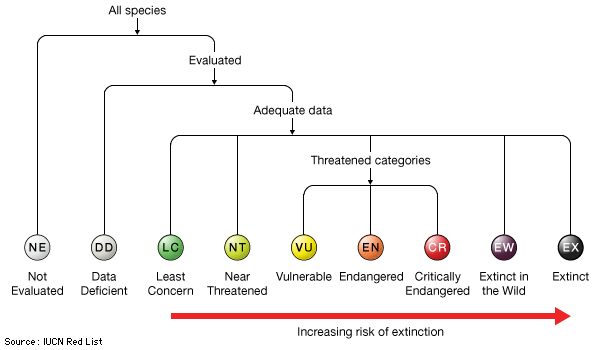
As herbivores, they play a vital role in their ecosystem by thinning vegetation and dispersing seeds through their dung. Unfortunately, due to poaching for ivory and severe habitat loss, the International Union for Conservation of Nature has classified them as a critically endangered species.1
Where do African forest elephants live?
African forest elephants (Loxodonta cyclotis) are found in the tropical forests of Central and Western Africa, ranging from Senegal in the west to the Democratic Republic of the Congo in the east.1
Currently, the species inhabits only about 25 percent of its historical range due to significant habitat loss and poaching. While their numbers have declined across much of their territory, stable populations remain in parts of Central Africa, most notably within Gabon and the Republic of the Congo. Within these environments, they often frequent forest clearings known as bais, which are mineral-rich areas they excavate to access necessary salt.1
How are African forest elephants different from African savanna elephants?
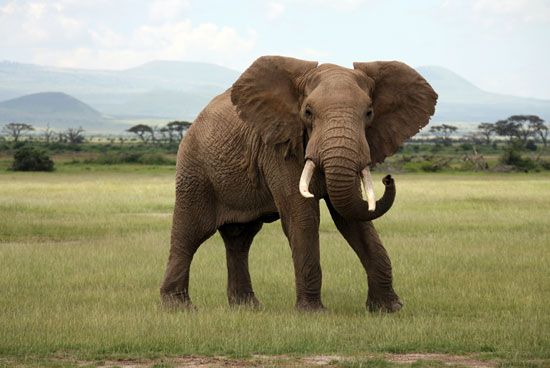
While African forest elephants and African bush (savanna) elephants were once classified as a single species, researchers have recognized them as two distinct species since the early 21st century due to significant genetic and physical differences.314
The primary physical differences between the two include:
- Size and Color: African forest elephants are smaller and possess darker grey skin compared to the larger African bush elephant.14
- Tusks: Forest elephant tusks are thinner, straighter, and point downward, whereas bush elephant tusks typically curve outward.14
- Ears: Forest elephants have more rounded or oval-shaped ears, while bush elephants have larger, more pointed, sail-shaped ears.14
- Toenails: Forest elephants have five toenails on their forefeet and four on their hindfeet; bush elephants have four on their forefeet and three on their hindfeet.1
Both species share similar social structures, living in matriarchies led by the oldest female. However, they occupy different environments, with forest elephants primarily inhabiting tropical forests and bush elephants ranging across savannas, forests, and deserts. Both are currently threatened by poaching and habitat loss-law) and habitat loss.314
What do African forest elephants eat?
African forest elephants are herbivores that spend approximately 20 hours each day foraging for food. They consume between 100 and 300 kg (about 220 to 660 pounds) of plant material daily, including:6
- Fruits
- Tree bark
- Shrubs
- Grasses
- Herbs
- Seeds6
To meet their nutritional requirements, they also seek out salt by visiting mineral-rich waterholes or salt licks, and they may consume soil directly, a behavior known as geophagy. By consuming large quantities of fruit and dispersing seeds through their dung, these elephants play a vital role in their ecosystems, acting as natural fertilizers and supporting forest health.61
Sources
- African forest elephant — Encyclopædia Britannica
- forest elephant — Merriam-Webster
- What’s the Difference Between Asian and African Elephants? — Encyclopædia Britannica
- African bush elephant — Encyclopædia Britannica
- Congo River - Plant life — Encyclopædia Britannica
- elephant: Top Questions — Encyclopædia Britannica
Published on · 3 min read