Asian Elephant
The Asian elephant (Elephas maximus) is the largest land mammal in Asia. These herbivores are distinguished from their African counterparts by their smaller…
What is Asian elephant?
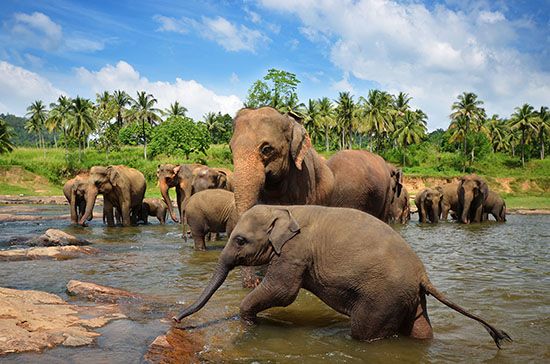
The Asian elephant (Elephas maximus) is the largest land mammal in Asia. These herbivores are distinguished from their African counterparts by their smaller, rounded ears, a twin-domed head shape, and a single projection on the tip of their trunk. While both male and female African elephants can grow tusks, only male Asian elephants typically develop them, though many lack them entirely.12
Asian elephants inhabit forests and grasslands across countries such as India, Sri Lanka, and Thailand. They are highly social animals that live in matriarchal herds, though they face significant threats from habitat loss, poaching, and human-elephant conflict. Consequently, the International Union for Conservation of Nature and Natural Resources has classified the species as endangered since 1986. Protecting these intelligent creatures is a vital conservation priority to ensure their survival in the wild.12
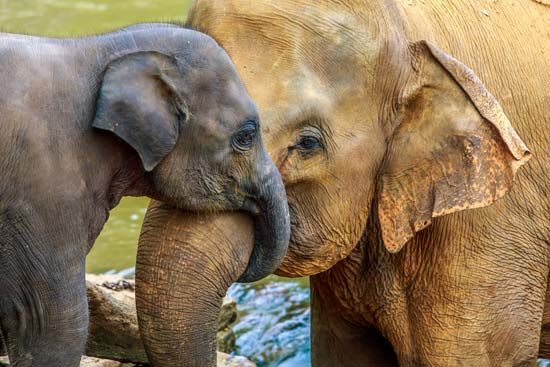
How do Asian elephants use their trunks for communication and survival?
The trunk, or proboscis, is a versatile organ essential to the survival and social life of the Asian elephant. Composed of approximately 150,000 muscle fascicles, it provides the strength to lift heavy loads and the dexterity to perform delicate tasks, such as picking up small objects or cracking open peanuts.4
Survival Functions
- Feeding and Hydration: Elephants use their trunks to grasp vegetation like grasses, leaves, and fruit, placing them directly into their mouths. For drinking, they suck up to 10 liters (2.6 gallons) of water into the trunk before squirting it into their mouths.546
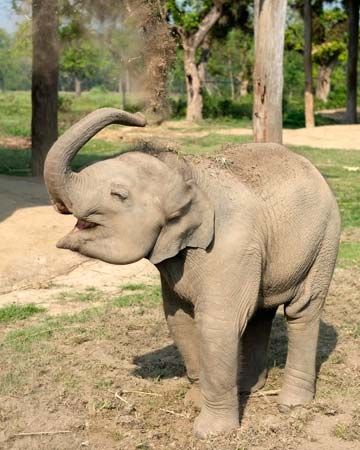
- Protection and Sensing: The trunk acts as an olfactory periscope, allowing elephants to sniff the air for danger or locate resources. Specialized whiskers on the trunk provide tactile feedback, helping the elephant gauge the size, location, and fragility of objects. Additionally, elephants use their trunks to spray water, mud, or dust onto their bodies to regulate temperature and protect against insects and the sun.54
Communication
- Vocalization: By modifying nostril size as air passes through, elephants produce a wide range of sounds, from low-frequency growls to high-pitched trumpets. They also use a pharyngeal pouch to emit infrasonic calls that can travel through the air and ground to reach other elephants up to 4 km away.56
- Social Interaction: Trunks are used for tactile communication, such as intertwining trunks or touching faces, which functions similarly to a human handshake to convey assurance or assess strength. Elephants may also produce sounds by beating their trunks against the ground, trees, or their own tusks.46
What are the main differences between Asian and African elephant species?
While Asian and African elephants share many social and behavioral traits, they are distinct species with several key physical differences. The most reliable ways to distinguish them include:
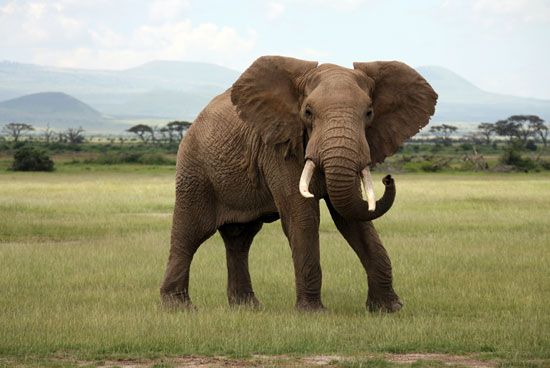
- Ears: African elephants have much larger ears, often described as shaped like the continent of Africa, which help them dissipate heat in hotter climates. Asian elephants have smaller, rounded ears.21
- Head Shape: Asian elephants possess a distinctive twin-domed head with a visible divot running up the center, whereas African elephants have a singular, rounded dome.215
- Trunk Projections: At the tip of the trunk, Asian elephants have a single flaplike projection, while African elephants have two.175
- Tusks: Both male and female African elephants can grow tusks. In contrast, only male Asian elephants typically grow them, and many males—particularly in certain populations—may lack them entirely.21
- Size: African elephants are generally larger. African bush elephants can reach up to 9 tons, while Asian elephants typically weigh around 6 tons and are shorter at the shoulder.2
Why is the Asian elephant considered an endangered species today?
The Asian elephant has been classified as an endangered species by the International Union for Conservation of Nature and Natural Resources since 1986. This status is the result of several interconnected threats that have contributed to a 50-percent decline in their population over the last three generations.71
The primary factors endangering the species include:
- Poaching: Male Asian elephants are specifically targeted for their ivory tusks, which fuels the illegal wildlife trade.71
- Habitat Loss and Fragmentation: The destruction of natural environments forces elephants into smaller, isolated areas, disrupting their movement and access to resources.71
- Human-Elephant Conflict: As habitats shrink, elephants often enter agricultural lands to consume crops like rice and sugarcane. These encounters frequently lead to retaliatory actions that result in the deaths of both elephants and humans.71
- Infrastructure Hazards: Collisions with trains pose a significant and ongoing threat to wild populations.71
Sources
- Asian elephant — Encyclopædia Britannica
- What’s the Difference Between Asian and African Elephants? — Encyclopædia Britannica
- Asian elephant — Merriam-Webster
- What are elephant trunks used for? — Encyclopædia Britannica
- elephant - The trunk (proboscis) — Encyclopædia Britannica
- elephant - Sound production and water storage — Encyclopædia Britannica
- Asian elephant: Top Questions — Encyclopædia Britannica
- elephant - Conservation — Encyclopædia Britannica
- poaching — Encyclopædia Britannica
Published on · 4 min read