Arsinoitherium
Arsinoitherium is a genus of extinct, large, primitive, hoofed mammals that lived during the Eocene Epoch and Oligocene Epoch. Roughly the size of a large…
What is Arsinoitherium?
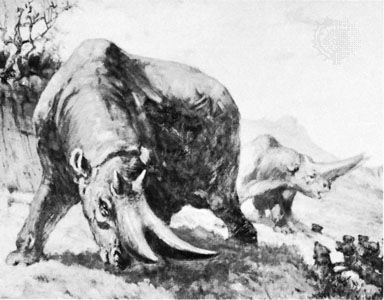
Arsinoitherium is a genus of extinct, large, primitive, hoofed mammals that lived during the Eocene Epoch and Oligocene Epoch. Roughly the size of a large rhinoceros, these animals reached lengths of approximately 3.5 meters (11 feet) and are believed to have been swamp dwellers.1
Physically, Arsinoitherium was characterized by an enormous pair of horns located on its nasal bones, complemented by a smaller pair of horns on its frontal bones. While its limbs resembled those of an elephant, the animal is considered a distant relative of proboscideans. Fossils of this genus and its relatives have been discovered in regions ranging from Egypt to Southeast Asia.12
How did the horns of Arsinoitherium function?
The provided search results do not contain information regarding the specific function of the horns of Arsinoitherium. While the articles describe the physical appearance and placement of these horns, they do not offer scientific hypotheses or evidence concerning their use, such as whether they served for defense, display, or intraspecific combat.
What are other examples of prehistoric mammals from the Eocene and Oligocene epochs?
The Eocene and Oligocene epochs were pivotal periods for the diversification of mammals, characterized by the emergence of many modern groups following the extinction of archaic forms.
Eocene Epoch (56 to 33.9 million years ago)
The Eocene saw the appearance of several significant mammalian groups:
- Ungulates: The epoch is marked by the rise of perissodactyls (odd-toed ungulates), including early horses like Eohippus (the dawn horse), rhinoceroses, and tapirs, as well as artiodactyls (even-toed ungulates) such as early ancestors of deer, cattle, and sheep.5
- Marine Mammals: This period marks the first appearance of fully aquatic groups, including cetaceans (whales, porpoises, and dolphins) and sirenians (manatees and dugongs).5
- Other Groups: The first elephant-like animals and early bats also appeared during this time.5
Oligocene Epoch (33.9 to 23 million years ago)
Following the Eocene, the Oligocene featured further specialization:
- Giant Mammals: The largest land mammal known, Indricotherium, a giant hornless rhinoceros, inhabited Asia.6
- Herbivores: Primitive horses continued to evolve, including three-toed forms like Mesohippus and Miohippus. Early pigs and peccaries appeared, and beavers emerged late in the epoch.6
- Primates: The earliest apelike forms, such as Parapithecus, are known from this epoch, alongside various Old World and New World monkeys.6
- Mastodons: The first mastodons appeared in Egypt.6
Why is Arsinoitherium considered a distant relative of elephants?
Arsinoitherium is classified as a distant relative of elephants because it belongs to the group known as Paenungulata.110
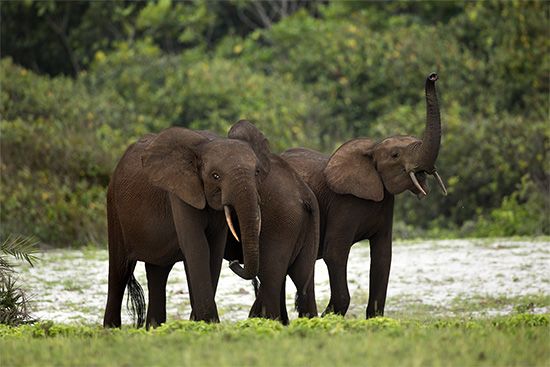
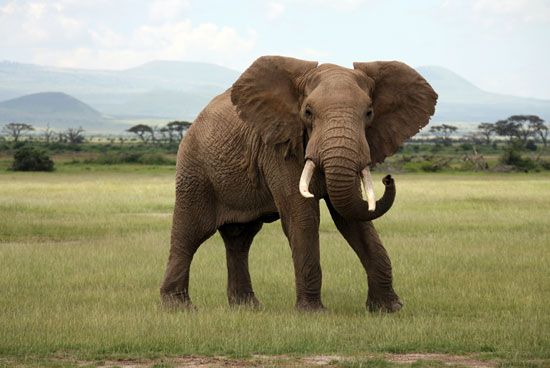
This taxonomic division links several diverse orders of mammals, including the extinct order Embrithopoda—to which Arsinoitherium belongs—with the surviving orders Proboscidea (elephants), Hyracoidea (hyraxes), and Sirenia (manatees and dugongs). While Arsinoitherium physically resembled a rhinoceros due to its large size and prominent horns, its evolutionary lineage places it within this broader clade of paenungulates. Furthermore, the animal possessed limbs that shared structural similarities with those of elephants, reinforcing its connection to this group of mammals.1012
Sources
- Arsinoitherium — Encyclopædia Britannica
- Arsinoitherium — Merriam-Webster
- horn — Encyclopædia Britannica
- dinosaur - Ceratopsia — Encyclopædia Britannica
- Oligocene Epoch — Encyclopædia Britannica
- Eocene Epoch — Encyclopædia Britannica
- Cenozoic Era - Cenozoic life — Encyclopædia Britannica
- Tertiary Period - Mammalian migration from Eurasia to North America — Encyclopædia Britannica
- Miocene Epoch — Encyclopædia Britannica
- Paenungulata — Merriam-Webster
Published on · 2 min read