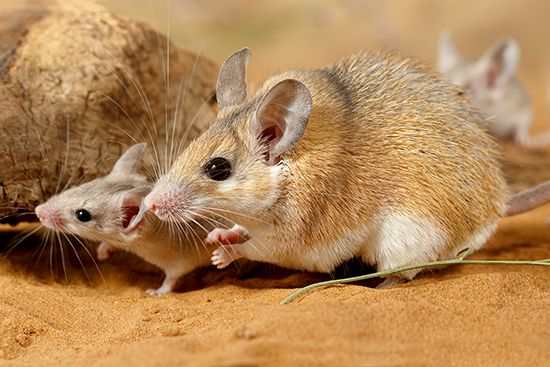
African Pouched Rat
African pouched rats (subfamily Cricetomyinae) are omnivorous rodents that occupy diverse roles across sub-Saharan Africa and savanna ecosystems.
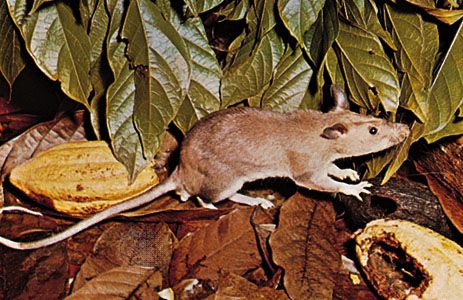
What role do African pouched rats play in their ecosystem?
African pouched rats (subfamily Cricetomyinae) are omnivorous rodents that occupy diverse roles across sub-Saharan Africa and savanna ecosystems.1
Their ecological impact includes:
- Dietary Versatility: As omnivores, they consume a wide variety of food sources, including seeds, fruit, and insects, which helps regulate plant and insect populations in their respective habitats.1
- Habitat Utilization: They inhabit forests, woodlands, and grasslands, often digging their own burrows in moist, shady areas or utilizing abandoned dens and termite mounds, which contributes to soil turnover.1
- Food Source: Larger species, such as the giant pouched rat, serve as a food source for native peoples.1
- Adaptability: Some species, like the short-tailed pouched rat, enter torpor to survive in environments with highly variable temperatures, demonstrating resilience in fluctuating climates.1
While they are highly adaptable, some species, such as the long-tailed pouched rat, are vulnerable to extinction due to their dependence on specific wooded habitats threatened by deforestation.1
How do African pouched rats communicate with each other?
Sorry, the Britannica knowledge base does not contain information regarding the specific communication methods of African pouched rats. While the provided search results detail their natural history, physical characteristics, and habitat, they do not describe the mechanisms these rodents use to interact or signal one another.
How do African pouched rats reproduce and care for their young?
African pouched rats (subfamily Cricetomyinae) exhibit variation in their reproductive output depending on the genus and species. While the provided information does not detail specific parental care behaviors, it does outline the typical litter sizes for these rodents:
- Giant pouched rats (Cricetomys): These large, omnivorous animals typically produce litters ranging from one to five young.1
- Short-tailed pouched rats (Saccostomus): These smaller, nocturnal rodents are more prolific, with litter sizes ranging from 1 to 10.1
- Long-tailed pouched rats (Beamys hindei): This species, which is a nimble climber found in forest and woodland habitats, bears litters of four to seven young.1
These animals generally construct or utilize burrows in moist, shady areas, or in the case of the short-tailed pouched rat, may use holes among tree roots and rock piles, which likely serve as the environment for raising their young.1
What is the diet of African pouched rats in their natural habitat?
African pouched rats are omnivorous rodents, though their specific diets vary by genus and environmental conditions:
- Giant pouched rats (Cricetomys): These omnivorous animals consume a wide variety of food sources. They are known to climb fruit trees during the day to forage.1
- Short-tailed pouched rats (Saccostomus): Their diet is seasonal and adaptive. During wet periods, they feed primarily on seeds, but they shift their diet to include insects during times of drought.1
- Long-tailed pouched rats (Beamys hindei): This species feeds on a diet consisting of seeds and fruit. They are often found in forest habitats and are sometimes seen in cassava plantations.1
Across these species, the characteristic cheek pouches are used to transport food back to their burrows, where it is either consumed or stored for later use.1
Sources
- African pouched rat — Encyclopædia Britannica
- Chemoreception - Territorial behavior — Encyclopædia Britannica
Published on · 2 min read