African Spiny Mouse
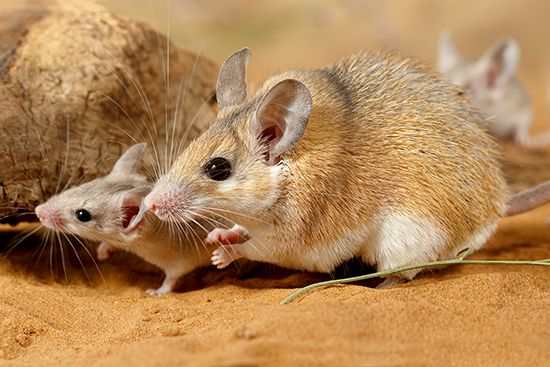
The African spiny mouse (genus Acomys) is defined by several distinct physical and biological traits:
What are the unique physical characteristics of the African spiny mouse?
The African spiny mouse (genus Acomys) is defined by several distinct physical and biological traits:
- Spiny Coat: Their upperparts are covered in harsh, inflexible spiny hairs, which may be gray, grayish yellow, brownish red, or reddish in color.1
- Facial Features: They possess notably large eyes and ears.1
- Tail Characteristics: They have scaly, nearly bald tails that are generally shorter than or equal to their body length. These tails are brittle and prone to breaking off, either partially or entirely.1
- Skin Sloughing: Certain species, such as Kemp’s spiny mouse (A. kempi) and Percival’s spiny mouse (A. percivali), have the unique ability to slough off patches of skin to escape predators. These wounds heal and are covered by new skin at a rate roughly twice as fast as similar injuries in adult rats.1
- Size Variation: Species range significantly in size, from the golden spiny mouse (A. russatus), which can reach 25 cm in body length, to the Cape spiny mouse (A. subspinosus), which may be as small as 10 cm.1
What role do African spiny mice play in their ecosystem?
African spiny mice (genus Acomys) play several roles within their ecosystems, primarily as omnivorous consumers and as components of the food web in rocky deserts, savannas, and dry woodlands.1
- Dietary Role: As omnivores, they primarily consume plant materials, though their diet can be opportunistic. For example, some populations of the Cairo spiny mouse have been observed consuming dates, while others have been documented scavenging dried flesh and bone marrow.1
- Niche Partitioning: These rodents demonstrate complex ecological interactions through temporal niche partitioning. In habitats where the golden spiny mouse and the Cairo spiny mouse coexist, they exploit the same food resources but avoid direct competition by being active at different times—the former is diurnal, while the latter is nocturnal.1
- Habitat Utilization: They are ground-dwelling animals that utilize various shelters, including rock crevices, termite mounds, and the abandoned burrows of other rodents, which helps them survive in harsh, arid environments.1
- Prey Dynamics: Their ability to slough off skin to escape predators suggests they serve as a significant prey source for local carnivores within their range.1
How do African spiny mice compare to other rodent species in terms of behavior and social structure?
African spiny mice (Acomys) exhibit distinct behavioral and social traits that differentiate them from many other rodents.
- Social Cooperation: Unlike many solitary rodent species, African spiny mice demonstrate cooperative behavior during reproduction. Females have been observed assisting other mothers during the birthing process by biting the umbilical cord and cleaning the newborns, a form of communal care that is relatively uncommon among many other small rodents.1
- Temporal Niche Partitioning: While many rodents are strictly nocturnal, African spiny mice show behavioral flexibility. For example, the golden spiny mouse is diurnal, while the Cairo spiny mouse is nocturnal. When these species share the same habitat, they utilize the same food resources but avoid direct competition by being active at different times of the day.1
- Adaptability: Some species, such as the Cairo spiny mouse, exhibit synanthropic behavior, meaning they live in close proximity to or alongside human populations, a trait not shared by all rodent species.1
- Defensive Behavior: Their unique physiological ability to slough off skin to escape predators is a specialized survival mechanism that distinguishes them from other rodents, such as rats, which lack this rapid healing and defensive adaptation.1
What are some common predators of African spiny mice?
African spiny mice (Acomys) are small, ground-dwelling rodents that occupy rocky deserts, savannas, and dry woodlands across Africa and parts of southwestern Asia. Because they are a common prey species within these environments, they face predation from a variety of carnivores and raptors that inhabit the same regions.13
While specific predator-prey studies for Acomys are limited, they are subject to predation by the diverse array of Carnivora and birds of prey found in their ecosystems, including:
- Small to medium-sized carnivores: Predators such as foxes, jackals, civets, and mongooses are known to hunt small mammals in these habitats.43
- Raptors: Various eagles, falcons, and owls (including burrowing species) are active hunters of small rodents in desert and savanna environments.4
- Reptilian predators: Many snakes, such as vipers, are common in the rocky, arid regions where spiny mice den and are significant predators of small rodents.4
To mitigate these threats, some species of African spiny mice have evolved a unique defensive mechanism: the ability to slough off patches of skin to escape a predator’s grasp.1
Sources
- African spiny mouse — Encyclopædia Britannica
- mouse — Encyclopædia Britannica
- Arabian Desert - Animal life — Encyclopædia Britannica
- Africa - Mammals — Encyclopædia Britannica
Published on · 3 min read