Agrimony
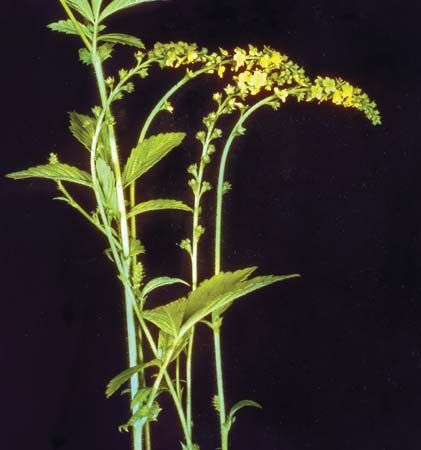
Agrimony refers to a genus (Agrimonia) of 12–15 species of perennial herbs belonging to the rose family (Rosaceae). It is important to distinguish this genus…
What is agrimony and what are its main characteristics as a plant?
Agrimony refers to a genus (Agrimonia) of 12–15 species of perennial herbs belonging to the rose family (Rosaceae). It is important to distinguish this genus from “hemp agrimony” (Eupatorium cannabinum), which is a different, unrelated plant with reddish flowers.123
Physical Characteristics
Agrimony plants are typically erect and feature the following traits:
- Leaves: They possess alternate, compound, and toothed leaves.12
- Flowers: The plants produce slender, long terminal spikes of small, yellow flowers, each consisting of five petals.12
- Fruit: The fruit is a burlike achene equipped with hooked spines1. These hooks allow the fruit to cling easily to animal coats or clothing, aiding in seed dispersal.21
Common agrimony (Agrimonia eupatoria), often called “church steeples,” can grow up to 120 cm (4 feet) tall and is found in temperate regions of the Northern Hemisphere. Historically, these plants have been utilized in folk medicine, and their leaves have been used to produce a yellow dye.1
What are the traditional medicinal uses of agrimony?
Historically, species within the genus Agrimonia have been utilized in folk medicine, though specific applications vary by tradition.1
While the plant is recognized for its historical role in traditional practices, it is important to note that scientific evidence supporting these medicinal claims is often limited. Relying on unverified herbal remedies for health conditions can be risky, and it is always essential to prioritize evidence-based medical advice from qualified healthcare professionals to ensure safety and efficacy.
How did agrimony get its name, and does it have any cultural or historical significance?
The name “agrimony” has roots in classical antiquity. It is derived from the Middle English egremoine, which traces back to the Anglo-French and Latin agrimonia. This term is considered a manuscript variant of the Latin argemonia, which itself originates from the Greek argemōnē.3
Regarding its cultural and historical significance, the plant has long been recognized for its utility in human society. Common agrimony (Agrimonia eupatoria), often referred to as “church steeples” due to its tall, slender spikes of yellow flowers, has been a staple in folk medicine for centuries. Beyond its traditional medicinal applications, the plant has historically been valued for its practical properties; its leaves have been used to produce a yellow dye. Its distinctive burlike achene, equipped with hooked spines, has also made it a notable plant in the wild, as it easily clings to the coats of animals and clothing, facilitating seed dispersal.1
What are the identifying features of agrimony that distinguish it from similar plants?
To identify agrimony (Agrimonia), look for these specific botanical characteristics that distinguish the genus:
Key Identifying Features
- Growth Habit: These plants are erect perennial herbs that typically reach heights of up to 120 cm (4 feet).1
- Leaves: They possess alternate, pinnately compound leaves with toothed edges.14
- Flowers: The flowers are small, yellow, and feature five petals. They are characteristically arranged in a long, terminal spike, often described as resembling “church steeples”.1
- Fruit and Seeds: The most distinct feature is the fruit, which is a burlike achene measuring approximately 0.6 cm (0.2 inch) in diameter. These fruits are covered in hooked spines or bristles that allow them to cling to animal coats or clothing for dispersal.14
These features, particularly the combination of yellow, spike-borne flowers and hooked, burlike fruits, help differentiate agrimony from other members of the Rosaceae family.14
Sources
- agrimony — Encyclopædia Britannica
- hemp agrimony — Merriam-Webster
- agrimony — Merriam-Webster
- agrimonia — Merriam-Webster
Published on · 3 min read