Ajanta Caves
The wall paintings at the Ajanta Caves are celebrated for their vibrant depictions of Buddhist legends and divinities. These artworks, created between the…
What stories or legends are depicted in the paintings at Ajanta Caves?
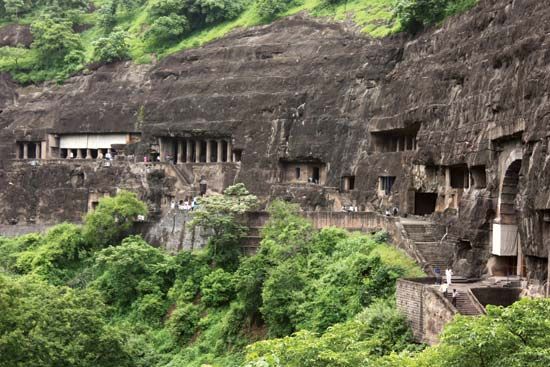
The wall paintings at the Ajanta Caves are celebrated for their vibrant depictions of Buddhist legends and divinities. These artworks, created between the 1st century BCE and the 7th century CE, were designed to guide visitors on a spiritual journey and spread Buddhist doctrine.123
The murals primarily focus on the life of the historical Buddha and include significant representations of bodhisattvas, such as the famous Bodhisattva Padmapani (also known as Avalokiteshvara), who is depicted holding a lotus flower. In addition to these religious narratives, the paintings incorporate secular and historical events, reflecting the cultural exchange that occurred along the trade routes passing through the region. The artists employed a distinct style characterized by classical Gupta dynasty conventions, emphasizing realism through the use of light, shade, and delicate human features.213
What types of artistic and architectural features can be found in the Ajanta Caves?
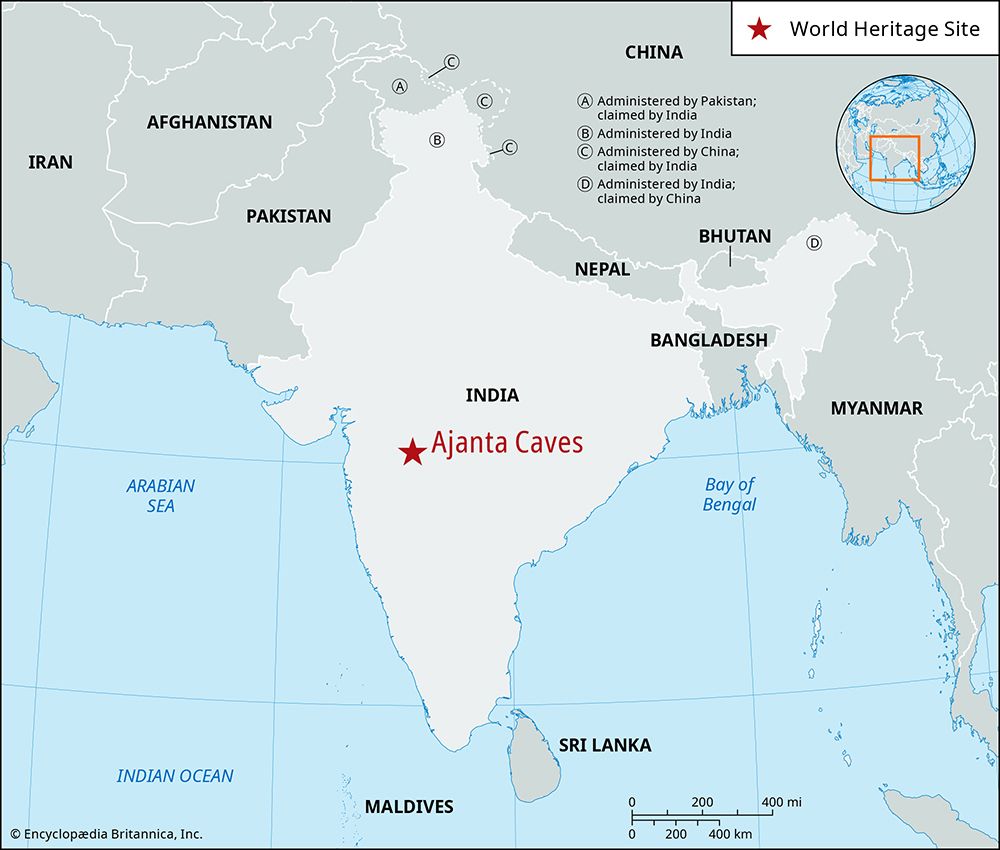
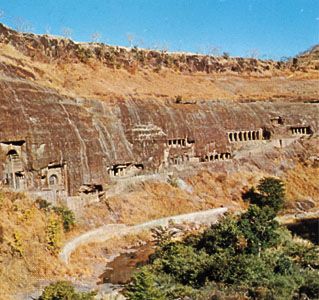
The Ajanta Caves are a remarkable collection of rock-cut cave temples and monasteries carved into granite cliffs. The site features two primary architectural forms:
- Chaityas: These are sanctuaries or prayer halls, often characterized by noteworthy sculpture and rich ornamentation on their pillars.14
- Viharas: These are monastic cells designed for the residence of monks.14
The artistic features of the site are defined by two distinct phases, ranging from the 2nd century BCE to the 6th century CE, with the later period reflecting the classical Gupta dynasty style. Key artistic elements include:1
- Wall Paintings: Executed in a tempera technique on plastered surfaces, these murals depict Buddhist legends, Jataka tales, and various divinities. They are known for their expansive, dynamic style, utilizing light and shade to provide substance to figures.2
- Sculpture: The site contains giant carved representations of the Buddha and bodhisattvas.1
- Stylistic Conventions: Figures are depicted with idealized features, including narrow waists, lotus-shaped eyes, and slender noses, reflecting the aesthetic maturity of the period.12
What role do the Ajanta Caves play in modern Indian tourism and culture?
The Ajanta Caves serve as a cornerstone of modern Indian cultural identity and tourism. As a designated UNESCO World Heritage site, they represent a vital link to the region’s ancient artistic traditions and spiritual history.21
In contemporary culture, the caves are recognized as a defining element of the artistic heritage of Maharashtra, standing alongside the Ellora Caves as symbols of India’s historical depth. For tourism, the site acts as a major destination, drawing visitors to experience the “exuberance and vitality” of its ancient frescoes and rock-cut architecture. Beyond their aesthetic appeal, the caves are valued for their role in illustrating the historical exchange of ideas and the spread of Buddhism across the Indian subcontinent. By preserving these masterpieces, India maintains a tangible connection to the classical Gupta dynasty era, ensuring that the site continues to function as a place for both cultural education and reflection.125
What is the historical significance of the Ajanta Caves in India?
The Ajanta Caves hold immense historical significance as a center for the development and dissemination of Buddhism across the Indian subcontinent. Established between the 1st century BCE and the 7th century CE, the site served as a vital hub along a major trade route, facilitating the exchange of ideas among pilgrims, traders, and artisans.12
The caves are historically notable for two distinct phases of artistic production: an early period beginning around 200 BCE and a later, classical phase during the Gupta dynasty (4th–6th century CE). The site is celebrated for its sophisticated rock-cut architecture, consisting of chaityas (sanctuaries) and viharas (monasteries), and its world-renowned wall paintings. These frescoes provide a unique record of Buddhist legends and historical events, showcasing an aesthetic maturity that defined the classical style of the era. Rediscovered in 1819, the site remains a UNESCO World Heritage site, preserving a tangible legacy of ancient Indian art and spiritual life.12
Sources
- 11 Caves That Made History - Ajanta Caves — Encyclopædia Britannica
- Ajanta Caves — Encyclopædia Britannica
- Bodhisattva Padmapani — Encyclopædia Britannica
- South Asian arts - Ancient wall painting — Encyclopædia Britannica
- Maharashtra - Cultural life — Encyclopædia Britannica
Published on · 3 min read