Baja California
Spanish colonization of the Baja California peninsula, which began in earnest with the establishment of a mission at Loreto in 1697, had a devastating impact…
How did the Spanish colonization impact the Baja California peninsula?
Spanish colonization of the Baja California peninsula, which began in earnest with the establishment of a mission at Loreto in 1697, had a devastating impact on the Indigenous population. Before Spanish arrival, an estimated 60,000 to 70,000 Indigenous people lived in small groups across the region.1
The mission system, operated by Jesuits, Franciscans, and later the Dominican order, sought to congregate and catechize these groups, teaching them agriculture and livestock husbandry. However, this process proved catastrophic; the Indigenous people were practically exterminated by a series of epidemics unwittingly introduced by the Spanish. By the time the missions were gradually abandoned following Mexican independence in 1822, the original population had largely vanished, replaced by a sparse population of mestizo farmers and cattlemen.1
The colonization was fundamentally marked by the imposition of foreign religious and social structures, which often involved forced labor and the suppression of traditional ways of life.12
How is Baja California divided politically between Mexico and the United States?
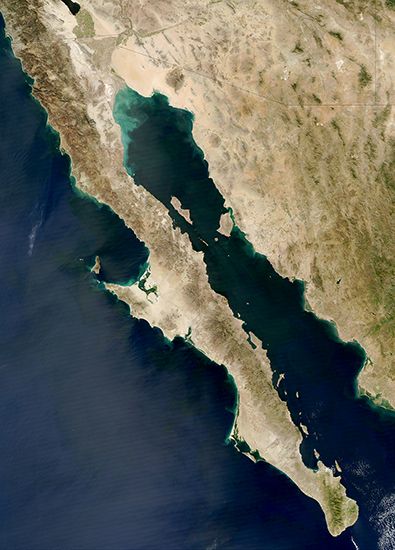
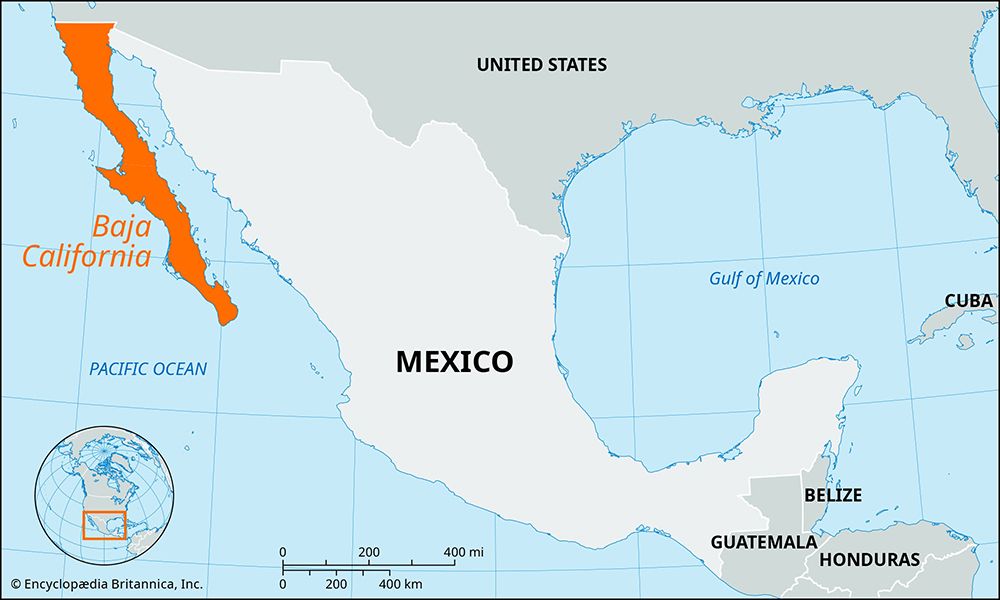
The Baja California peninsula is entirely part of Mexico and is not divided politically between Mexico and the United States. The peninsula is politically organized into two Mexican states: Baja California in the north and Baja California Sur in the south.4
The confusion regarding a division often stems from the peninsula’s geography. The northern border of the state of Baja California serves as the international boundary between Mexico and the United States, specifically bordering the U.S. states of California and Arizona. Following the Mexican-American War, the Treaty of Guadalupe Hidalgo (1848) formally established this boundary, assigning the region north of the border to the United States and the Baja peninsula to Mexico.14
What are some popular tourist destinations and activities in Baja California?
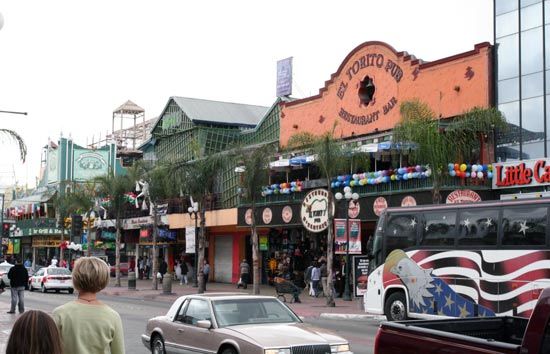
Baja California is a premier destination for travelers, offering a diverse range of activities across its two states. Tourism is a vital component of the regional economy, supported by the Transpeninsular Highway, which connects the U.S.-Mexico border to the southern tip of the peninsula.64
Popular Destinations and Activities
- Los Cabos and La Paz: These are the primary tourist hubs of Baja California Sur. La Paz is renowned for its sunny beaches, beautiful bay, and opportunities for sport fishing—specifically for marlin, tuna, and sailfish—as well as diving and wildlife observation on nearby islands.61
- Coastal Recreation: The beaches at Rosarito are highly popular with visitors from California. Throughout the peninsula, travelers enjoy deep-sea fishing and various aquatic sports.761
- Nature and Wildlife: The region is home to significant ecological sites, including a whale sanctuary and breeding grounds for seals and California sea lions, which are part of a UNESCO World Heritage site.6
- Cultural Experiences: In the north, Tecate is well-known for its famous brewery, while cities like Tijuana and Ensenada serve as major cultural and commercial centers.7
What indigenous cultures inhabited Baja California before European colonization?
Before European contact in the 16th century, the Baja California peninsula was inhabited by an estimated 60,000 to 70,000 Indigenous people who lived in small, localized groups. These populations were primarily hunter-gatherers who exploited specific territories for fishing, hunting, and collecting wild plants.1
Among the notable groups were the Cochimi, who inhabited the central region of the peninsula and spoke a Yuman language. In the northern areas, Indigenous groups shared cultural traditions with other Indigenous peoples of California, while those residing in the Colorado River valley, such as the Mojave and Quechan, maintained traditions similar to the Indigenous peoples of the American Southwest.28
Following the arrival of the Spanish in 1533, these populations faced devastating consequences. Jesuit missionaries began establishing permanent settlements in 1697, and the Indigenous inhabitants were subsequently decimated by epidemics introduced by the Europeans. By the time the Dominican order took over the missions in the late 18th century, very few Indigenous people remained in the southern part of the peninsula.1
Sources
- Baja California — Encyclopædia Britannica
- California - Settlement — Encyclopædia Britannica
- Gulf of California — Encyclopædia Britannica
- Baja California — Encyclopædia Britannica
- Native American - The Southwest and the southern Pacific Coast — Encyclopædia Britannica
- Baja California Sur — Encyclopædia Britannica
- La Paz — Encyclopædia Britannica
- Indigenous peoples of California — Encyclopædia Britannica
- Mexico - Pre-Columbian Mexico — Encyclopædia Britannica
- Cochimi — Merriam-Webster
Published on · 3 min read